
This cottage cheese dip for veggies blends completely smooth, tastes fresh and savory, and stays thick enough to cling to carrots, cucumber, bell pepper and crackers. Greek yogurt supports the creamy body, while lemon, Dijon, dill and chives give it the familiar brightness of an herbed party dip.
The liquid is deliberately limited. Cottage cheese already contains whey, and vegetables release water once cut. Blending the dairy and dry seasonings first, adding lemon carefully, and chilling the finished dip for 30 minutes produces a spoonable texture rather than a runny dressing.
This recipe was developed through culinary research and editorial review. Cottage cheese moisture, yogurt thickness, blender design and herb freshness vary, so adjust only after blending and chilling.
For a ranch-forward version with a slightly different seasoning profile, compare the cottage cheese ranch dip recipe. The Greek yogurt herb sauce recipe is looser and better suited to drizzling over chicken or grain bowls.
Why cottage cheese dip can become watery
Cottage cheese brands contain different amounts of free whey. A container with a visible pool of liquid makes a looser dip than densely packed curds, even when the label lists the same serving size.
Lemon juice and yogurt add more moisture. They should be measured, not poured freely into the blender. The dip also looks a little softer immediately after blending because the moving blades warm it; chilling restores body.
Finally, vegetables contribute water. Washed vegetables should be dried thoroughly, and cucumber should be cut shortly before serving. A wet vegetable platter can thin the surface of the dip even when the recipe itself is correctly balanced.
Ingredients
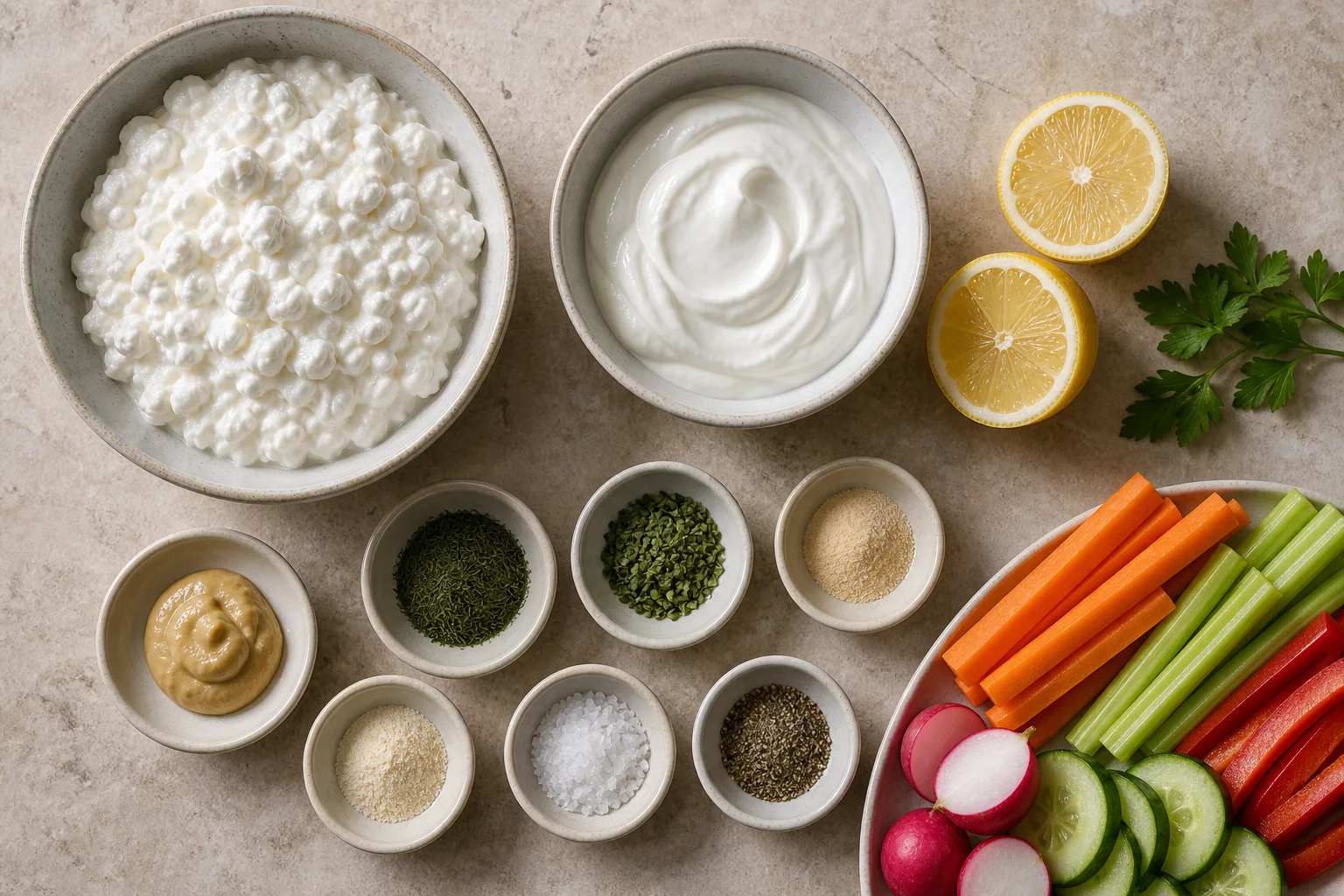
- 2 cups whole-milk cottage cheese
- 1/3 cup plain whole-milk or 2% Greek yogurt
- 1 tablespoon fresh lemon juice
- 1 teaspoon Dijon mustard
- 1 teaspoon dried dill
- 1 teaspoon dried chives
- 1/2 teaspoon garlic powder
- 1/2 teaspoon onion powder
- 1/2 teaspoon kosher salt
- 1/4 teaspoon ground black pepper
- 1 tablespoon finely chopped fresh parsley, optional
- 1 to 2 tablespoons cold water, only if needed
- carrots, celery, bell pepper, cucumber, radishes or crackers, for serving
Ingredient notes and substitutions
Cottage cheese: Whole-milk cottage cheese gives the richest, smoothest dip. Small or large curds both work. If a container has an unusual pool of whey, spoon off only that loose surface liquid; do not press or fully drain the curds.
Greek yogurt: Thick Greek yogurt reinforces the body and adds tang. Sour cream can replace it by volume for a richer, less protein-forward dip. Regular yogurt is too loose for a direct swap.
Dried herbs: Dried dill and chives distribute evenly and do not introduce much water. Rub them between your fingers before adding to wake up the aroma. For an all-fresh-herb dip, see the quantities below and expect a greener, slightly looser result.
Lemon: One tablespoon brightens the dairy without turning the dip thin. Add extra lemon zest, not extra juice, if you want stronger citrus flavor.
Dijon: Dijon adds background acidity and savory depth. Yellow mustard works in half the amount, while whole-grain mustard prevents an entirely smooth appearance.
Garlic and onion powders: Powders give consistent flavor without raw pieces or vegetable moisture. Fresh garlic becomes stronger during storage; if using it, start with half a small finely grated clove.
Water: It is an adjustment ingredient, not an automatic addition. Many cottage cheeses need none. Add it only after the base is smooth and only 1 teaspoon at a time.
How to make cottage cheese veggie dip
1. Inspect the cottage cheese
Open the container and check for separated whey. If a clear pool sits on top, spoon off that loose liquid. Leave the moisture held among the curds.
Measure 2 cups into the blender. Do not pack the cup or press the cottage cheese through a strainer; the calibrated dip uses naturally moist curds.
2. Blend the dairy base
Add cottage cheese and Greek yogurt to a high-powered blender or food processor. Blend for 60 seconds, stop safely and scrape the container, then continue until no visible curds remain.
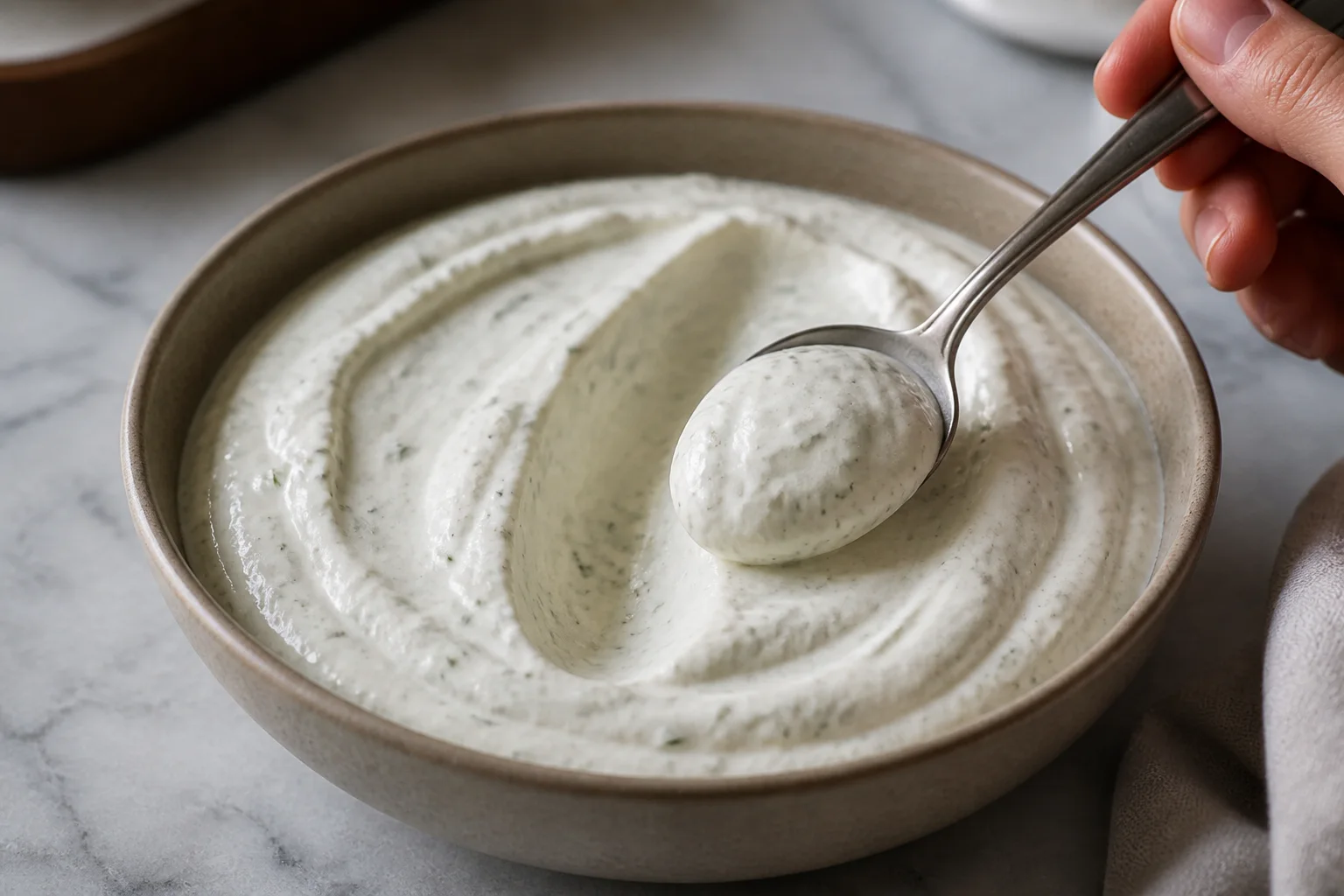
The base should be glossy and thick enough to hold soft ridges. A food processor may require 2 to 3 minutes because its wider bowl circulates a small batch less aggressively.
3. Add the seasonings
Add lemon juice, Dijon, dried dill, dried chives, garlic powder, onion powder, salt and pepper. Blend for 20 to 30 seconds, just until uniformly flecked.
Avoid a long second blend. Friction warms the dip and can make it appear thinner than it will be after chilling.
4. Check the texture
Stop the machine and drag a spoon through the dip. The groove should remain visible for a moment, and a spoonful should mound rather than pour.
If the blender cannot circulate and the dip remains extremely stiff, add cold water 1 teaspoon at a time and pulse. Do not add both tablespoons without checking between additions.
5. Fold in fresh parsley
Transfer the dip to a bowl and fold in chopped parsley by hand if using. Folding preserves fresh green flecks; blending parsley completely can turn the whole dip pale green and release more plant moisture.
Taste now, remembering that dried herbs strengthen as they hydrate. Add salt by a pinch rather than another large measure.
6. Chill before serving
Cover and refrigerate for at least 30 minutes. The herbs hydrate, the garlic and onion flavors settle, and the dip regains body after blending.
Stir once before serving. If it thickens more than desired, add 1 teaspoon water or lemon juice; use water when the acidity already tastes balanced.
7. Prepare the vegetables
Wash vegetables under running water and dry thoroughly. Cut them into sturdy pieces that can lift the thick dip: carrot sticks, celery batons, bell pepper strips, cucumber spears and halved radishes all work.
Keep wet or juicy cut vegetables separate until serving. Blot cucumber surfaces if necessary so water does not pool in the dip bowl.
How smooth should whipped cottage cheese dip be?
The finished dairy base should have no obvious curds or pebbly sensation. Rub a small amount between two clean fingers before seasonings are added; it should feel cohesive and smooth.
A high-powered blender usually creates the finest texture. A food processor works but needs more scraping and time. An immersion blender can work in a tall narrow vessel, though trapped curds around the bottom corners may need attention.
Do not keep blending indefinitely. Once the curds are gone, continued friction warms the dip and loosens it. Chill rather than adding extra cottage cheese to correct temporary warmth.
The best vegetables for a thick dip
Choose vegetables with enough structure to scoop. Carrots and celery can be cut into 3-inch sticks; bell pepper works best in wide strips; small radishes can be halved while large ones are quartered.
Cucumber spears are sturdy but watery. English or Persian cucumbers have fewer large seeds and generally hold better than mature garden cucumbers. Cut them near serving time and blot the cut faces.
Blanched vegetables can also work. Briefly cook broccoli or snap peas, cool them in ice water and dry extremely well. Any water clinging to the florets will thin the dip.
For crackers, choose sturdy wheat crackers, seeded crisps or pita chips. Thin potato chips may break under a thick chilled dip.
Fresh-herb variation
Replace dried dill and chives with 2 tablespoons chopped fresh dill and 2 tablespoons chopped fresh chives. Fold them in after the base is smooth rather than blending them completely.
Fresh herbs contain water and take up more volume, so omit the optional water at first. Chill 30 minutes and then assess thickness.
For a parsley-forward version, use 1/4 cup chopped flat-leaf parsley, 1 tablespoon fresh chives and 1 teaspoon lemon zest. Keep the measured 1 tablespoon lemon juice.
Other flavor variations
Ranch-style: Add 1/2 teaspoon dried parsley and 1/4 teaspoon dried thyme. Keep dill, chives, garlic and onion for a layered ranch profile.
Everything seasoning: Omit salt at first and fold in 1 tablespoon everything bagel seasoning after blending. Let the dip stand 10 minutes, then taste because packaged blends vary in saltiness.
Smoky pepper: Add 1/2 teaspoon smoked paprika and a pinch of cayenne. Garnish with a little extra paprika instead of blending in a large amount.
Jalapeño lime: Replace lemon with 2 teaspoons lime juice and fold in 1 tablespoon finely minced pickled jalapeño. Blot the jalapeño before chopping to limit extra brine.
Cucumber dill: Fold in 1/3 cup finely diced, seeded cucumber that has been salted lightly, rested 10 minutes and squeezed dry. Serve this variation the same day.
Troubleshooting
The dip is watery
The cottage cheese contained excess whey, too much lemon or water was added, or wet vegetables contacted the bowl. Chill for 30 minutes first. If still loose, blend in 1/4 cup cottage cheese and re-season cautiously.
The dip is too thick
Add cold water 1 teaspoon at a time. If it also needs brightness, use lemon juice for the first teaspoon and water after that.
The dip still has curds
Scrape the container and blend longer. A wide food processor bowl can take several minutes. If the batch sits below the blades, use a smaller vessel or an immersion blender.
The dip tastes bland
Chill it before making a large correction; dried herbs need time to hydrate. Then add a pinch of salt, a little Dijon, lemon zest or black pepper depending on what is missing.
The garlic tastes too strong
Fresh garlic intensifies during storage. Use garlic powder for more control. For an already strong dip, blend in additional cottage cheese and yogurt in the same approximate ratio.
The herbs turned the dip green
They were blended too long. Fold fresh herbs by hand after the dairy base is smooth. The color is harmless, but the appearance and flavor may be more vegetal.
Water collects on top after storage
Some whey separation is normal. Stir gently. If a substantial clear pool appears, pour it off before stirring and use the dip promptly.
Make-ahead and serving safety
The dip is well suited to making one day ahead because the dried herbs hydrate and flavors settle. Keep it covered and refrigerated until serving.
For a party, place only a portion on the table and replenish from the refrigerator. USDA buffet-safety guidance recommends keeping cold foods at 40°F or below, using ice or small replacement dishes when needed.
Do not return dip to storage if guests have repeatedly dipped vegetables or crackers directly into the communal bowl. Cross-contact and time at room temperature both matter.
Storage
Refrigerate in an airtight container and use within 3 to 4 days. Stir before serving, and pour off only a clear surface pool if substantial separation occurs.
Freezing is not recommended. Thawed cottage cheese and yogurt can release water and become grainy, while fresh herbs lose their clean color.
Keep prepared vegetables in a separate container lined with a dry paper towel. Combining them with the dip in advance transfers water and shortens the best-quality window.
Frequently asked questions
Can cottage cheese be used as a vegetable dip?
Yes. Blending cottage cheese with thick yogurt and savory seasonings removes the curd texture and creates a dip that clings to sturdy vegetables.
Does blended cottage cheese get smooth?
Yes. A high-powered blender can make it glossy and curd-free. A food processor also works but may need several minutes and repeated scraping.
Can I make this dip without Greek yogurt?
Yes. Replace it with 1/3 cup additional cottage cheese for a thicker, milder dip, or with sour cream for a richer result.
Can I use low-fat cottage cheese?
It can work, but the dip may be less rich and sometimes looser depending on the brand. Limit added water and assess after chilling.
How long should cottage cheese dip chill?
Chill for at least 30 minutes. This hydrates dried herbs and allows the warmed blended base to thicken again.
What if I do not have a blender?
A food processor is the best substitute. An immersion blender in a tall narrow container can work; a whisk alone will not remove the curds.
Is this the same as cottage cheese ranch?
It is related, but this version is designed as a versatile herb veggie dip. The dedicated ranch recipe has a more specific ranch seasoning balance.
Recipe development note
This cottage cheese dip for veggies was developed through culinary research and editorial review. It has not been represented as a personal kitchen test. Cottage cheese moisture, yogurt thickness, blender design and herb strength vary; use the smoothness, groove and chilled-cling cues throughout the method.
Nutrition is an estimate for the dip only and does not include vegetables or crackers. The accompanying visuals are AI-assisted food-editorial images, not photographs of a kitchen test.
Recipe at a glance
| Metric | Details |
|---|---|
| Prep time | 15 minutes |
| Total time | 45 minutes |
| Yield | 8 servings |
Printable recipe card
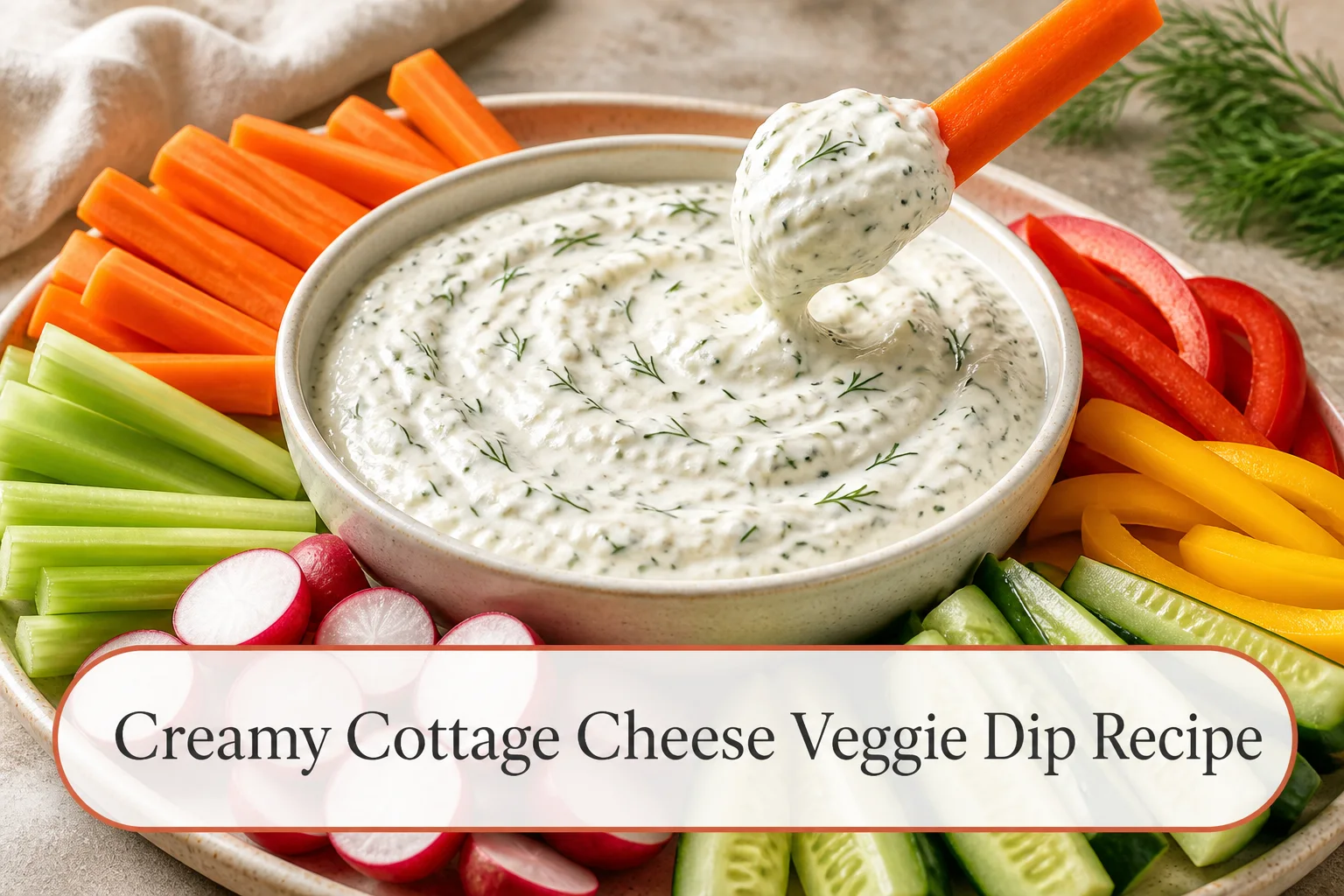
Creamy Cottage Cheese Veggie Dip Recipe
Ingredients
Equipment
Method
- Spoon off only an unusual clear pool of surface whey from the cottage cheese; do not press or fully drain the curds.
- Blend cottage cheese and Greek yogurt for 60 seconds, scrape safely, then continue until glossy with no visible curds.
- Add lemon juice, Dijon, dried dill, dried chives, garlic powder, onion powder, salt and pepper. Blend 20 to 30 seconds until evenly flecked.
- Drag a spoon through the dip; the groove should remain briefly. If extremely stiff, add cold water 1 teaspoon at a time and pulse.
- Transfer to a bowl and fold in optional parsley by hand. Taste, remembering the dried herbs strengthen as they hydrate.
- Cover and refrigerate at least 30 minutes. Stir once and adjust with only 1 teaspoon water or lemon juice if needed.
- Wash, thoroughly dry and cut sturdy vegetables. Keep juicy vegetables separate until serving and serve the dip cold.
Notes
- Remove only a clear surface pool of whey; do not fully drain the cottage cheese.
- Add optional water only 1 teaspoon at a time.
- Chill 30 minutes before final texture and seasoning adjustments.
- Dry vegetables thoroughly and add cucumber near serving time.
- This recipe was developed through culinary research and editorial review.
This recipe was developed through culinary research and editorial review. Cottage cheese moisture, yogurt thickness, blender design and herb strength vary; use the smoothness, groove and chilled-cling cues throughout the method.
Nutrition is an estimate for the dip only and excludes vegetables and crackers; actual values vary.