
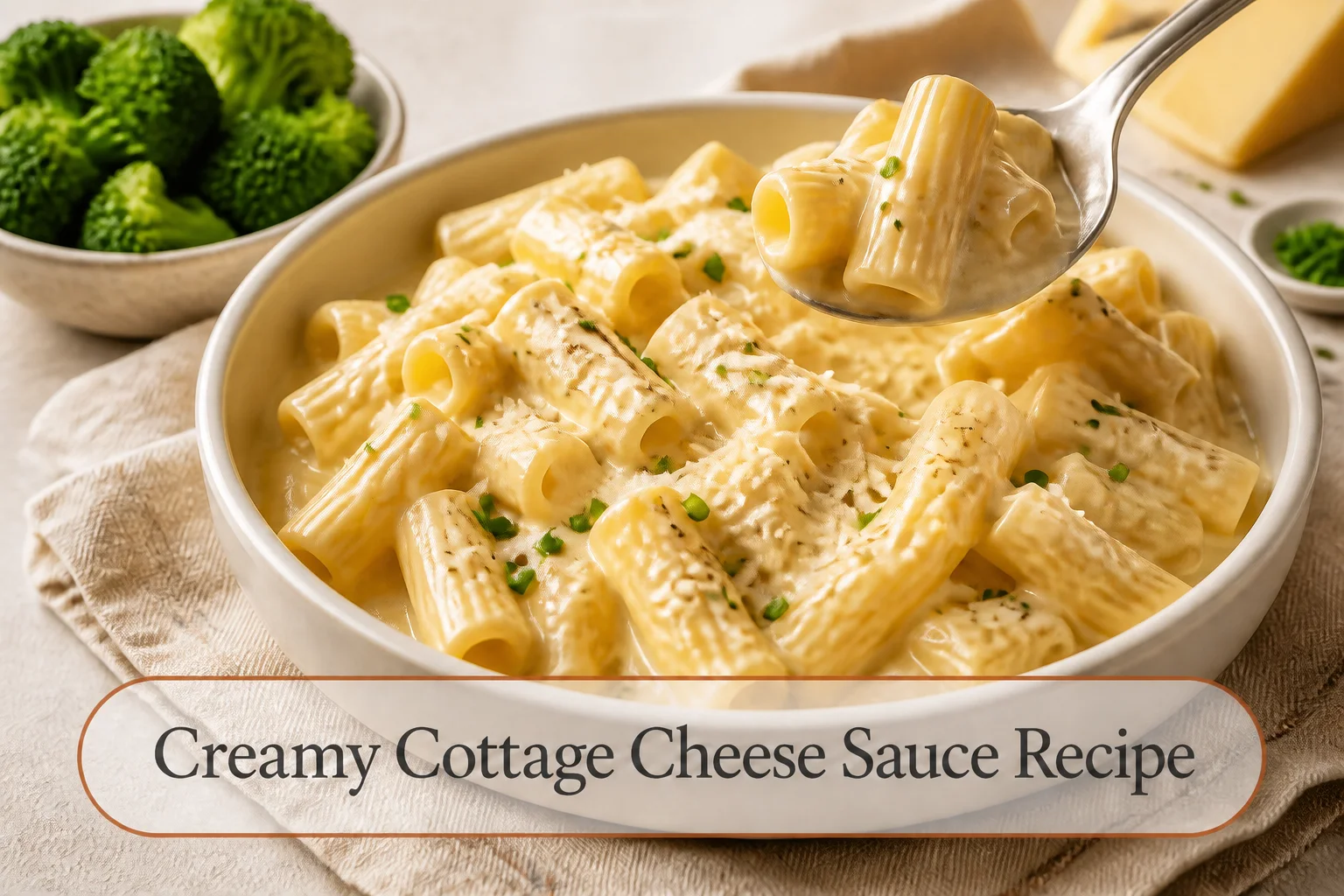
This creamy cottage cheese sauce turns simple curds into a smooth, savory sauce for pasta, steamed vegetables, baked potatoes or grain bowls. Sharp cheddar and Parmesan provide familiar cheese flavor, while a small amount of cornstarch helps the dairy stay cohesive during gentle heating.
The important technique is to blend the cold sauce completely smooth before warming it. Cottage cheese proteins tighten under high heat, so the sauce is added to a warm pan off the strongest heat and cooked only until it lightly coats a spoon. It should steam, not boil.
This recipe was developed through culinary research and editorial review. Cottage cheese moisture, blender strength, cheese age and burner output vary, so adjust with reserved hot pasta water and follow the smoothness and temperature cues instead of relying only on time.
For a cold, herb-forward option, try the cottage cheese ranch dip recipe. The cottage cheese breadsticks recipe makes a useful side for pasta or soup served with this sauce.
Why cottage cheese sauce can turn grainy
Cottage cheese already contains set milk proteins. Blending breaks the visible curds into very small particles, but it does not make those proteins immune to heat. A hard boil squeezes out moisture and encourages the particles to cluster, creating a gritty or separated appearance.
Pre-shredded cheese brings another complication. The powder used to keep shreds separate can interfere with melting. Freshly grated cheddar and finely grated Parmesan melt more evenly into the warm blended base.
Cornstarch gives the sauce a small buffer. It thickens free water and reduces the chance that fat and moisture visibly split, but it cannot rescue sauce that is boiled aggressively. Low heat remains the main control.
Ingredients
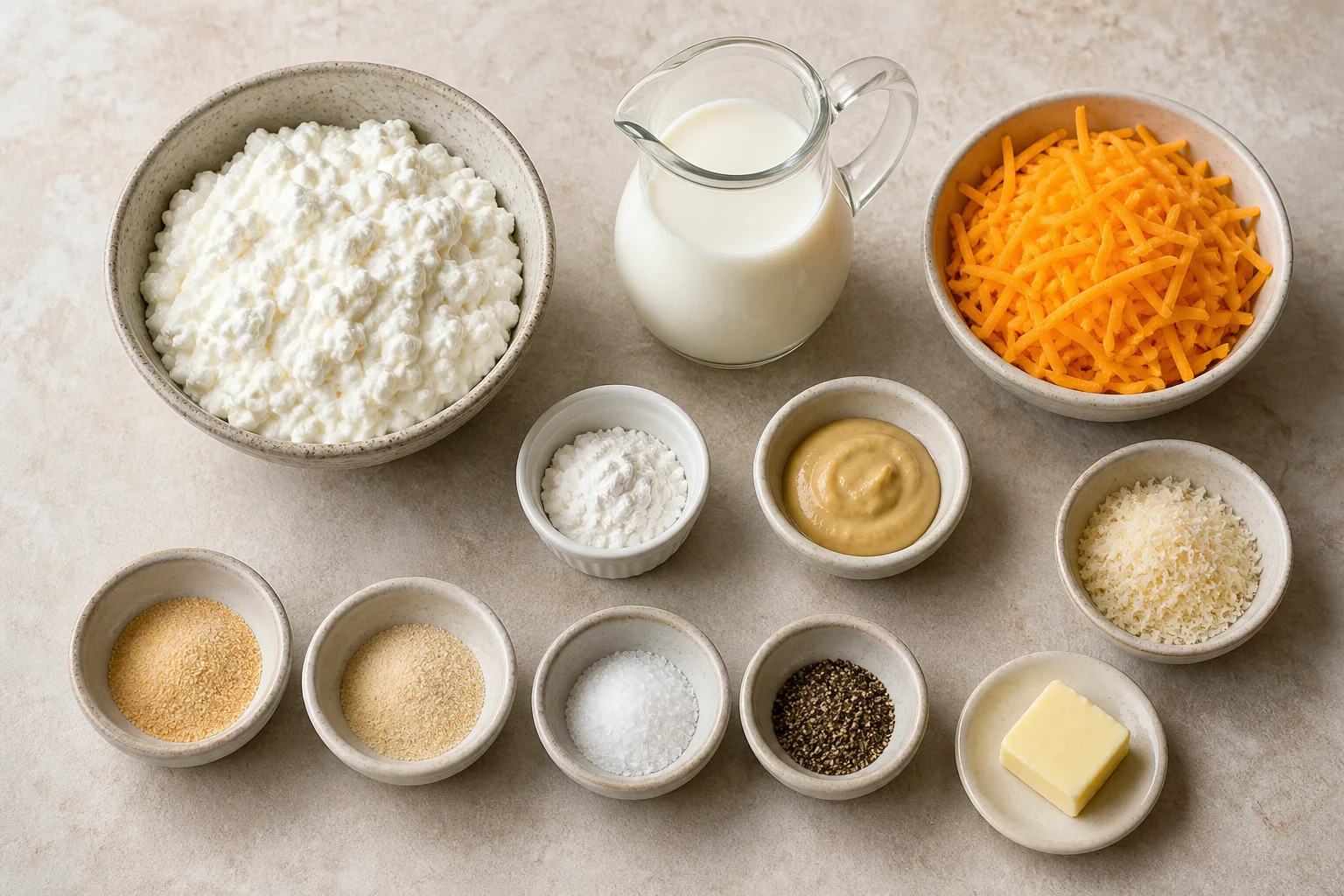
- 2 cups whole-milk cottage cheese
- 1/2 cup whole milk, plus more if needed
- 1 tablespoon cornstarch
- 1 teaspoon Dijon mustard
- 1/2 teaspoon garlic powder
- 1/2 teaspoon onion powder
- 1/4 teaspoon kosher salt, plus more to taste
- 1/8 teaspoon ground black pepper
- 1 cup freshly shredded sharp cheddar cheese
- 1/4 cup finely grated Parmesan cheese
- 1 tablespoon unsalted butter
- 1 teaspoon fresh lemon juice, optional
- 2 tablespoons chopped chives or parsley, optional
Ingredient notes and substitutions
Cottage cheese: Whole-milk cottage cheese gives the smoothest mouthfeel. Small- or large-curd both work because they are blended. Do not drain it; the whey is part of the calibrated liquid.
Milk: Whole milk loosens the curds and helps the blender circulate. Two-percent milk works with a slightly leaner finish. Unsweetened plain plant milk can work, but its flavor and thickening behavior vary.
Cornstarch: Blend it into the cold dairy so it disperses without lumps. Flour would need a different cooking method and can taste raw if heated only briefly.
Cheddar: A sharp cheddar gives strong flavor without needing an excessive quantity. Grate it from a block on the small holes of a box grater. Mild cheddar, Monterey Jack or Gouda can replace part of it, but very aged dry cheese may melt less smoothly.
Parmesan: Finely grated Parmesan adds salty depth. A fluffy microplane grate incorporates faster than coarse shreds. Because Parmesan varies in saltiness, finish seasoning after both cheeses melt.
Dijon: Mustard supports the cheese flavor without making the sauce taste overtly mustardy. Yellow mustard can work, but start with 1/2 teaspoon.
Butter: A tablespoon rounds out the leaner blended dairy base. Olive oil can replace it, though the flavor will be more pronounced.
Lemon: Add lemon juice only off heat and only if the finished sauce needs brightness. Acid and very high heat together can encourage curdling.
How to make cottage cheese sauce
1. Grate and measure before heating
Grate the cheddar and Parmesan and let them lose their refrigerator chill while the sauce base is prepared. Measure seasonings and keep them beside the stove.
If serving with pasta, start the pasta first and reserve at least 1 cup of starchy cooking water before draining. That water is better than plain milk for adjusting a pasta sauce because the starch helps it cling.
2. Blend the cold base
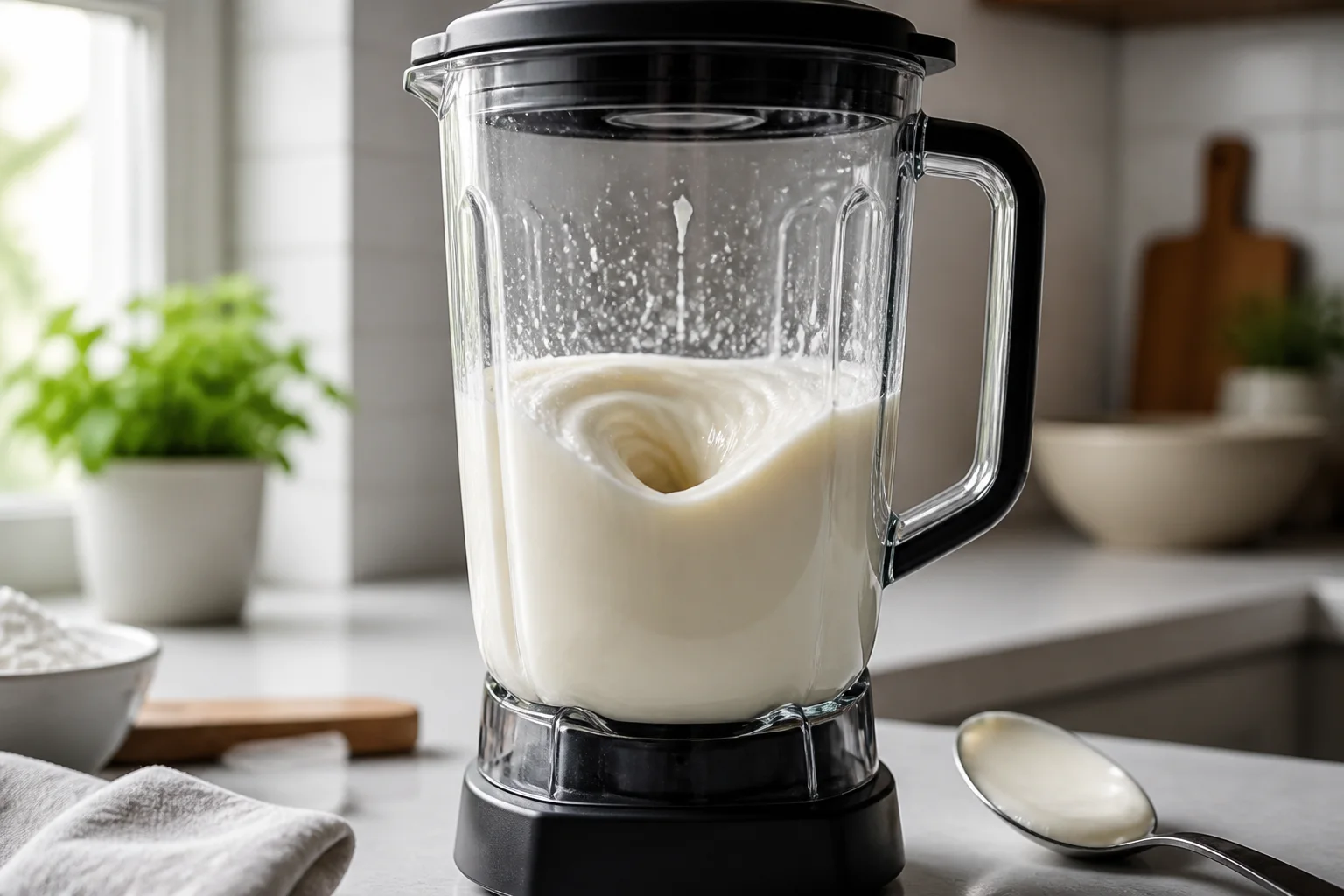
Add cottage cheese, 1/2 cup milk, cornstarch, Dijon, garlic powder, onion powder, salt and pepper to a high-powered blender. Blend for 60 to 90 seconds, stopping safely to scrape once, until glossy and completely curd-free.
Rub a small drop between two clean fingers. It should feel smooth rather than pebbly. A food processor may need 2 to 3 minutes and several scrapes; an immersion blender works best in a tall, narrow vessel.
3. Warm butter gently
Melt the butter in a wide saucepan over medium-low heat. When it foams gently, reduce the burner to low.
Do not brown the butter for this sauce. Browned milk solids add flavor but also create visible flecks and a hotter pan just before the dairy arrives.
4. Thicken without boiling
Pour the blended cottage cheese mixture into the pan. Stir constantly with a silicone spatula, scraping the bottom and corners, for 3 to 5 minutes.
The sauce should become steamy and lightly coat the spatula. Keep it below a simmer; if bubbles break across the surface, pull the pan off the burner and continue stirring.
5. Melt the cheeses off heat
Remove the pan from the burner. Add cheddar in three handfuls, stirring until each addition melts before adding the next. Stir in Parmesan last.
Residual heat should be enough. If a few shreds remain, return the pan to the lowest heat for 10 to 15 seconds while stirring, then remove it again.
6. Adjust the consistency
For pasta, add reserved hot pasta water 1 tablespoon at a time until the sauce flows easily and coats the noodles. For vegetables or dipping, leave it slightly thicker.
The sauce thickens as it cools. Stop when it looks a little looser than the final texture you want.
7. Finish and serve
Taste after all cheese is incorporated. Add more salt only if needed, and stir in lemon juice for brightness if desired. Fold in chives or parsley just before serving.
Serve warm, not bubbling hot. If combining with pasta, toss over low residual heat for only 30 to 60 seconds; do not bring the finished sauce to a boil.
How smooth should the blended base be?
The base should pour in a thick ribbon and look glossy, with no visible curds around the blender walls. Scrape the container halfway through so dry protein above the blades returns to the mixture.
Blender shape matters. A wide jar may struggle with this quantity, while a narrow jar circulates it more efficiently. Add no more than 1 tablespoon extra milk at a time if the blades spin without pulling the mixture down.
Do the texture check before heating. Once cheese is warm, returning the sauce to a blender creates steam pressure and burn risk. Never seal hot sauce in a standard blender jar unless the manufacturer explicitly permits it and provides a venting method.
Temperature control for a silky sauce
Keep the pan over low heat and stir continuously while the cornstarch activates. The goal is steam and slight thickening, not vigorous bubbles.
Then remove the pan before adding shredded cheese. Cheddar melts most smoothly in a moist base that is hot enough to soften it but not boiling. Adding it in stages prevents a cold mound from dropping the temperature unevenly.
If using an instant-read thermometer, keep the dairy base roughly in the 150 to 165°F range while thickening. Exact melting behavior varies by cheese; visible steaming and a coated spoon are the practical cues.
Ways to use cottage cheese sauce
Pasta: This batch coats about 12 ounces dry pasta, depending on shape. Reserve pasta water and toss gradually so ridges and hollows fill without creating a soupy bowl.
Vegetables: Spoon over steamed broccoli, cauliflower, green beans or roasted carrots. Dry or drain vegetables first so surface water does not thin the sauce.
Baked potatoes: Split hot potatoes and add sauce just before serving. Chives, black pepper and steamed broccoli turn it into a fuller meal.
Grain bowls: Use a smaller amount over brown rice, quinoa or farro with roasted vegetables. Loosen the sauce so it drizzles rather than sits in a heavy mound.
Nacho-style bowl: Replace Parmesan with more cheddar, add 1/4 teaspoon smoked paprika and finish with pickled jalapeños. Do not heat acidic pickling liquid in the sauce.
Macaroni: Combine with cooked elbows, then serve from the stovetop. Baking the sauce for a long time can make it firmer and less creamy unless additional liquid is included.
For another way to use cultured dairy in a pasta dinner, Turkish-style pasta with beef and garlic yogurt layers yogurt sauce with seasoned beef and pepper butter.
Troubleshooting
The sauce is grainy
It was not blended long enough, the shredded cheese was too cold or the finished sauce became too hot. Blend the cold base completely, use finely grated room-temperature cheese and melt it off heat.
The sauce separated
A boil or prolonged heating likely tightened the proteins. Remove the pan, whisk in 1 tablespoon warm milk or pasta water and stir gently. The texture may improve, but severely curdled sauce will not become perfectly smooth again.
The sauce is too thick
Whisk in warm milk or reserved pasta water 1 tablespoon at a time. Account for cooling: a sauce that looks perfect in the pan may become too tight after several minutes on the plate.
The sauce is too thin
Return the blended base—before shredded cheese is added—to low heat for another minute while stirring. If cheese is already present, avoid boiling; let the sauce stand 2 minutes, because it thickens as it cools.
The sauce tastes bland
Sharpness and salt vary among cheeses. Add black pepper, a small spoonful of Dijon, finely grated Parmesan or a few drops of lemon juice rather than immediately adding a large amount of salt.
The sauce has visible curds
The blender needed more time or more efficient circulation. A food processor often requires several minutes. Check the cold base between clean fingers before heating next time.
The cheddar clumps
Pre-shredded cheese, large shreds or adding everything at once can cause clumps. Use freshly grated cheese and add it in three stages with the pan off heat.
Substitution guide
For a milder sauce, use half sharp cheddar and half Monterey Jack. For a smoky flavor, replace up to half the cheddar with smoked Gouda; keep Parmesan for savoriness.
Low-fat cottage cheese can work, but the sauce may feel less rich and can tighten more during reheating. Keep the butter and begin with slightly lower heat.
For a gluten-free sauce, use certified gluten-free cornstarch and verify every packaged seasoning and cheese according to your needs. Cornstarch itself contains no gluten, but cross-contact and additives vary.
This sauce is dairy-based and is not suitable for a dairy-free diet without substantial reformulation. Plant-based cottage-cheese and shreddable-cheese products differ too widely for a direct substitution guarantee.
Storage and reheating
Cool leftover sauce promptly and refrigerate in a shallow airtight container. Use within 3 to 4 days. USDA guidance recommends refrigerating leftovers at 40°F or below.
Reheat on the stovetop over the lowest heat, stirring often and adding milk or water by the tablespoon. Stop as soon as the sauce is hot and smooth; do not boil.
For the microwave, use 50% power in 20-second intervals, stirring thoroughly between each. Full power creates hot spots that can split the sauce before the rest is warm.
Freezing is not recommended. Cottage cheese and melted cheddar can release water and become grainy after thawing. If frozen anyway, thaw in the refrigerator and reheat gently with the expectation of a less smooth texture.
Frequently asked questions
Can cottage cheese be used to make cheese sauce?
Yes. Blend it completely smooth with milk and seasonings, warm gently, then melt shredded cheese into it off heat. Boiling is the main texture risk.
Does cottage cheese sauce taste like cottage cheese?
It retains a mild dairy tang, but cheddar, Parmesan, Dijon and seasonings lead the flavor. Complete blending removes the recognizable curd texture.
Can I make the sauce without cheddar?
Yes, but it will taste more like a savory blended cottage cheese cream than a classic cheese sauce. Increase Parmesan modestly and adjust salt after warming.
Can I use this sauce for mac and cheese?
Yes. The batch coats about 12 ounces dry pasta. Reserve pasta water and loosen the sauce before tossing, because the noodles continue absorbing moisture.
Can I make cottage cheese sauce ahead?
Yes. Blend and cook it up to 3 days ahead, cool promptly and refrigerate. Reheat over very low heat with added milk or water.
Why should cheese be grated from a block?
Bagged shreds often contain anti-caking powder that can make melted sauces less cohesive. Fine fresh shreds melt faster and more evenly.
Can I blend the sauce after heating?
Avoid transferring hot sauce to a sealed standard blender. Blend the cold base first; it is safer and gives the smoothness needed before heat is applied.
Recipe development note
This cottage cheese sauce recipe was developed through culinary research and editorial review. It has not been represented as a personal kitchen test. Cottage cheese moisture, blender strength, cheese composition and burner output can affect the result; use the smoothness, steaming and spoon-coating cues throughout the method.
Nutrition is an estimate based on generic whole-milk cottage cheese and full-fat cheeses; pasta and serving foods are not included. The accompanying visuals are AI-assisted food-editorial images, not photographs of a kitchen test.
Recipe at a glance
| Metric | Details |
|---|---|
| Prep time | 15 minutes |
| Cook time | 10 minutes |
| Total time | 25 minutes |
| Yield | 6 servings |
Printable recipe card
Creamy Cottage Cheese Sauce Recipe
Ingredients
Equipment
Method
- Grate cheddar and Parmesan and let them lose their refrigerator chill. If serving with pasta, reserve at least 1 cup hot pasta water.
- Blend cottage cheese, 1/2 cup milk, cornstarch, Dijon, garlic powder, onion powder, salt and pepper for 60 to 90 seconds, scraping once, until glossy and completely curd-free.
- Melt butter in a wide saucepan over medium-low. When it foams gently, reduce the burner to low without browning the butter.
- Add the blended base and stir constantly for 3 to 5 minutes, until steamy and lightly coating the spatula. Keep below a simmer.
- Remove from heat. Add cheddar in three handfuls, stirring each smooth before the next, then stir in Parmesan. Return to the lowest heat for only 10 to 15 seconds if necessary.
- Add hot pasta water or warm milk 1 tablespoon at a time until slightly looser than the desired final consistency.
- Taste, adjust salt and stir in optional lemon juice and herbs. Serve warm and do not boil the finished sauce.
Notes
- Blend the cold base until completely curd-free.
- Use freshly grated cheese and add it off heat in stages.
- Keep the sauce steaming but below a simmer.
- Reheat over very low heat with added liquid and never boil.
- This recipe was developed through culinary research and editorial review.
This recipe was developed through culinary research and editorial review. Cottage cheese moisture, blender strength, cheese composition and burner output vary; use the smoothness, steaming and spoon-coating cues throughout the method.
Nutrition is an estimate based on generic whole-milk cottage cheese and full-fat cheeses; pasta and serving foods are not included.