
This Instant Pot broccoli cheddar soup uses the pressure cooker where it helps and leaves dairy and cheese out of the pressure cycle. Broccoli stems, potato and aromatics soften quickly under pressure, while the florets cook only after the lid comes off. Freshly shredded cheddar is stirred in off heat, a simple detail that helps the soup stay smooth rather than grainy.
The result is a creamy broccoli cheese soup with real pieces of broccoli, enough cheddar flavor and a base that does not depend on a heavy flour roux. Evaporated milk adds body with less risk of separating than ordinary milk, and a small Yukon Gold potato thickens the blended portion naturally.
This recipe was developed through culinary research and editorial review. Pressure-cooker models, broccoli size and cheese moisture vary, so use the visual cues and follow the safety and release directions for your exact appliance.
If you want a dairy-free pressure-cooker soup, the Instant Pot beef barley soup recipe uses an entirely different rich broth base. For another broccoli dinner, see the slow cooker chicken, broccoli and rice recipe.
Why the ingredients cook in stages
Broccoli stems are denser than florets. A brief high-pressure cycle softens peeled stems, carrots and potato enough to blend, but that same cycle can turn small florets olive-colored and overly soft. Holding the florets back keeps recognizable broccoli in the finished bowl.
Cheddar is an emulsion of fat, protein and moisture. Hard boiling can tighten the proteins and release fat, creating a gritty or oily soup. Adding freshly shredded cheese gradually after the heat is turned off is more reliable than pressure-cooking it.
Evaporated milk also goes in after pressure cooking. Besides protecting it from scorching, this keeps the liquid thin enough during the pressure stage to circulate and reduces the chance of a burn warning.
Ingredients
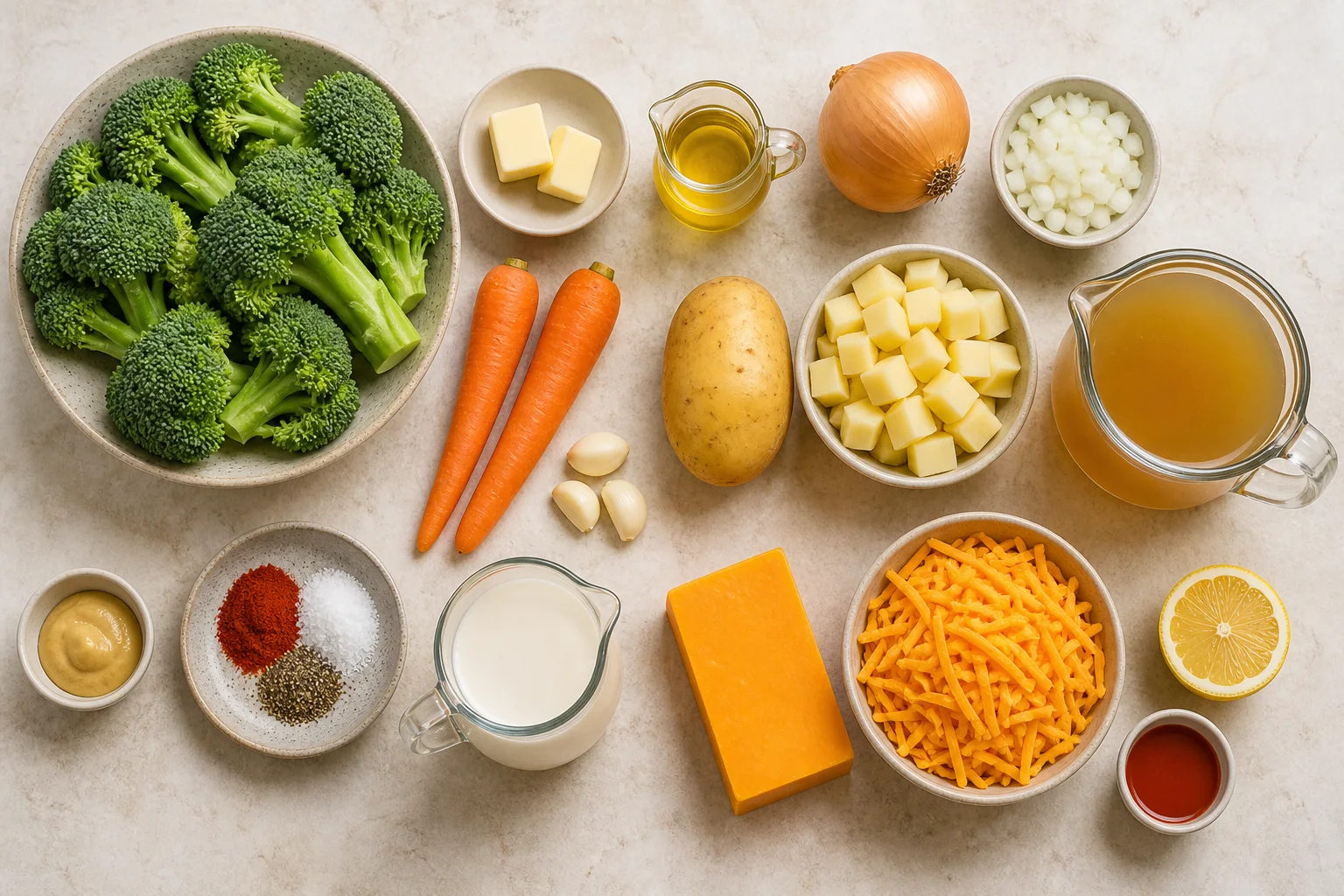
- 1 1/4 pounds broccoli crowns with stems
- 2 tablespoons unsalted butter
- 1 tablespoon olive oil
- 1 medium yellow onion, diced
- 2 medium carrots, cut into thin quarter-moons
- 3 garlic cloves, minced
- 1 medium Yukon Gold potato, peeled and cut into 1/2-inch cubes
- 3 cups low-sodium vegetable or chicken broth, divided
- 1 teaspoon Dijon mustard
- 1/2 teaspoon smoked paprika
- 3/4 teaspoon kosher salt, plus more to taste
- 1/4 teaspoon black pepper
- 1 can (12 ounces) evaporated milk, preferably room temperature
- 8 ounces sharp cheddar cheese, freshly shredded
- 1 teaspoon fresh lemon juice
- Hot sauce, optional, for serving
Ingredient notes and substitutions
Broccoli: Buy crowns with usable stems rather than florets alone. Peel the fibrous outer layer from thick stems, then dice the tender centers. Cut florets to a consistent 3/4-inch size so they finish together after pressure cooking. Frozen broccoli is addressed in the FAQ because it needs different handling.
Yukon Gold potato: One medium waxy potato gives the pureed base body without making it taste like potato soup. Russet works but can become slightly starchier. Cut either type into 1/2-inch cubes.
Evaporated milk: This is unsweetened concentrated milk, not sweetened condensed milk. Its concentration makes the soup creamy without adding heavy cream. Half-and-half can be substituted after pressure cooking, but it should not boil.
Cheddar: Use a block and shred it shortly before cooking. Pre-shredded cheese often contains anti-caking powders that can make the soup less smooth. Sharp cheddar provides more flavor per ounce; mild cheddar also melts well.
Broth: Vegetable broth keeps the soup meatless; chicken broth adds a savory background. Choose low-sodium broth because cheddar contributes substantial salt.
Dijon and lemon: Neither should dominate. They sharpen the cheese flavor and balance the richness. Yellow mustard is stronger in color and less nuanced but can work in a smaller amount.
How to make Instant Pot broccoli cheddar soup
1. Separate the stems and florets
Cut the florets into roughly 3/4-inch pieces and set them aside. Peel any tough outer layer from the stems and dice the tender centers into 1/2-inch pieces. Keeping the two portions separate is the main texture safeguard.
Shred the cheddar from a block and let the evaporated milk lose its refrigerator chill while the base cooks. Cold dairy can lower the soup temperature abruptly and slow melting.
2. Sauté the aromatics
Set a 6-quart electric pressure cooker to Sauté. Melt the butter with the oil, then add onion and carrots. Cook for 4 minutes, stirring, until the onion begins to soften. Add garlic and cook for 30 seconds.
The oil raises the butter’s tolerance during sautéing, but the mixture should not brown deeply. Cancel Sauté if the garlic starts coloring.
3. Deglaze and load the base
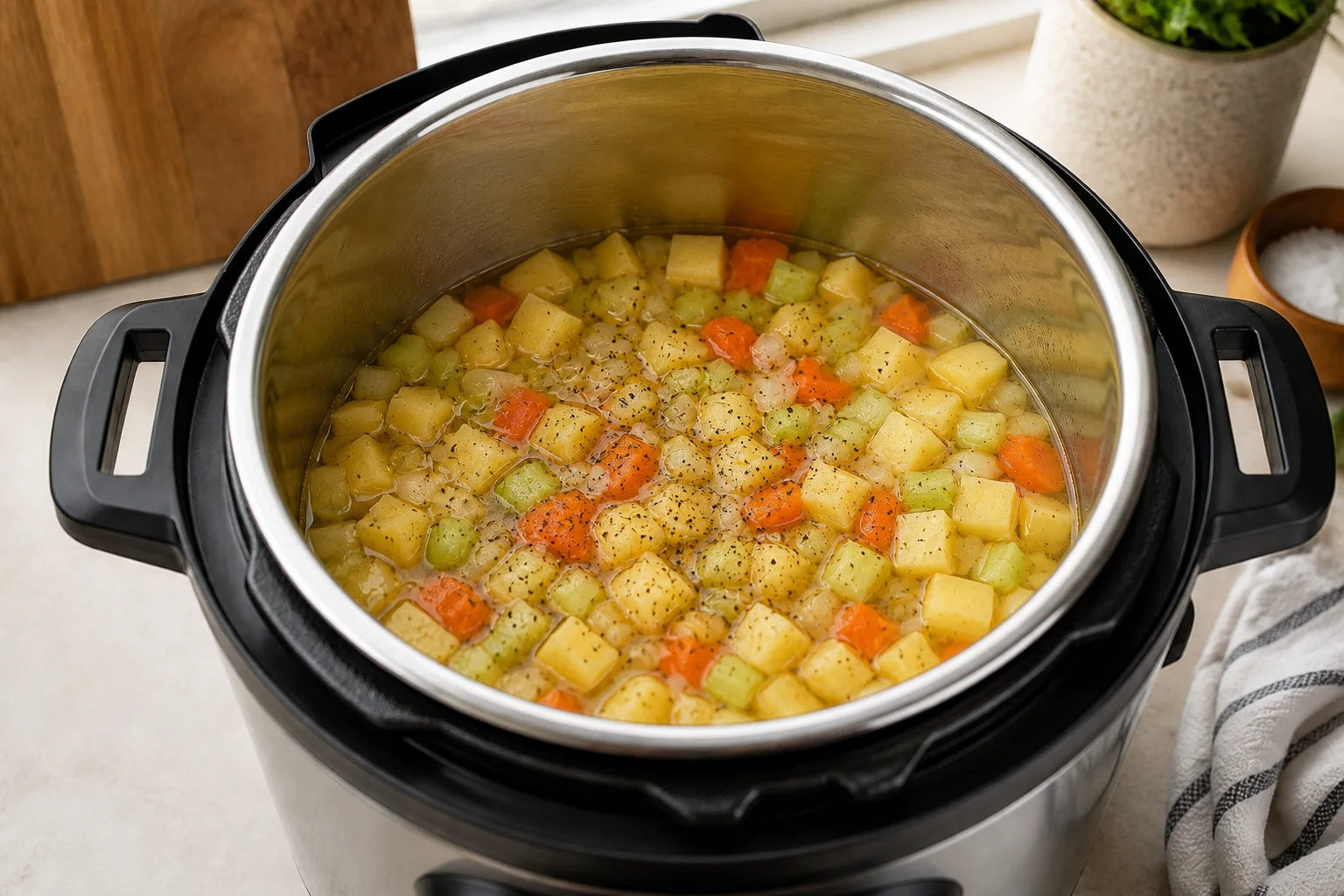
Pour in 1/2 cup broth and scrape the bottom thoroughly with a flat wooden spoon. No browned or stuck areas should remain. Add the remaining broth, diced broccoli stems, potato, Dijon, smoked paprika, salt and pepper.
Do not add the florets, evaporated milk or cheddar yet. Confirm that the volume is below the fill limit printed in the exact model manual.
4. Pressure-cook briefly
Secure the lid using the sealing setup specified for the appliance. Cook on High Pressure for 1 minute. The cooker will take additional time to build pressure; the display countdown is not the complete elapsed time.
5. Release pressure safely
Allow a 5-minute natural release. Then release remaining pressure only as the exact model manual directs. Keep hands and face away from the vent, and stop the release if liquid sputters. Never force the lid; open it only after the appliance confirms depressurization.
Instant Pot maintains current model-specific directions on its official product manuals page. Those instructions override generic recipe wording.
6. Blend part of the base
Use an immersion blender to pulse the soup three or four times, leaving plenty of carrot and broccoli-stem texture. Alternatively, transfer about 2 cups to a countertop blender, vent and cover it according to the blender manufacturer’s hot-liquid instructions, then return the puree to the pot.
Do not completely puree the soup unless you prefer a uniformly smooth base. The potato should disappear into the liquid and provide light thickening.
7. Cook the florets after pressure
Turn on Sauté at the lowest available setting. Stir in the reserved broccoli florets and cook uncovered for 3 to 5 minutes, stirring often, until bright green and just tender. Exact time depends on floret size.
Cancel Sauté before adding dairy. If the soup is actively bubbling, wait 1 to 2 minutes for it to settle.
8. Add milk and cheddar off heat
Stir in the evaporated milk. Add the shredded cheddar one loose handful at a time, stirring until each addition melts before adding the next. Do not switch Sauté back on and do not let the soup boil.
Finish with lemon juice. Taste before adding more salt, then serve with optional hot sauce. If the soup is thicker than desired, loosen it with warm broth a few tablespoons at a time.
The best way to prevent grainy cheese soup
Temperature is the main control. An actively boiling base can make cheddar proteins contract and release fat. Turn off the heat, wait for visible bubbling to stop and add cheese gradually.
Fresh grating matters too. Bagged shredded cheese is convenient, but cellulose or starch coatings can interfere with a glossy melt. Finely shredded cheese also melts faster than large strands, reducing the time it spends in hot liquid.
Finally, avoid very aged, dry cheddar as the only cheese. It delivers strong flavor but may melt less smoothly. A standard sharp cheddar block offers a useful balance. If using extra-sharp cheddar, combining it with a good-melting medium cheddar can improve texture.
How thick should broccoli cheddar soup be?
The soup should coat a spoon but still pour easily. It thickens several minutes after the cheese melts and again during refrigeration. Judge the final consistency only after all cheddar is incorporated.
For a thicker bowl, blend another cup of the vegetable base before adding dairy. For a thinner soup, add warm broth. Avoid adding raw flour directly to the finished pot; it clumps and needs simmering, which conflicts with gentle cheese handling.
Troubleshooting
The cheese turned grainy or oily
The soup was probably too hot, the cheese was added too quickly or the cheese contained anti-caking coating. Remove the pot from the cooker base so residual heat does not continue cooking it. Whisk gently—not aggressively—with a splash of warm evaporated milk. The texture may improve, although a fully broken cheese emulsion may not become perfectly smooth again.
The soup triggered a burn warning
A spot on the inner pot may not have been fully deglazed, or the potato pieces may have settled into residue. Turn the cooker off and follow its manual before opening. Once safe, inspect and clean the bottom; do not simply restart against scorched material.
The broccoli is mushy
Florets were too small or simmered too long after opening. Use consistent 3/4-inch florets and stop cooking while they retain a little bite. Residual heat continues softening them.
The broccoli is still firm
Return to the lowest Sauté setting for 1 to 2 minutes, stirring frequently, then cancel before the soup reaches a full boil. Covering the open pot briefly can also help the florets steam in the hot base.
The soup is too thin
Let it stand 5 minutes. If it remains thin, blend another portion of vegetables. A cornstarch slurry can work before dairy is added, but the potato usually makes it unnecessary.
The soup tastes flat
Add salt only after considering the cheddar and broth. A few drops of lemon juice or hot sauce often restore balance more effectively than extra cheese.
The soup is too salty
Add unsalted broth and a little evaporated milk. More potato will not remove salt; it only increases volume after additional cooking.
Storage and reheating
Transfer leftovers to shallow containers and refrigerate within 2 hours. USDA leftover safety guidance recommends using most cooked leftovers within 3 to 4 days.
Reheat gently in a saucepan over low heat, stirring often, or microwave at reduced power in short intervals. Add a splash of broth or milk because the potato and cheese thicken during refrigeration. Do not bring the reheated soup to a rolling boil.
Can broccoli cheddar soup be frozen?
Dairy-and-cheese soups can separate and broccoli softens after freezing, so refrigeration gives better texture. If freezing is necessary, cool promptly and freeze individual portions for up to 2 months for best quality. Thaw overnight in the refrigerator, reheat slowly and stir in a small amount of fresh evaporated milk if needed.
For planned freezer cooking, the better approach is to freeze the pressure-cooked vegetable base before adding florets, milk and cheddar. Thaw and heat the base, cook fresh florets, then finish with dairy and cheese.
Frequently asked questions
Can I use frozen broccoli?
Yes, but do not pressure-cook it. Add frozen florets after releasing pressure and simmer just until hot and tender, usually a little longer than fresh florets. Expect a softer texture and slightly more water in the soup.
Can I use heavy cream?
Yes. Replace the evaporated milk with 1 1/2 cups heavy cream or half-and-half and add it off heat. The soup will be richer. Never use sweetened condensed milk.
Can I make it gluten-free?
The recipe contains no flour. Check the labels on broth, Dijon and hot sauce for your dietary needs, and avoid cross-contact in the kitchen.
Can I make it vegetarian?
Use vegetable broth and a cheddar made with microbial or vegetarian rennet if that distinction matters to you.
Can I double the recipe?
Do not double it in a 6-quart cooker without verifying both the volume and the model’s soup and foaming-food limits. Broccoli takes substantial space before cooking. Separate batches give more predictable results.
Why is the pressure time only 1 minute?
Pressure build and release contribute additional cooking. The small potato and broccoli-stem pieces soften during that entire period. The florets intentionally cook later.
Can I use pre-shredded cheddar?
It will melt, but the soup may be less smooth because of anti-caking coatings. Block cheese grated just before use is the more reliable choice.
Recipe development note
This recipe was developed through culinary research and editorial review. It has not been represented as a personal kitchen test. Broccoli maturity, floret size, cheese formulation, altitude and pressure-cooker model can change the timing and texture; follow the appliance manual and use the visual cues in the method.
Nutrition is an estimate based on generic ingredients. The accompanying visuals are AI-assisted food-editorial images, not photographs of a kitchen test.
Recipe at a glance
| Metric | Details |
|---|---|
| Prep time | 25 minutes |
| Cook time | 15 minutes |
| Total time | 55 minutes |
| Yield | 6 servings |
Printable recipe card
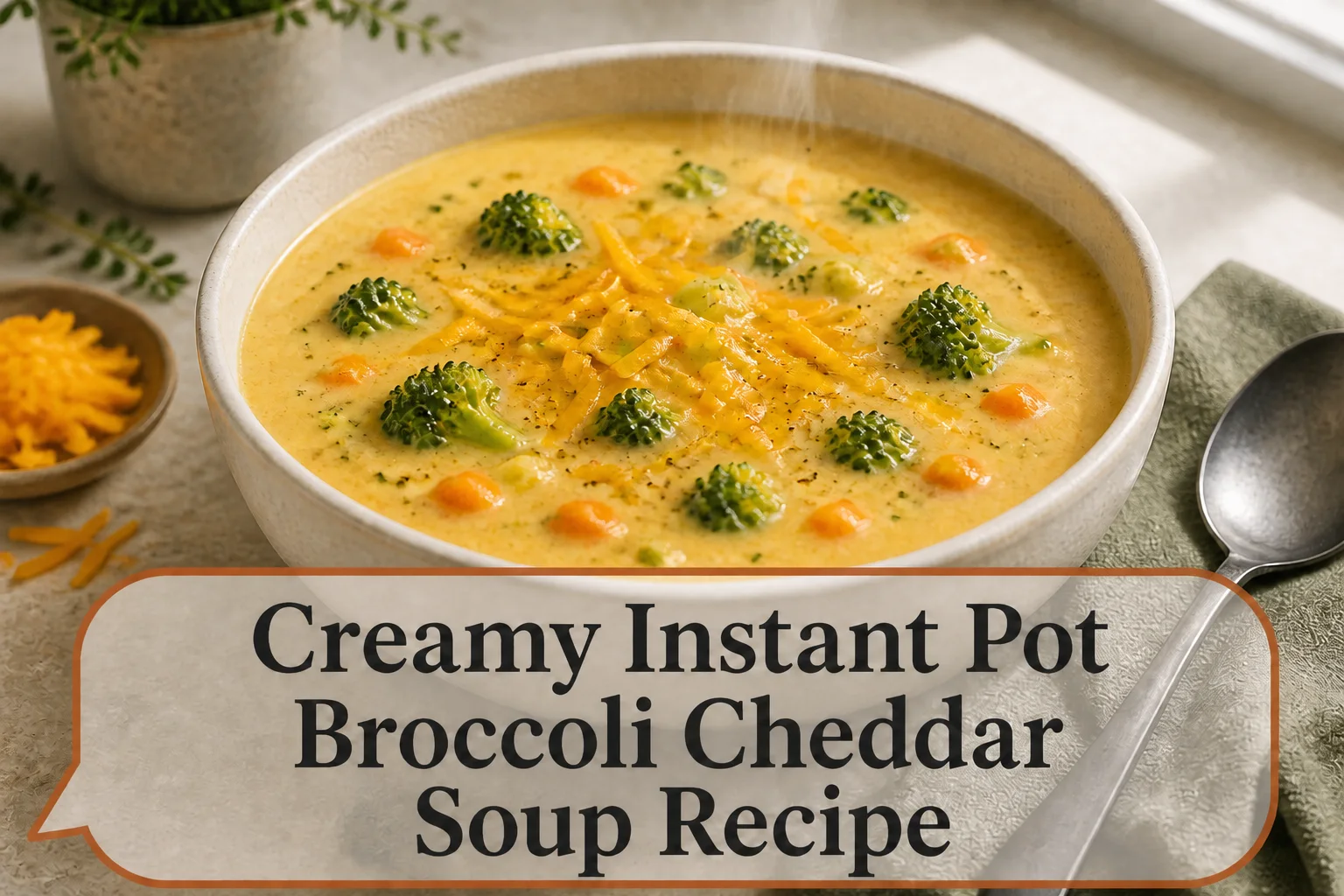
Creamy Instant Pot Broccoli Cheddar Soup Recipe
Ingredients
Equipment
Method
- Peel and dice the tender broccoli stems. Cut florets to about 3/4 inch and reserve them separately. Shred cheddar from a block.
- Using Sauté, melt butter with oil. Cook onion and carrots 4 minutes; add garlic for 30 seconds.
- Add 1/2 cup broth and scrape until the bottom is completely clear. Add remaining broth, broccoli stems, potato, Dijon, paprika, salt and pepper. Keep florets, milk and cheddar out.
- Lock the lid using the exact model's sealing setup and cook on High Pressure for 1 minute.
- Allow a 5-minute natural release, then release remaining pressure only as the model manual directs. Open only after depressurization is confirmed.
- Pulse the base three or four times with an immersion blender, leaving some vegetable texture.
- On the lowest Sauté setting, stir in reserved broccoli florets and cook uncovered 3 to 5 minutes until just tender. Cancel Sauté.
- When bubbling stops, stir in evaporated milk. Add cheddar one handful at a time, stirring until smooth. Add lemon juice, adjust seasoning and serve.
Notes
- Do not pressure-cook the florets, evaporated milk or cheddar.
- Shred cheddar from a block and add it gradually off heat.
- Deglaze fully before pressure cooking.
- Follow the release and fill-limit directions for the exact cooker model.
- This recipe was developed through culinary research and editorial review.
This recipe was developed through culinary research and editorial review. Broccoli maturity, floret size, cheese formulation, altitude and pressure-cooker model vary; follow the exact appliance manual and use visual cues.
Nutrition is an estimate based on generic ingredients; actual values vary by broth, dairy, cheese and serving size.