
Canned pumpkin makes a smooth soup quickly, but it needs aromatics, enough broth, and a contrasting finish to avoid tasting flat or overly dense. Onion, ginger and sage build the savory base here, while coconut milk rounds the texture and lemon added at the end keeps the pumpkin bright.
Ingredient moisture, piece size, cookware and starting temperature can shift the finish. The method therefore pairs a practical time range with visible or temperature-based doneness cues.
This recipe was developed through culinary research and editorial review. It is not represented as a personal kitchen test.
For a related idea, see butternut squash soup recipe. You may also want pumpkin cookies recipe.
Why this recipe works
Aromatics cook before the pumpkin: Softened onion and briefly bloomed spices create a savory base instead of leaving raw, sharp flavors.
Broth is whisked in gradually: Adding liquid in stages helps dense pumpkin dissolve smoothly without stubborn lumps.
Acid comes last: Lemon added after simmering sharpens the flavor without muting during a long cook.
The first batch is the useful reference point. Measure as written, note the finish in your equipment, and change only one variable at a time if an adjustment is needed.
Ingredients
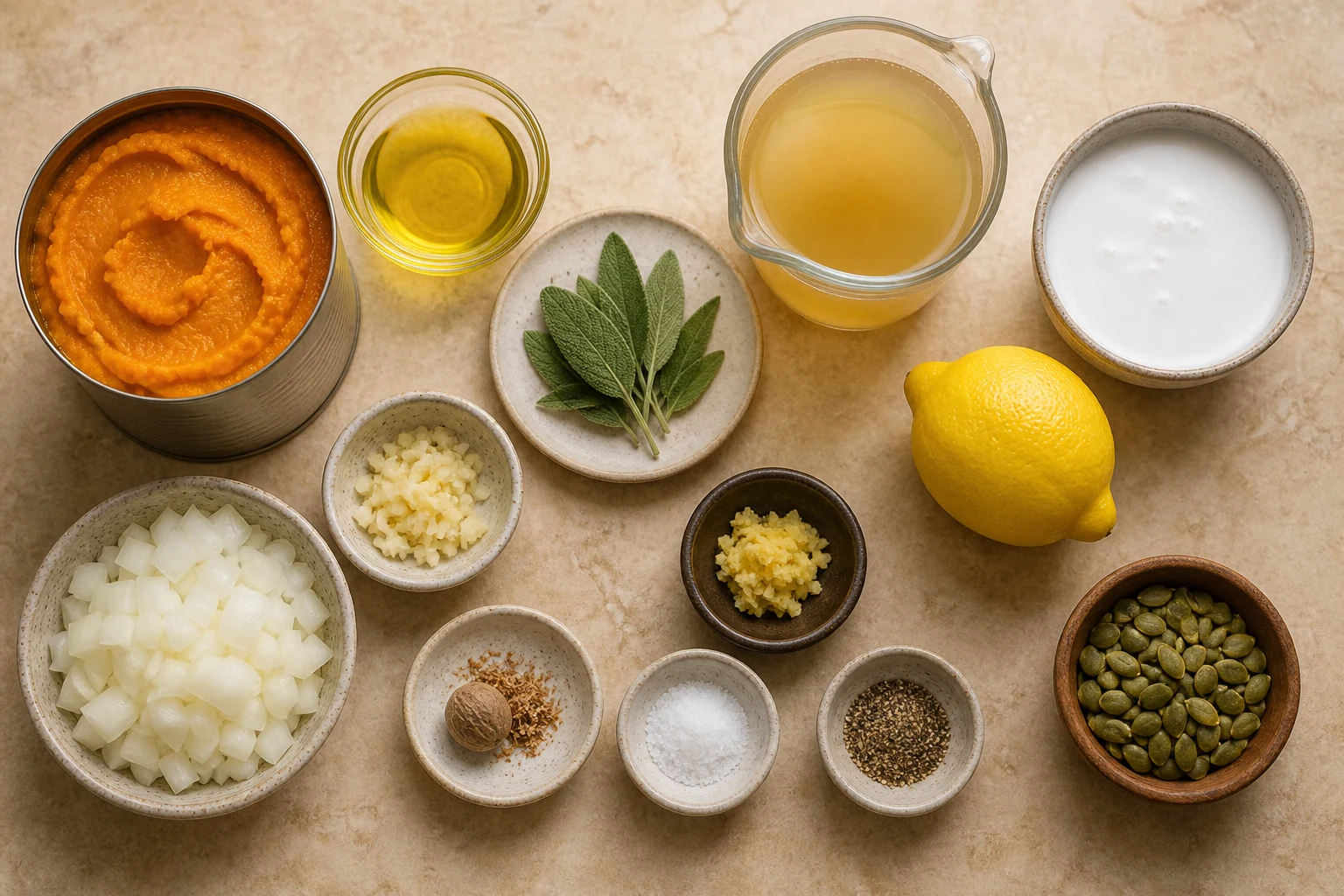
- 1 tablespoon olive oil
- 1 medium yellow onion, diced
- 3 cloves garlic, chopped
- 1 tablespoon fresh ginger, grated
- 1 teaspoon dried rubbed sage
- 1/4 teaspoon ground nutmeg
- 2 15-ounce cans pumpkin purée, not pie filling
- 4 cups low-sodium vegetable broth, plus more as needed
- 1 cup full-fat coconut milk, well stirred
- 1 teaspoon kosher salt, plus more to taste
- 1/4 teaspoon black pepper
- 1 tablespoon lemon juice
- 2 tablespoons toasted pumpkin seeds, for serving
Ingredient notes
Pumpkin purée
Use 100% pumpkin, not sweetened pie filling. The purée should be deep orange and spoonable rather than watery.
Coconut milk
Full-fat canned coconut milk makes the soup silky. Stir the can thoroughly so the solids and liquid are evenly combined.
Broth
Low-sodium broth allows final seasoning after the soup reduces. Keep extra available because pumpkin thickness varies by brand.
How to make pumpkin soup
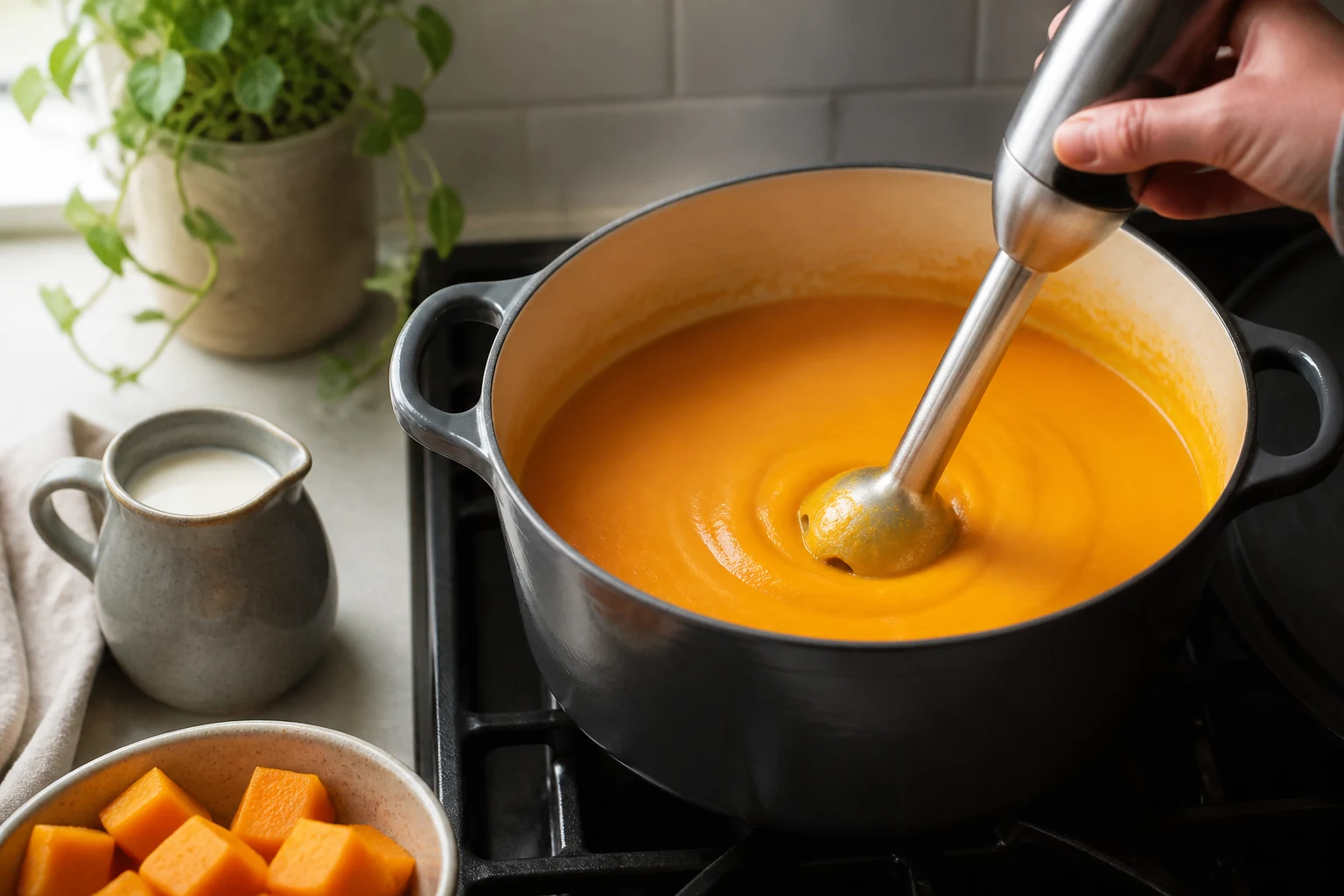
1. Soften the onion
Heat olive oil in a heavy pot over medium. Add onion and cook for 6 to 8 minutes until soft and lightly golden.
2. Bloom the aromatics
Add garlic, ginger, sage and nutmeg; stir for 45 seconds until fragrant without browning the garlic.
3. Add pumpkin and broth
Stir in pumpkin until it coats the aromatics, then gradually whisk in broth, salt and pepper until smooth.
4. Simmer
Bring to a gentle simmer and cook partially covered for 15 minutes, stirring the bottom occasionally.
5. Blend and enrich
Blend until completely smooth, then stir in coconut milk over low heat. Do not boil hard after adding it.
6. Balance and serve
Add lemon juice, taste for salt, and thin with broth if needed. Serve with pumpkin seeds after a 5-minute cooling rest.
Quick timing and doneness guide
| Stage | What to look for | What to do |
|---|---|---|
| Preparation | Softened onion and briefly bloomed spices create a savory base instead of leaving raw, sharp flavors. | Complete the size, moisture or equipment setup before cooking |
| First check | Bring to a gentle simmer and cook partially covered for 15 minutes, stirring the bottom occasionally. | Check at the early end of the range and keep unfinished portions cooking |
| Finished | Add lemon juice, taste for salt, and thin with broth if needed. Serve with pumpkin seeds after a 5-minute cooling rest. | Stop when the stated texture or safe temperature is reached |
| If adjustment is needed | Lower the heat and blend briefly; keep reheating gentle. | Make the smallest useful change, then check again |
This table is a decision guide, not a replacement for ingredient labels, the appliance manual or safe-temperature guidance. When food safety depends on internal temperature, check more than one thick piece with a reliable thermometer.
Substitutions and variations
Dairy version
Replace coconut milk with 3/4 cup half-and-half, adding it over low heat after blending.
Fresh squash
Use about 4 cups roasted pumpkin or butternut squash flesh and add extra broth as needed while blending.
Spicy finish
Add a pinch of cayenne with the nutmeg or drizzle individual bowls with chili crisp.
Change one major component at a time. Moisture, sweetness, structure and cooking time affect one another, so several simultaneous substitutions are harder to predict.
Serving ideas
Pair with crusty bread, a grilled cheese sandwich or a crisp apple salad. A spoonful of plain yogurt, toasted pepitas or chopped sage gives each bowl contrast without making the whole pot heavy.
Troubleshooting
The soup is too thick
Likely cause: The pumpkin brand is dense or the soup reduced uncovered.
Fix: Whisk in warm broth 1/4 cup at a time until it pours easily from a ladle.
The soup tastes flat
Likely cause: It needs salt or acidity rather than more spice.
Fix: Add salt and lemon juice in small alternating amounts, tasting after each addition.
The texture is grainy
Likely cause: The aromatics were not softened or the soup was not blended long enough.
Fix: Blend carefully until smooth and pass through a fine sieve if an especially refined texture is desired.
The coconut milk separates
Likely cause: The enriched soup boiled hard.
Fix: Lower the heat and blend briefly; keep reheating gentle.
Storage, freezing and reheating
Refrigerator: Cool in shallow containers within 2 hours and refrigerate for 3 to 4 days.
Freezer: Freeze for up to 3 months, leaving expansion space; thaw overnight in the refrigerator.
Reheating or serving after storage: Warm gently on the stove, stirring often, until steaming throughout. Add broth if the chilled soup has thickened.
For general handling, the FoodSafety.gov Four Steps to Food Safety is the authoritative outside reference used for this article. FoodSafety.gov recommends prompt chilling of cooked leftovers and thorough reheating; use clean shallow containers for faster cooling.
Frequently asked questions
Can I make pumpkin soup with canned pumpkin?
Yes. Plain canned pumpkin produces a smooth, fast soup and avoids the work of roasting and puréeing a whole pumpkin.
How do I make pumpkin soup less sweet?
Use savory broth, onion, ginger and sage, then balance the finished soup with salt and lemon rather than adding sugar.
Can pumpkin soup be frozen?
Yes. Cool it promptly, freeze in practical portions, and reheat gently after thawing.
Recipe development note
The method for pumpkin soup recipe was developed through culinary research and editorial review. The quantities and time ranges are an editorial recipe specification, not a claim that every ingredient brand, appliance or batch was personally tested in one kitchen.
Nutrition is an estimate per servings and varies with brands, optional ingredients and portion size. The accompanying visuals are AI-assisted food-editorial images, not photographs of a kitchen test.
Printable recipe card
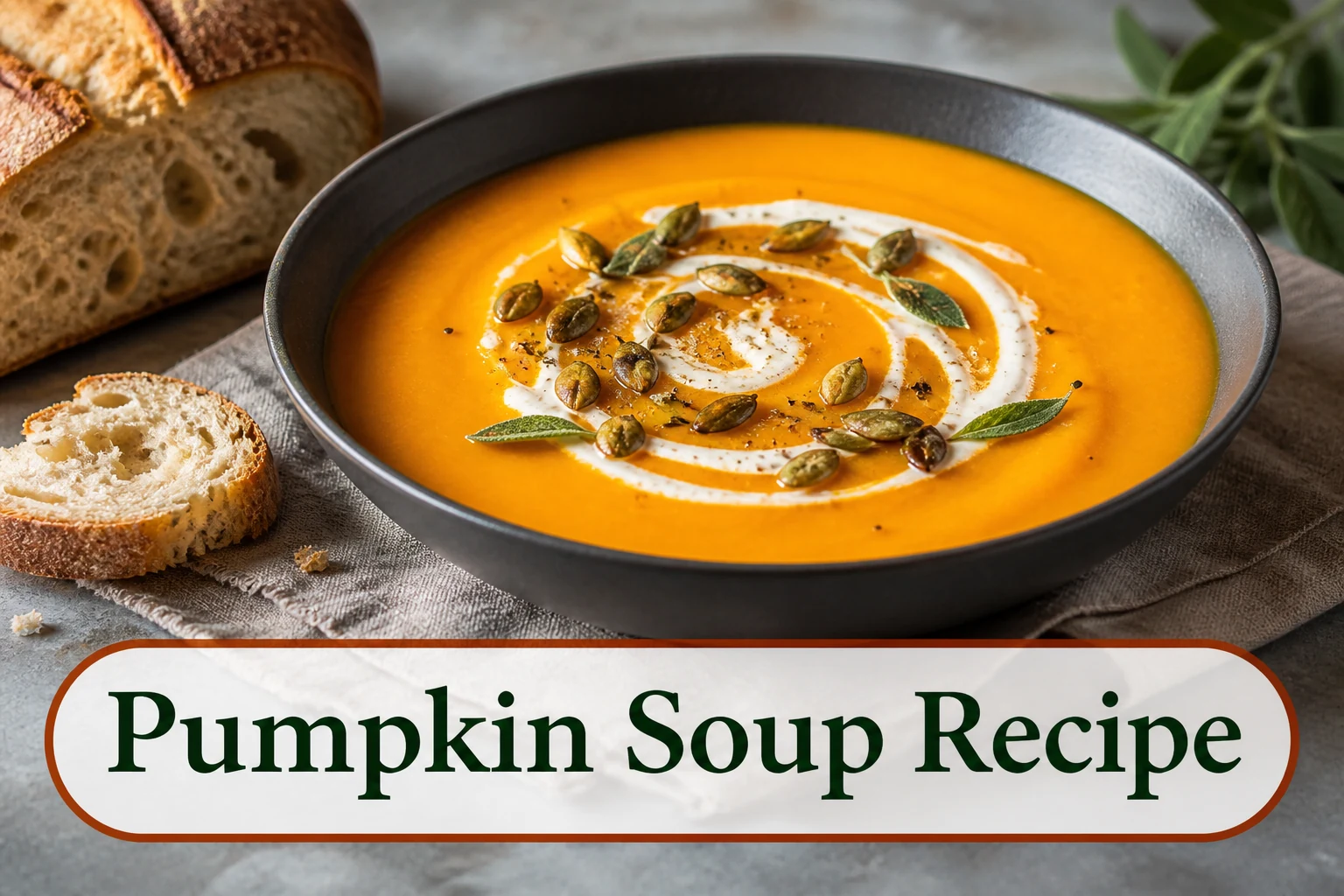
Pumpkin Soup Recipe
Ingredients
Equipment
Method
- Heat olive oil in a heavy pot over medium. Add onion and cook for 6 to 8 minutes until soft and lightly golden.
- Add garlic, ginger, sage and nutmeg; stir for 45 seconds until fragrant without browning the garlic.
- Stir in pumpkin until it coats the aromatics, then gradually whisk in broth, salt and pepper until smooth.
- Bring to a gentle simmer and cook partially covered for 15 minutes, stirring the bottom occasionally.
- Blend until completely smooth, then stir in coconut milk over low heat. Do not boil hard after adding it.
- Add lemon juice, taste for salt, and thin with broth if needed. Serve with pumpkin seeds after a 5-minute cooling rest.
Notes
- Read ingredient labels and the manual for any appliance used.
- Begin checking at the early end of the range.
- FoodSafety.gov recommends prompt chilling of cooked leftovers and thorough reheating; use clean shallow containers for faster cooling.
- This recipe was developed through culinary research and editorial review.
This recipe was developed through culinary research and editorial review. Equipment, ingredient brands, starting temperature and batch size can change timing; follow the method cues and applicable safety guidance.
Nutrition is an estimate per servings and varies with brands, optional ingredients and portion size.