
Air fried orange chicken stays crisp when the chicken and sauce are cooked separately and combined only at serving time. The chicken gets a thin cornstarch-panko coating and a light oil mist before air frying. Meanwhile, fresh orange juice, zest, soy sauce, vinegar, ginger and garlic reduce into a glossy sauce on the stovetop.
The sauce is deliberately thick enough to cling in a light layer. Pouring a watery sauce over the whole batch would soften the coating almost immediately. Toss only the amount that will be eaten, and keep extra sauce on the side.
This recipe was developed through culinary research and editorial review. Chicken-piece size, basket space and appliance power change the timing, so use the stated range as a checkpoint and verify 165°F in several of the largest pieces.
For a simpler breaded chicken dinner, try the air fryer chicken nuggets recipe. The air fryer chicken parm recipe also keeps wet sauce away from the crust until the end.
Why this orange chicken stays crisp
- Small, even chicken pieces cook together. One-inch chunks brown before the centers dry out.
- Cornstarch dries the surface. A thin first layer absorbs moisture and helps the egg adhere.
- Fine panko provides airflow. Crushed crumbs cover the small pieces without forming oversized sharp flakes.
- Oil is misted, not poured. A light coating promotes browning without turning the breading heavy.
- The sauce reduces separately. It thickens before touching the crisp chicken.
- Only the serving portion is tossed. Untouched leftovers remain easier to reheat.
Ingredients
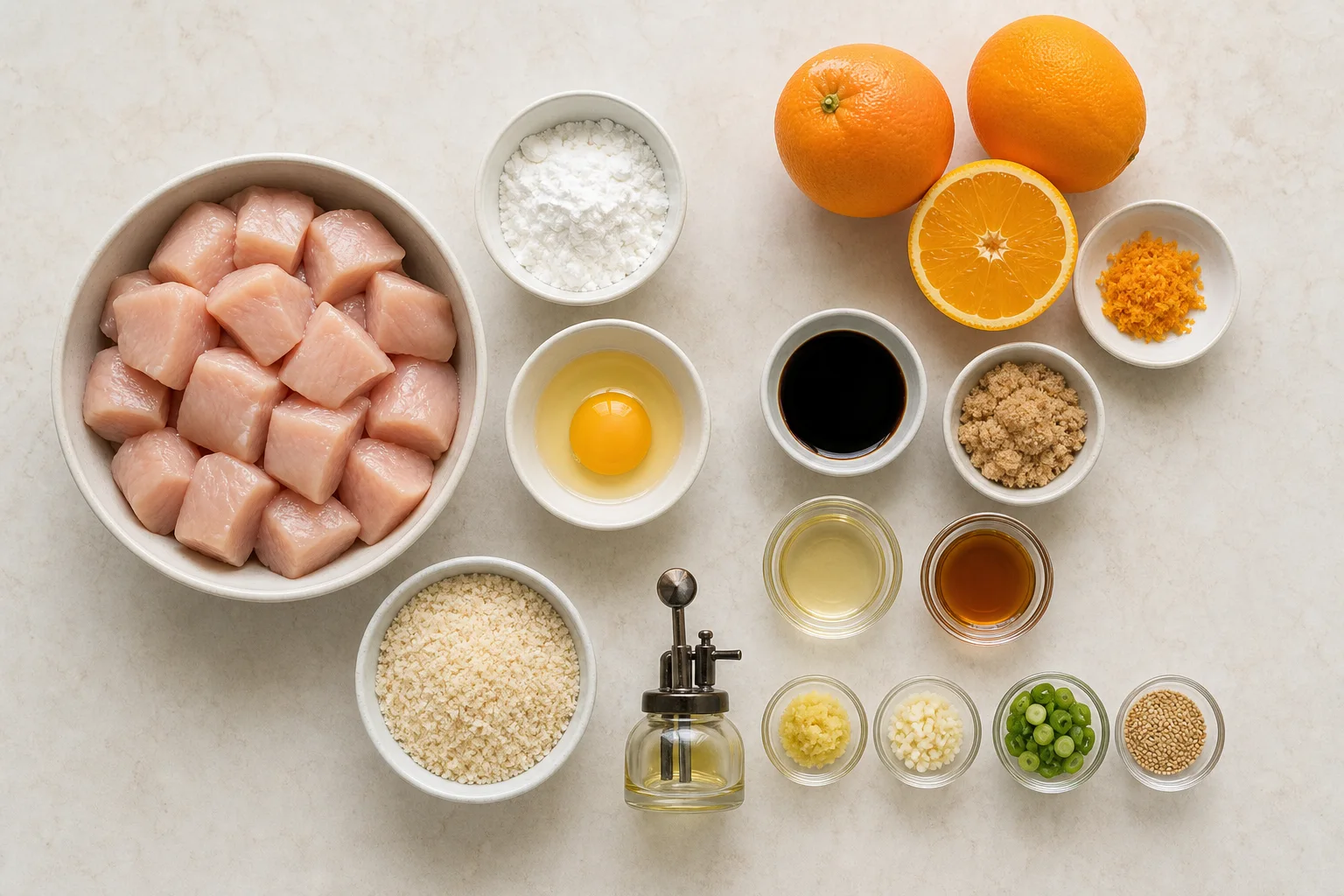
For the chicken
- 1 1/4 pounds boneless, skinless chicken breast or thighs
- 1/2 teaspoon Diamond Crystal kosher salt, or 1/4 teaspoon fine salt
- 1/4 teaspoon ground black pepper
- 1/3 cup cornstarch, divided
- 1 large egg
- 1 tablespoon water
- 3/4 cup panko breadcrumbs, lightly crushed
- Avocado-oil spray or another high-heat cooking spray
For the orange sauce
- 1/2 cup fresh orange juice
- 1 teaspoon finely grated orange zest
- 3 tablespoons reduced-sodium soy sauce
- 2 tablespoons packed light brown sugar or honey
- 1 tablespoon rice vinegar
- 1 teaspoon toasted sesame oil, optional
- 1 teaspoon finely grated fresh ginger
- 2 garlic cloves, finely grated or minced
- 1 tablespoon cornstarch
- 2 tablespoons cold water
- Sliced scallions and sesame seeds, optional for serving
Ingredient notes and substitutions
Chicken breast or thighs: Breast meat is lean and cooks quickly. Thigh meat stays a little juicier and tolerates an extra minute. Do not mix very different sizes or cuts in one batch unless you are prepared to remove pieces separately.
Cornstarch: Most goes on the chicken; one tablespoon thickens the sauce. Potato starch can replace the coating starch, but use cornstarch in the sauce for the most predictable texture.
Panko: Crush the crumbs briefly between your fingers so they adhere to one-inch chicken pieces. Gluten-free panko works if its texture is similar. Regular fine breadcrumbs brown more evenly but make a denser crust.
Orange: Fresh juice and zest give a brighter flavor than bottled juice. Zest only the orange outer layer; white pith adds bitterness. A medium orange usually supplies enough juice for this recipe, but have a second available.
Soy sauce: Reduced-sodium soy sauce controls saltiness as the sauce reduces. Tamari can make the sauce gluten-free when paired with gluten-free crumbs.
Sweetener: Brown sugar produces a familiar glossy sauce. Honey tastes more floral and may thicken slightly faster. Neither should be added to the chicken before air frying because sugar can scorch.
How to make orange chicken in the air fryer
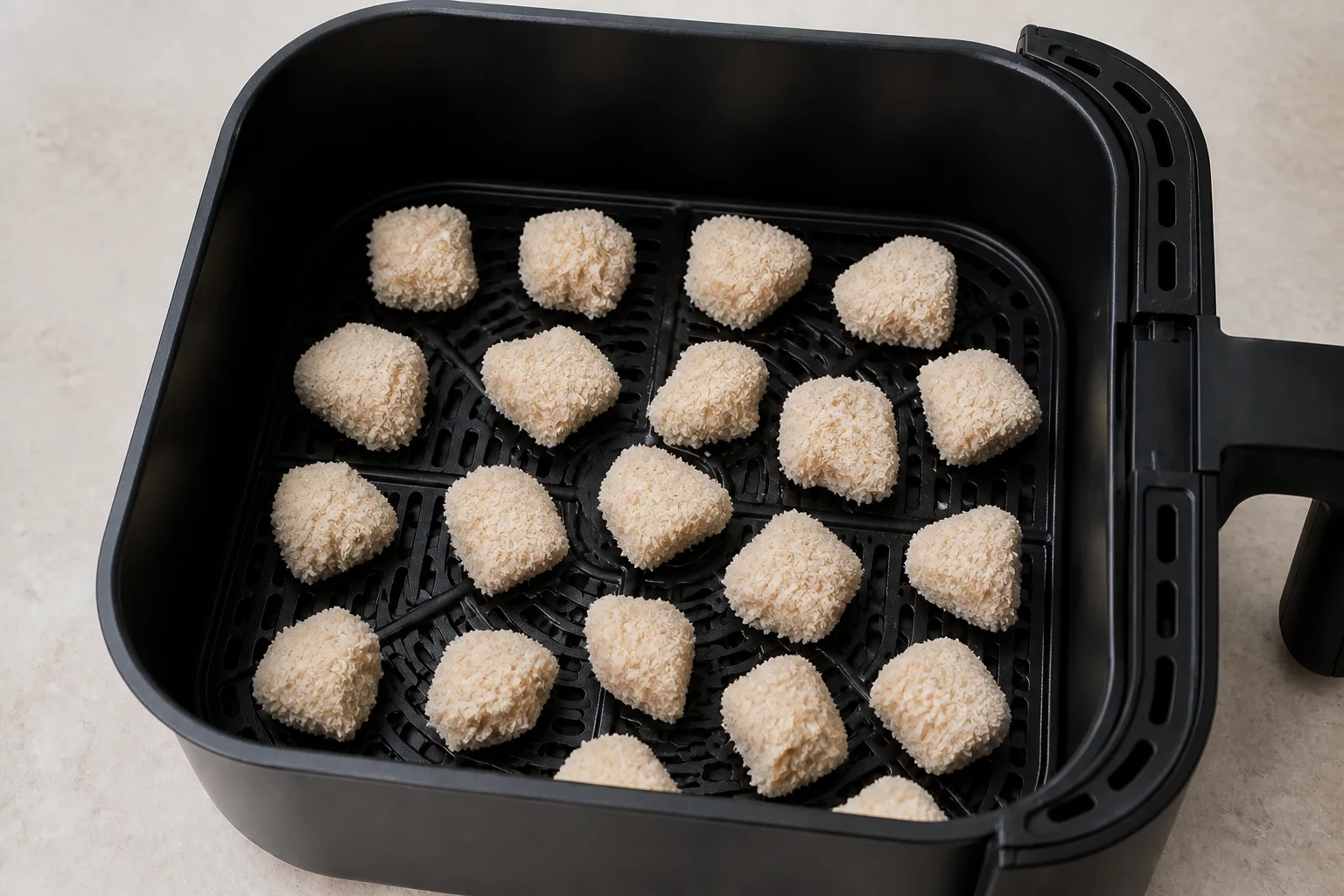
1. Cut and dry the chicken
Cut the chicken into roughly 1-inch pieces. Keep the chunks as uniform as practical and trim away loose pieces that would cook too quickly.
Pat the chicken dry with paper towels, then season with salt and pepper. Wash hands, the cutting board and utensils after handling raw poultry.
2. Prepare the coating stations
Place 1/4 cup cornstarch in a shallow bowl. Whisk the egg with 1 tablespoon water in a second bowl. Put the lightly crushed panko in a third bowl.
Keep one hand for dry ingredients and one for the egg to reduce clumping. Line a clean plate or small sheet pan with parchment for the coated pieces.
3. Bread the chicken lightly
Working with a few pieces at a time, toss the chicken in cornstarch and shake off the excess. Dip in egg, let the extra drip away, then press gently into panko.
The coating should be thin and complete rather than thick and shaggy. Set pieces apart on the lined plate. Do not return cooked chicken to this plate later because it contacted raw poultry.
4. Preheat and arrange
Preheat the air fryer to 390°F for 3 minutes if the manufacturer recommends preheating. Mist the crisper plate lightly with high-heat oil.
Arrange chicken in one layer with space between pieces. Mist the tops until the crumbs look lightly moistened but not saturated. Most baskets need two batches for 1 1/4 pounds.
5. Air fry the chicken
Cook at 390°F for 5 minutes. Turn the pieces, mist any dry white patches and cook for another 4 to 7 minutes.
The chicken is ready when the coating is golden and several of the largest pieces reach at least 165°F. The official FoodSafety.gov temperature chart lists 165°F for all poultry. Insert the thermometer through the side so its sensor reaches the center.
Move cooked chicken to a clean wire rack rather than piling it in a bowl. Air circulating underneath helps protect the crust while the second batch cooks.
6. Cook the orange sauce
While the chicken air fries, combine orange juice, zest, soy sauce, brown sugar, rice vinegar, sesame oil, ginger and garlic in a small saucepan. Bring to a gentle simmer over medium heat and cook for 3 minutes.
Whisk 1 tablespoon cornstarch with 2 tablespoons cold water until completely smooth. Pour the slurry into the simmering sauce while whisking. Cook for 1 to 2 minutes, until glossy and thick enough to coat a spoon.
Remove from the heat. The sauce continues to thicken slightly as it cools. If it becomes too thick, whisk in warm water 1 teaspoon at a time.
7. Toss only what you will serve
Put the portion of chicken being eaten immediately in a clean bowl. Add just enough warm sauce to coat it lightly and toss for a few seconds. Start with about half of the sauce; more can be served at the table.
Finish with scallions and sesame seeds if desired. Serve immediately over rice or with steamed vegetables.
Air fryer orange chicken time
One-inch chicken pieces usually need 9 to 12 minutes at 390°F, turned after 5 minutes. Small pieces can finish sooner, while thigh meat or larger chunks may need 12 to 14 minutes.
The second batch often browns faster because the appliance is fully heated. Begin checking it 1 to 2 minutes early. Remove individual pieces when they reach temperature rather than waiting for the largest one to match the smallest.
How thick should the orange sauce be?
The finished sauce should fall from a spoon in a ribbon and briefly leave a trail across the surface of the saucepan. It should not be paste-like. A thin sauce runs to the bottom of the bowl and leaves the crust wet; an excessively thick sauce clumps instead of coating.
Cornstarch only reaches its full thickening ability after the sauce returns to a simmer. If it looks thin immediately after the slurry is added, keep whisking for a full minute before adding more starch.
Troubleshooting
The breading falls off
Excess surface moisture or a heavy cornstarch layer can prevent the egg from holding. Pat the chicken dry, shake off loose starch and let excess egg drip away before pressing into crumbs. Turn gently after the first side has set.
The coating has pale patches
Dry panko needs a fine oil mist to brown. Spray visible white areas when turning, but avoid pouring oil or using so much spray that the crumbs become soggy.
The chicken is dry
The pieces were too small or cooked past 165°F by a wide margin. Cut one-inch chunks, start checking after 9 minutes and remove finished pieces individually.
The sauce is watery
The sauce may not have returned to a simmer after the slurry was added. Simmer while whisking for another minute. If necessary, mix 1 teaspoon cornstarch with 2 teaspoons cold water and add only part of it.
The sauce is too thick
Whisk in warm water or orange juice 1 teaspoon at a time over low heat. Do not add dry cornstarch directly; it creates lumps.
The chicken loses its crunch
It sat in sauce too long or was piled while hot. Hold cooked pieces on a wire rack and toss only the portion that will be eaten immediately.
Flavor adjustments
For a less-sweet sauce, reduce the brown sugar to 1 tablespoon. The orange flavor will taste sharper and the sauce may be slightly less glossy.
For heat, add 1/4 teaspoon crushed red pepper to the saucepan or finish with chili crisp at the table. Adding a sugary chili sauce early can make the mixture overly sweet.
For extra orange aroma, add another 1/2 teaspoon zest after removing the sauce from heat. Do not add white pith or boil the zest for a long time.
For seasoned chicken without breading or a sweet glaze, air fryer chicken bites uses oil, paprika and garlic on evenly cut pieces.
What to serve with orange chicken
Serve with steamed jasmine rice, brown rice or noodles. Broccoli, green beans, snap peas and bok choy balance the sweet-savory sauce.
If making an air-fried vegetable side, cook it before the chicken and reheat briefly after the last chicken batch. Putting vegetables beneath or on top of the chicken blocks airflow.
Make-ahead strategy
The sauce can be prepared up to 3 days ahead and refrigerated separately. Reheat it gently, adding a splash of water if it has become too thick.
The chicken can be cut several hours ahead and kept covered in the refrigerator, but bread it close to cooking time. A coated surface absorbs moisture during a long wait and becomes less crisp.
Storage and reheating
For the best leftovers, store unsauced chicken and orange sauce in separate airtight containers. Refrigerate within 2 hours and use cooked chicken within 3 to 4 days, consistent with the FoodSafety.gov cold-storage chart.
Reheat unsauced chicken at 375°F for 4 to 7 minutes, turning once, until the center reaches 165°F. Warm the sauce separately on the stovetop or in short microwave intervals, then toss only after both are hot.
Sauced leftovers can still be reheated, but the coating will be softer. Use 350°F for 4 to 6 minutes and place parchment under the food only if the air-fryer manufacturer permits it and the chicken fully weighs it down.
Frequently asked questions
Can I use frozen chicken pieces?
No. This breading method requires thawed, dry chicken so the starch, egg and crumbs adhere evenly. Thaw chicken in the refrigerator before cutting and coating.
Can I make orange chicken without panko?
Yes. Use fine dry breadcrumbs for a denser coating, or omit crumbs and toss the chicken with a thin cornstarch layer plus oil for a lighter crust.
Do I need to flip the chicken?
Yes. Turn after 5 minutes so both sides receive direct hot airflow and so dry coating patches can be misted.
Can the sauce go in the air fryer?
No. Cook the sauce in a saucepan and add it after the chicken leaves the appliance. Loose sauce can drip, smoke and soften the coating.
How do I keep orange chicken crisp for a party?
Hold unsauced chicken on a wire rack in a 200°F oven for a short time. Rewarm the sauce separately and toss small servings as guests are ready to eat.
Is this the same as frozen orange chicken?
No. This is a from-scratch recipe using raw chicken. A packaged frozen orange chicken kit should be cooked according to its label, with the enclosed sauce handled separately.
Recipe at a glance
| Metric | Details |
|---|---|
| Prep time | 25 minutes |
| Cook time | 22 minutes |
| Total time | 47 minutes |
| Yield | 4 servings |
Printable recipe card
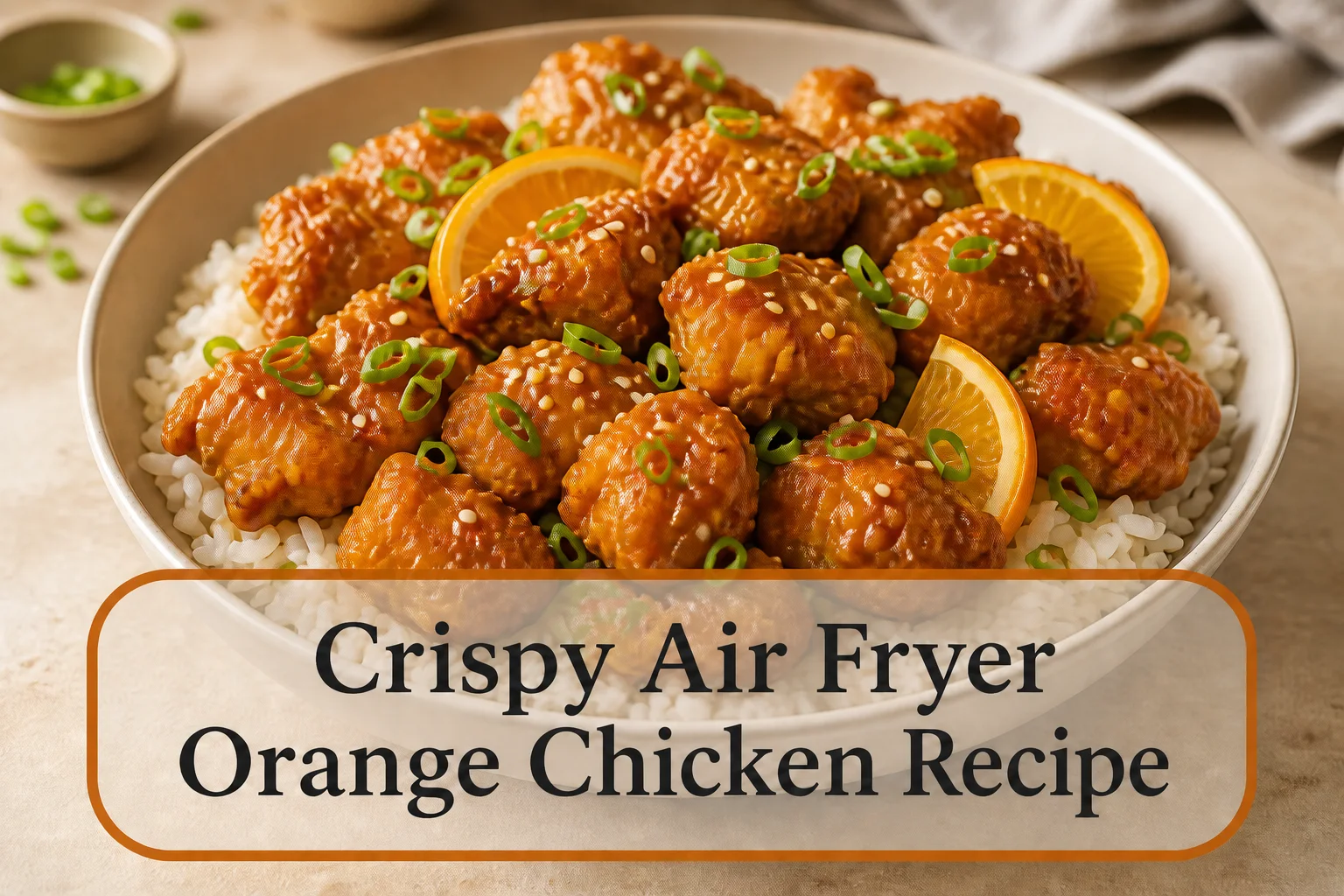
Crispy Air Fryer Orange Chicken Recipe
Ingredients
Equipment
Method
- Cut chicken into 1-inch pieces, pat dry and season with salt and pepper.
- Put 1/4 cup cornstarch, egg whisked with 1 tablespoon water, and panko in three bowls.
- Coat chicken lightly in cornstarch, then egg, then panko.
- Preheat the air fryer to 390°F if recommended. Arrange chicken in one layer and mist with oil.
- Cook for 5 minutes. Turn, mist dry patches and cook 4 to 7 minutes more, until at least 165°F.
- Simmer orange juice, zest, soy sauce, sugar, vinegar, sesame oil, ginger and garlic for 3 minutes.
- Mix remaining 1 tablespoon cornstarch with 2 tablespoons cold water. Whisk into the sauce and simmer 1 to 2 minutes.
- Toss only the serving portion of hot chicken with a light layer of sauce. Serve immediately.
Notes
- Keep sauce separate until serving.
- Cook chicken in batches when needed.
- Verify the largest pieces reach at least 165°F.
- This recipe was developed through culinary research and editorial review.
This recipe was developed through culinary research and editorial review. Piece size and appliance performance vary; verify the largest chicken pieces reach at least 165°F.
Nutrition is an estimate based on generic ingredient data; actual values vary with chicken cut, oil pickup and the amount of sauce used.