
This savory cottage cheese toast recipe includes three distinct toppings: tomato-basil, avocado-chile and warm mushroom-thyme. Each starts with deeply toasted whole-grain sourdough and well-stirred cottage cheese, but the order of assembly changes slightly to keep the bread crisp.
The full recipe makes six toasts, two of each flavor. Make all three for brunch, or use one topping formula with two slices for a quick breakfast or lunch.
This recipe was developed through culinary research and editorial review. Bread density, cottage-cheese whey and tomato moisture vary, so use the drainage and assembly cues rather than relying on a single toast setting.
For homemade bases, try flourless cottage cheese bread or soft oatmeal bread.
How to keep cottage cheese toast from getting soggy
Toast the bread until the center is dry and the surface feels crisp, not merely warm. Thick sourdough gives moisture more distance to travel before the bottom softens.
Stir cottage cheese before measuring. If free whey pools in the container, spoon the cheese into a fine sieve for 5 minutes. Do not squeeze out the moisture inside the curds.
Salt tomatoes and let them drain separately. Cook mushrooms until their pan is dry. Add avocado and all toppings only after the toast is ready, then serve within about 10 minutes.
Ingredients
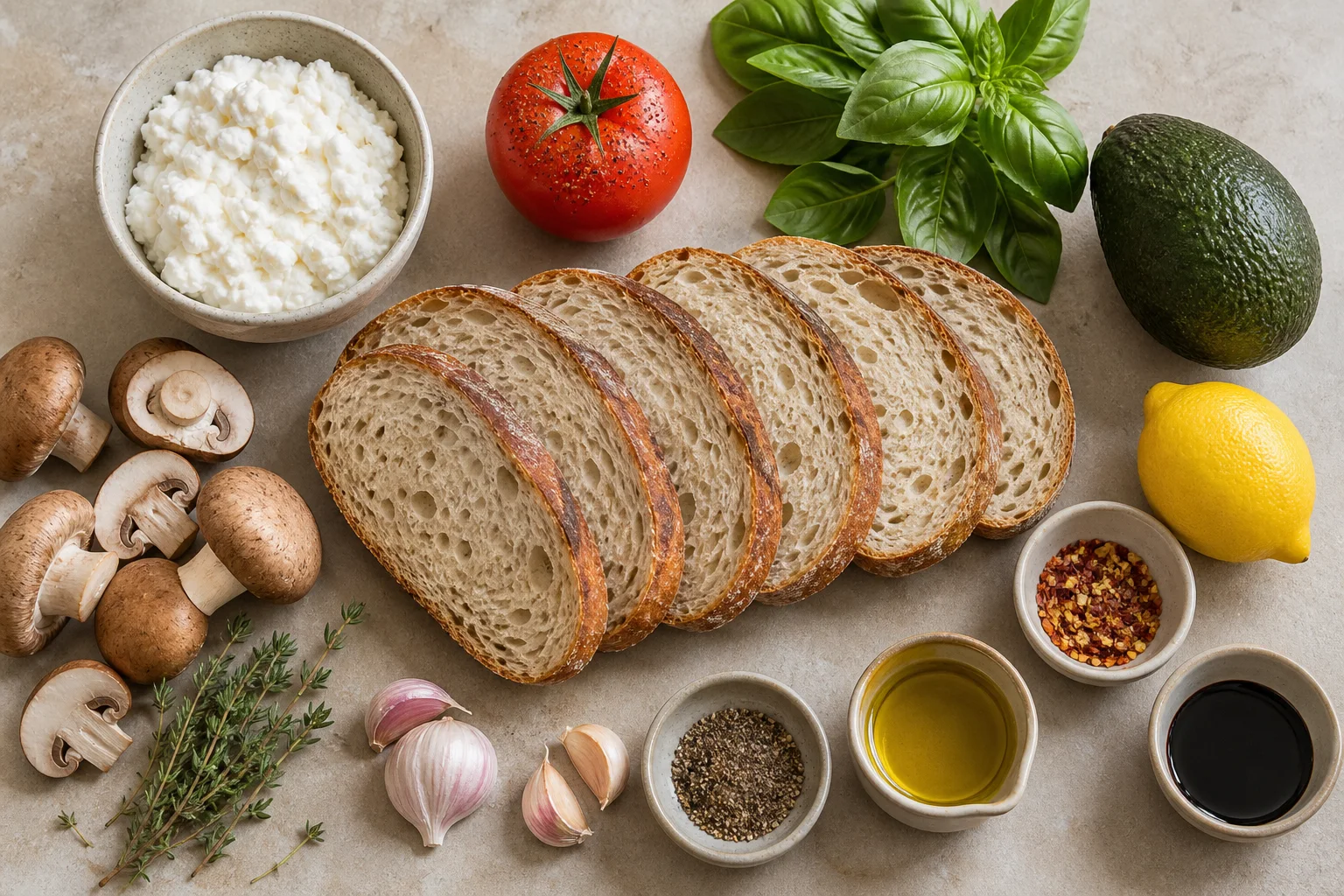
Cottage cheese toast base
- 6 slices whole-grain sourdough, about 1/2 inch thick
- 1 1/2 cups 4% cottage cheese
- 1 tablespoon extra-virgin olive oil, for brushing
- 1/4 teaspoon black pepper
Tomato-basil topping for two toasts
- 1 medium ripe tomato, seeded and diced
- 1/4 teaspoon fine salt
- 2 tablespoons torn fresh basil
- 1 teaspoon balsamic glaze
Avocado-chile topping for two toasts
- 1 small ripe avocado, thinly sliced
- 1 teaspoon lemon juice
- 1/4 teaspoon red pepper flakes
- Pinch of flaky salt
Mushroom-thyme topping for two toasts
- 4 ounces cremini mushrooms, thinly sliced
- 1 teaspoon olive oil
- 1/2 teaspoon fresh thyme leaves
- 1 small garlic clove, finely grated
- Pinch of fine salt
Ingredient notes and substitutions
Bread: A sturdy 1/2-inch sourdough slice is the most resistant to moisture. Whole-grain sandwich bread works but should be toasted a little darker and served immediately.
Cottage cheese: Full-fat small-curd cheese tastes creamy and sits neatly on toast. Low-fat works after draining loose whey. Large curds can be lightly mashed, not pureed into a liquid.
Tomato: Plum tomatoes release less water than large slicing tomatoes. Seeding and salting give any variety a better texture for toast.
Avocado: Choose fruit that yields gently near the stem. Lemon slows surface browning and brightens the mild cottage cheese.
Mushrooms: Cremini mushrooms develop savory flavor and cook relatively dry. White button mushrooms work at the same quantity.
For a thicker homemade base, cottage cheese bagels use all-purpose flour and baking powder; split and toast a cooled bagel before adding these toppings.
How to make savory cottage cheese toast
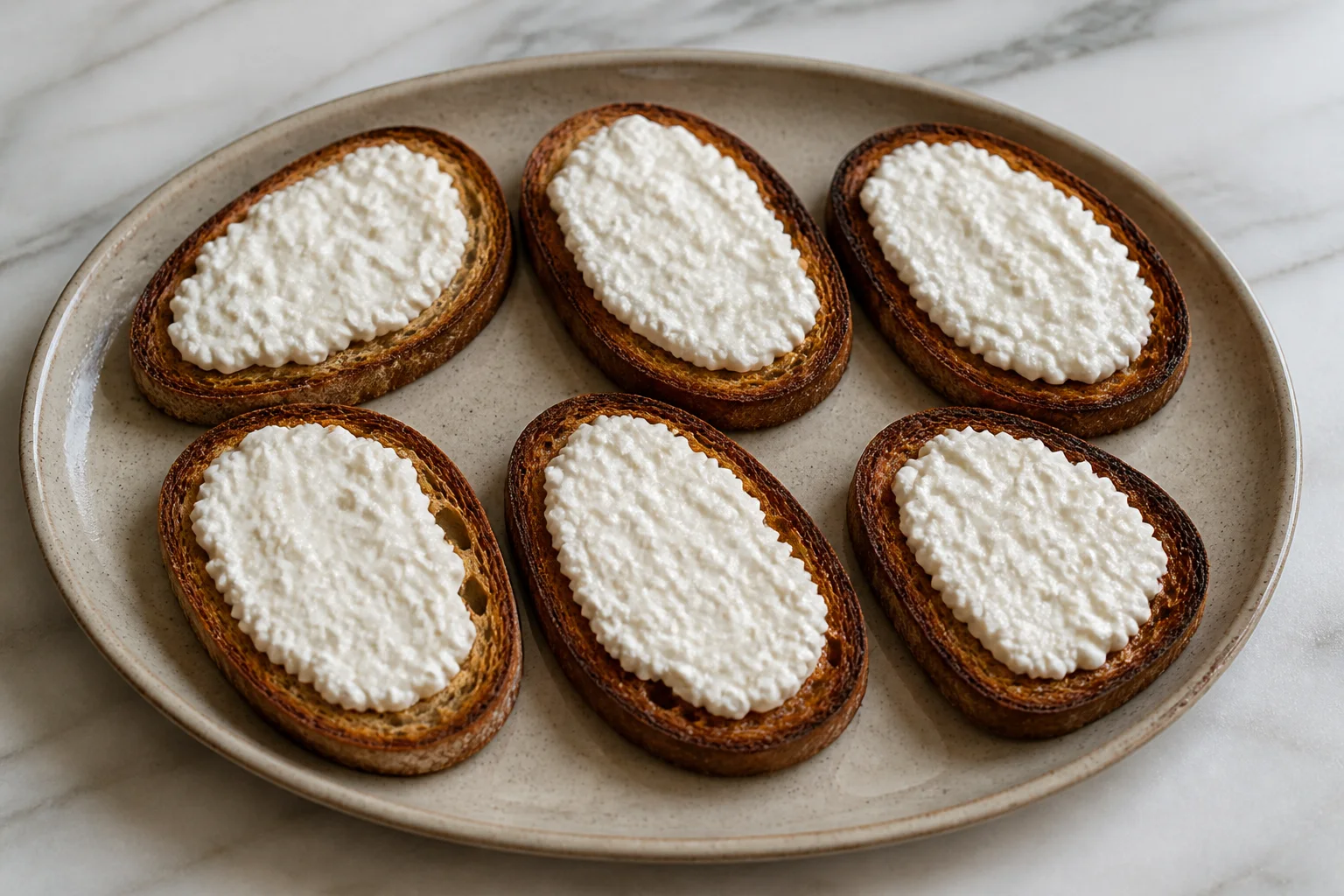
1. Drain only if needed
Stir the cottage cheese. If whey immediately pools around the spoon, drain in a fine-mesh sieve for 5 minutes. Season with black pepper but do not salt the full bowl yet.
2. Prepare the tomato topping
Toss diced seeded tomato with 1/4 teaspoon salt in a small sieve. Set over a bowl for 10 minutes, then blot lightly and fold in basil.
3. Prepare the avocado topping
Slice avocado just before serving. Brush or toss gently with lemon juice. Keep the slices broad rather than mashing them into a wet layer.
4. Cook the mushrooms
Heat 1 teaspoon olive oil in a skillet over medium-high. Add mushrooms in one layer and cook 4 to 6 minutes until browned and the pan looks dry. Add thyme, garlic and a pinch of salt for the final 30 seconds.
5. Toast the bread deeply
Brush the six bread slices lightly with 1 tablespoon oil. Toast until both faces are golden and the center is crisp. A toaster oven commonly takes 5 to 8 minutes at 400°F, turned once; a skillet takes about 2 to 3 minutes per side.
6. Add cottage cheese
Spread 1/4 cup cottage cheese over each hot toast, leaving a narrow border. Use the back of a spoon lightly so the bread surface is not crushed.
7. Build three pairs
Top two slices with drained tomato and basil, then drizzle balsamic glaze. Add avocado, red pepper flakes and flaky salt to two. Finish the last two with warm dry mushrooms.
8. Serve promptly
Place on an open platter and serve within 10 minutes. Stacking the toasts traps steam from both bread and warm mushrooms.
Toasting guide for a crisp base
| Bread | Approximate method | Useful cue | Best serving window |
|---|---|---|---|
| 1/2-inch sourdough | 400°F toaster oven, 5 to 8 minutes | Golden faces, dry center | Within 10 minutes |
| Whole-grain sandwich bread | Standard toaster, medium-dark | Edges rigid, center crisp | Within 5 minutes |
| Dense rye | Skillet, 2 to 3 minutes per side | Oil absorbed, surface browned | Within 10 minutes |
| Refrigerated pre-toasted bread | 375°F oven, 3 to 5 minutes | Crisp again, not hard | Immediately |
Toast color is not the only cue. A thick pale center beneath browned grill marks still absorbs moisture quickly.
Three topping formulas explained
Tomato-basil
Draining salted tomato concentrates its flavor and removes liquid that would otherwise run into the cheese. Balsamic glaze goes on last because it is thick enough to stay near the surface.
Avocado-chile
Slices create less dense moisture contact than a heavy mashed layer. Add flaky salt only at serving so it does not draw extra water from avocado.
Mushroom-thyme
Cook mushrooms until the skillet is dry. Garlic enters near the end so it becomes fragrant without burning while the mushrooms release water.
Make-ahead strategy
Stir and, if needed, drain cottage cheese up to 2 days ahead. Keep it covered and cold.
Tomatoes can be seeded and diced up to 1 day ahead, but salt and drain them only 10 to 20 minutes before serving. Cook mushrooms up to 3 days ahead and rewarm in a dry skillet.
Do not toast bread or slice avocado hours ahead. Toast loses its dry structure in storage, while cut avocado browns and softens.
For packed lunches, store bread, cottage cheese and topping in three separate containers and assemble immediately before eating.
Troubleshooting
The toast becomes soggy immediately
The bread center was not crisp or cottage cheese had free whey. Toast more deeply and drain loose liquid for 5 minutes.
Cottage cheese slides off
The toast is angled, the cheese is watery or toppings are overloaded. Use a level layer and keep topping quantities measured.
The tomato topping is watery
Seeds and salt-released juice were not removed. Seed, salt and drain for 10 minutes.
Mushrooms make the cheese warm and runny
They came straight from a wet skillet. Cook until dry and rest 1 minute before adding.
Avocado turns brown
Slice close to serving and coat the cut surface with lemon juice. Refrigeration slows but does not stop browning.
The toast is too hard
It was sliced too thin or toasted beyond crisp. Use 1/2-inch bread and stop before the crumb becomes brittle.
Storage
Assembled cottage cheese toast is best eaten immediately and should not be frozen. Refrigeration makes the bread leathery and wet.
Store plain cottage cheese according to its package and use the opened container within its stated window. Prepared drained tomato and cooked mushrooms keep up to 3 days refrigerated in separate covered containers.
Discard assembled toast that remains at room temperature for more than 2 hours. For meal prep, carry the dairy in an insulated lunch bag with a cold pack.
Frequently asked questions
Is cottage cheese good on toast?
Yes. It provides a creamy, mildly tangy base for both fresh and cooked savory toppings, especially on sturdy crisp bread.
Should I blend the cottage cheese?
It is optional. Lightly blending gives a smooth spread, but overblending a wet brand can make it runny.
What seasoning works with cottage cheese toast?
Black pepper, fresh herbs, chili flakes, lemon zest and everything seasoning all work. Taste before adding salt.
Can I use gluten-free bread?
Yes. Choose a sturdy slice and toast it thoroughly; verify all topping labels for your needs.
Which variation is best for meal prep?
Mushroom-thyme holds best when components are packed separately. Assemble immediately before eating.
How much protein does one toast have?
The estimate is about 12 grams with 1/4 cup cottage cheese and the specified bread, but labels vary.
Recipe development note
This savory cottage cheese toast recipe was developed through culinary research and editorial review. It is not represented as a personal kitchen test. Bread density, cottage-cheese whey and topping moisture vary, so use the drainage and crispness cues.
Nutrition is an approximate average per one toast across the three variations. The accompanying visuals are AI-assisted food-editorial images, not photographs of a kitchen test.
Printable recipe card
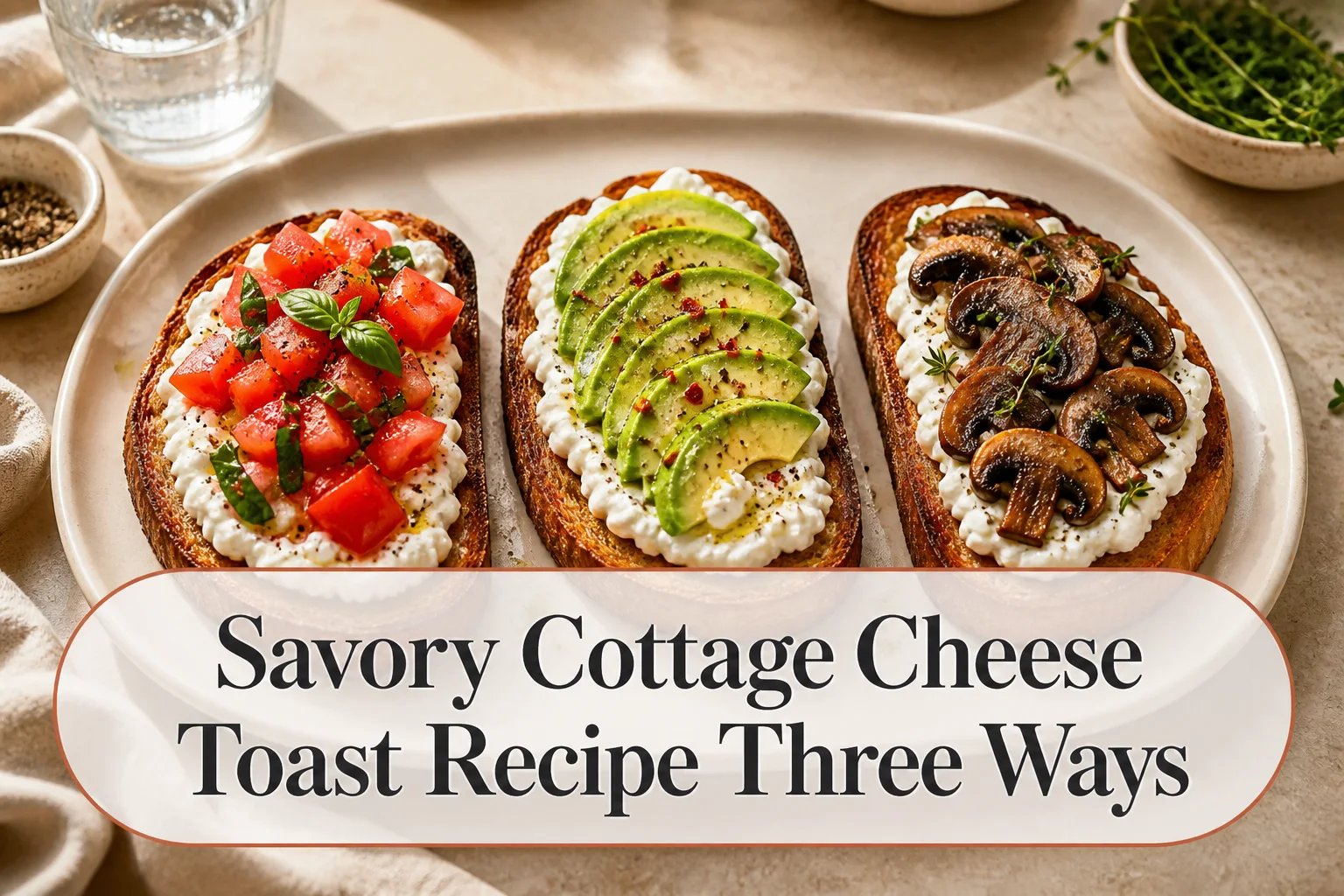
Savory Cottage Cheese Toast Recipe Three Ways
Ingredients
Equipment
Method
- Stir cottage cheese and drain loose whey in a fine sieve for 5 minutes only if needed; season with pepper.
- Salt diced seeded tomato in a sieve for 10 minutes, blot and fold in basil.
- Slice avocado near serving and coat lightly with lemon juice.
- Brown mushrooms in 1 teaspoon oil for 4 to 6 minutes until dry; add thyme, garlic and salt for 30 seconds.
- Brush bread with oil and toast deeply until both faces are golden and the centers crisp.
- Add 1/4 cup cottage cheese to each hot toast, leaving a narrow border.
- Finish two with tomato and balsamic, two with avocado, chile and salt, and two with mushrooms.
- Serve on an open platter within 10 minutes and do not stack.
Notes
- Toast bread through the center, not only at the surface.
- Drain free whey and tomato juice.
- Cook mushrooms until the skillet is dry.
- Assemble only immediately before serving.
- Contains milk and wheat unless substitutions are used.
- This recipe was developed through culinary research and editorial review.
This recipe was developed through culinary research and editorial review. Bread density, cottage-cheese whey and topping moisture vary; use the drainage and crispness cues.
Nutrition is an approximate average per one toast across the three variations.