
These cottage cheese egg muffins blend whole eggs and cottage cheese into a smooth base, then add dry spinach, red pepper and cheddar for color and texture. They are flourless, softly set and intended as portable egg bites rather than bread-style muffins.
The distinction matters for both cooking and expectations. A standard muffin uses flour for a crumb; these rely on gently coagulated eggs, so lower heat and a short cooling period keep them tender instead of spongy.
This recipe was developed through culinary research and editorial review. Egg size, cottage-cheese moisture, silicone thickness and oven calibration vary, so use a 160°F center and a barely firm surface as the final cues.
If you want a bread-like baked muffin, use the separate savory cottage cheese muffin recipe. For a loaf without flour, see flourless cottage cheese bread.
Why cottage cheese works in egg muffins
Cottage cheese supplies milk protein, moisture and mild acidity. Blending breaks up the curds so they disperse through the eggs and create an even custard rather than white pockets.
The mixture should not be aerated for several minutes. Excess foam rises in the oven, then collapses into a wrinkled top. Blend only until smooth, let the base rest while preparing vegetables and skim large bubbles if needed.
Vegetables must be dry and finely cut. Water from wet spinach or raw mushrooms dilutes the egg around each piece and can leave soggy pockets.
Ingredients
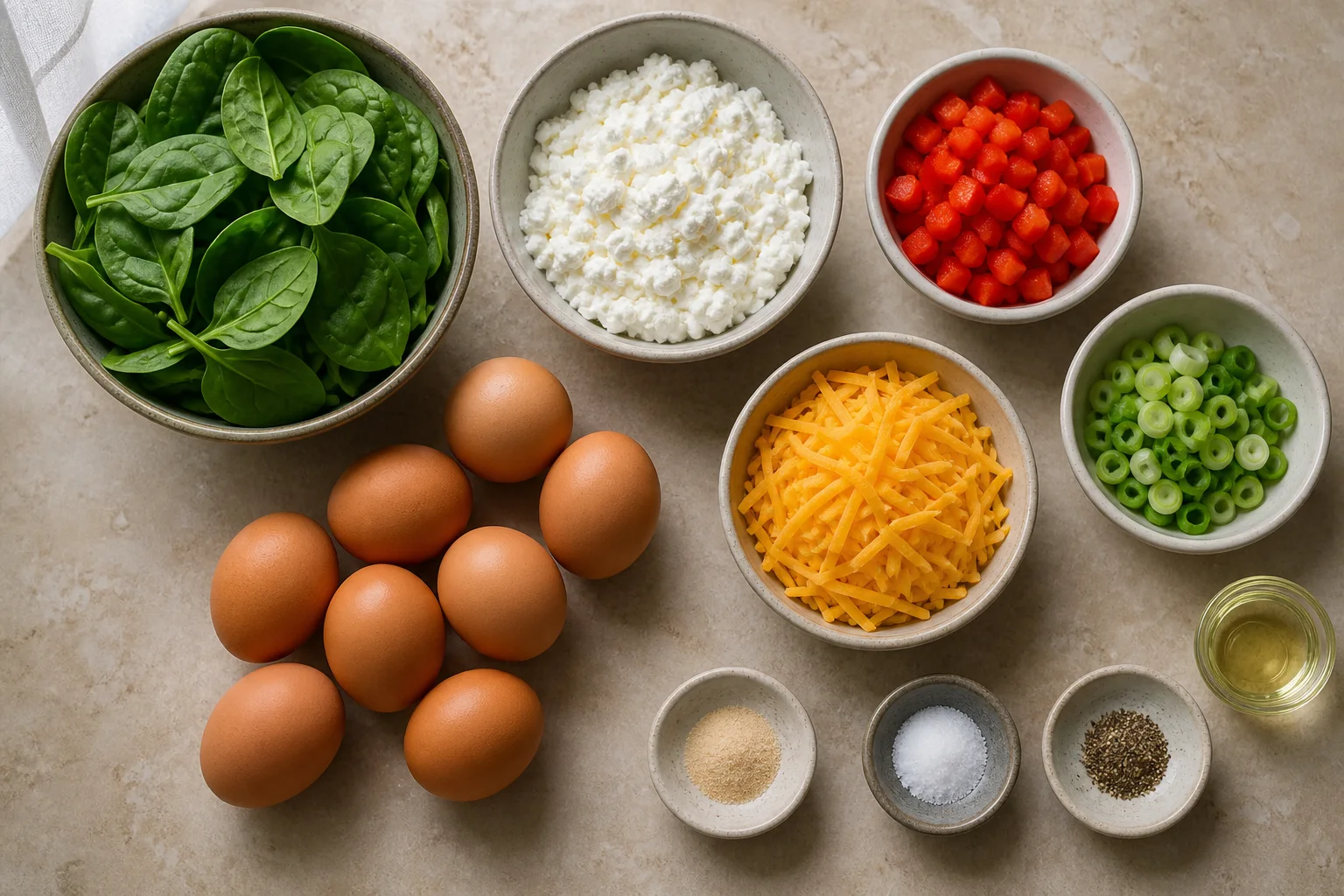
- 8 large eggs
- 1 cup 4% cottage cheese
- 1/2 teaspoon fine salt
- 1/4 teaspoon black pepper
- 1/4 teaspoon garlic powder
- 1 packed cup baby spinach, washed and thoroughly dried
- 1/2 cup finely diced red bell pepper
- 3 green onions, finely sliced
- 3/4 cup shredded sharp cheddar cheese, divided
- Cooking spray or 2 teaspoons neutral oil
Ingredient notes and substitutions
Eggs: Use eight large eggs for twelve standard silicone muffin cups. Carton egg whites can replace up to two eggs; replacing all of them makes a firmer, less rich bite.
Cottage cheese: Full-fat cottage cheese gives the smoothest, most tender texture. Low-fat works but may release more whey. If liquid pools visibly on top, stir, then drain only the loose whey for 5 minutes.
Spinach: Fresh baby spinach is convenient, but it must be dry. Frozen spinach works after thawing and squeezing very thoroughly; use 1/3 packed cup.
Bell pepper: Dice into 1/4-inch pieces so it softens during the gentle bake. Broccoli must be cooked, cooled and blotted before use.
Cheddar: Sharp cheddar gives noticeable flavor with a moderate amount. Monterey Jack or low-moisture mozzarella can substitute.
How to make cottage cheese egg muffins
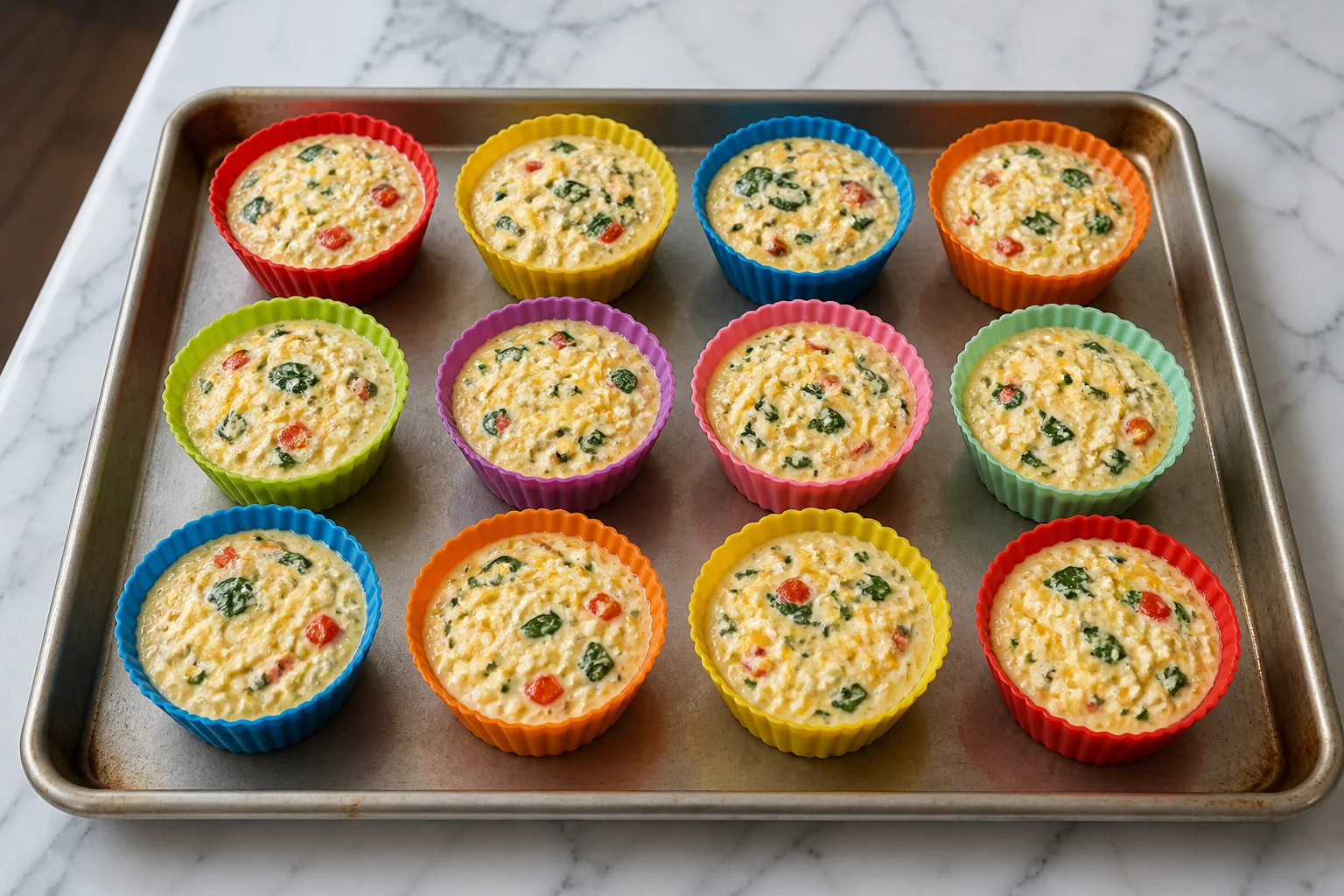
1. Heat the oven
Place a rack in the center and heat the oven to 325°F. Set twelve standard silicone muffin cups on a rimmed sheet pan, or use a well-greased nonstick metal muffin pan.
2. Prepare dry vegetables
Wash spinach under running water, spin dry and blot. Chop into pieces no larger than 1/2 inch. Dice pepper finely and slice green onions.
3. Blend the egg base
Add eggs, cottage cheese, salt, pepper and garlic powder to a blender. Blend for 20 to 30 seconds, just until smooth. Let stand 3 minutes so large bubbles rise.
4. Fill with vegetables
Divide spinach, pepper, green onion and 1/2 cup cheddar evenly among the twelve greased cups. Keep pieces below the rim and redistribute any overfilled cup.
5. Add the egg mixture
Pour the blended base evenly into the cups, filling each about three-quarters full. Stir each cup once with a small fork to release trapped air and distribute vegetables.
6. Add the remaining cheese
Sprinkle the final 1/4 cup cheddar over the tops. Wipe spills from the sheet pan or exposed muffin-pan surface before baking.
7. Bake gently
Bake 22 to 28 minutes. Begin checking at 22. The centers should look set with only a slight wobble, and an instant-read thermometer inserted through the side of a center muffin should reach 160°F.
8. Cool and release
Rest in the cups for 5 minutes. Run a small flexible spatula around the edges and transfer to a rack. The muffins deflate slightly as steam leaves; that is normal for a flourless egg bite.
Cottage cheese egg muffin baking guide
| Pan or cup | First check at 325°F | Common total time | Useful cue |
|---|---|---|---|
| Standard silicone cups | 22 minutes | 24 to 28 minutes | Center 160°F, slight wobble |
| Light metal muffin pan | 20 minutes | 22 to 26 minutes | Edges set without deep browning |
| Dark nonstick pan | 18 minutes | 20 to 24 minutes | Bottom not over-browned |
| Mini silicone cups | 12 minutes | 14 to 18 minutes | Fully set and 160°F |
Silicone insulates more than metal and may need extra time. Fill every cup to a similar depth so all portions finish together.
How to prevent watery egg muffins
Dry the spinach before chopping and use small amounts of raw bell pepper. Do not add raw mushrooms, zucchini or tomatoes without cooking and removing their moisture first.
If cottage cheese has a visible layer of whey, drain only that loose liquid. The recipe still needs the moisture within the curds.
Do not cover hot muffins in the pan. Steam condenses on the surface and collects beneath them. Move to a rack after 5 minutes and cool before storage.
Why egg muffins puff and fall
Eggs expand as trapped air and water vapor heat. Without flour, there is no bread network to hold the tallest rise, so modest settling is expected.
Excess blending creates more bubbles and a larger collapse. High oven heat can also make the edges surge before the center sets. Blend briefly and stay at 325°F.
A slightly wrinkled top after cooling is not a failure. Large tunnels, a rubbery rim or a deeply sunken wet center point to excessive air, overbaking or vegetable moisture.
Flavor variations
Broccoli cheddar: Replace spinach and pepper with 1 cup finely chopped cooked broccoli, cooled and blotted dry.
Roasted pepper and feta: Use 1/2 cup drained roasted red pepper and replace cheddar with feta. Reduce salt to 1/4 teaspoon.
Turkey sausage: Add 3/4 cup fully cooked, cooled and crumbled turkey sausage. Keep the vegetable volume modest so the cups do not overflow.
Dill and scallion: Omit garlic powder and add 2 tablespoons chopped fresh dill. Use a mild white cheddar.
Jalapeño: Add 2 tablespoons finely minced seeded jalapeño and use pepper Jack cheese.
For a breakfast assembled without baking the cottage cheese, cottage cheese breakfast bowls combines it with a cooked egg, avocado, tomatoes and pumpkin seeds.
Troubleshooting
The muffins are watery underneath
Vegetables were wet or the muffins cooled in the pan. Dry produce thoroughly and transfer to a rack after 5 minutes.
The texture is rubbery
They baked too hot or too long. Use 325°F and remove as soon as the centers reach 160°F.
The muffins stick
The cups were not greased or the muffins were released immediately. Grease every surface and wait 5 minutes.
They collapse dramatically
The mixture was blended until foamy or the oven was too hot. Blend only until smooth and let bubbles settle.
Vegetables sink
Pieces were large or the egg base was unusually thin. Dice finely and distribute vegetables in cups before pouring.
The tops brown before centers set
The pan is dark or the rack is too high. Move to the center and begin checking earlier; reduce to 315°F in a very hot oven.
Storage and reheating
Cool completely, then refrigerate in a covered container lined with a paper towel for up to 4 days. Replace the towel if it becomes damp.
Reheat in a microwave at 50% power in 20-second intervals, or in a 300°F oven for 8 to 12 minutes, until the center reaches 165°F. Gentle heat protects the soft texture.
Freeze cooled muffins in one layer, then transfer to a freezer container for up to 2 months. Thaw overnight or microwave from frozen at reduced power, checking often. High power can make the outside rubbery while the middle remains cold.
For another breakfast to portion ahead, turkey sausage and egg breakfast burritos includes assembly and freezer guidance for tortillas filled with eggs, beans and cheese.
Food-safety notes
Cook egg dishes to 160°F and reheat leftovers to 165°F. These temperatures appear in the USDA safe minimum internal temperature chart.
Refrigerate cooked muffins within 2 hours. Use clean utensils for ready-to-eat vegetables and discard cracked eggs that leaked in the carton.
Frequently asked questions
Are these regular savory muffins?
No. They are flourless egg muffins with a custardy, egg-bite texture. The linked cottage-cheese muffin recipe has a bread-like crumb.
Do I need to blend cottage cheese?
Blending gives the smoothest base. A food processor works, though it may leave tiny curds.
Can I use paper liners?
Egg mixtures often stick to untreated paper. Greased silicone cups or a well-greased nonstick pan release more reliably.
Can I make them dairy-free?
Not with a direct swap, because cottage cheese is part of the structure. Use a separately formulated dairy-free egg-muffin recipe.
How much protein is in each muffin?
The estimate is about 8 grams, but egg, cheese and cottage-cheese labels vary.
Can I eat them cold?
Yes, if properly refrigerated, though the texture is softer and the cheese flavor is milder when cold.
Recipe development note
These cottage cheese egg muffins were developed through culinary research and editorial review. They are not represented as a personal kitchen test. Egg size, dairy moisture, vegetable dryness and pan material vary; use the texture and temperature cues.
Nutrition is an estimate per one egg muffin. The accompanying visuals are AI-assisted food-editorial images, not photographs of a kitchen test.
Printable recipe card

Fluffy Cottage Cheese Egg Muffins Recipe with Spinach
Ingredients
Equipment
Method
- Heat oven to 325°F and set twelve greased silicone muffin cups on a rimmed sheet pan.
- Wash, dry and chop spinach; finely dice pepper and slice green onions.
- Blend eggs, cottage cheese, salt, pepper and garlic for 20 to 30 seconds until smooth; rest 3 minutes.
- Divide vegetables and 1/2 cup cheddar evenly among the cups.
- Pour the blended mixture to fill cups three-quarters full and stir each once to distribute.
- Sprinkle with remaining 1/4 cup cheddar.
- Bake 22 to 28 minutes until barely firm and 160°F in the center.
- Rest 5 minutes, release with a flexible spatula and move to a rack.
Notes
- These are flourless egg bites, not bread-style muffins.
- Dry spinach and peppers thoroughly.
- Blend only until smooth, not foamy.
- Cook egg centers to 160°F and leftovers to 165°F.
- Contains egg and milk.
- This recipe was developed through culinary research and editorial review.
This recipe was developed through culinary research and editorial review. Egg size, dairy moisture, vegetable dryness and pan material vary; verify 160°F.
Nutrition is an estimate per one egg muffin.