
These savory cottage cheese muffins have a tender bread-like crumb, melted cheddar and small pieces of spinach and scallion in every bite. They are more substantial than crustless egg bites because flour provides structure, but the cottage cheese keeps the interior moist without leaving obvious wet curds.
The method solves two common problems. Cottage cheese is blended with the eggs, milk and oil so the batter hydrates evenly, and the washed spinach is dried thoroughly before chopping so it does not release a watery layer around the vegetables. The finished muffins cool on a rack instead of steaming in the pan.
This recipe was developed through culinary research and editorial review. Cottage-cheese moisture, flour absorption, vegetable dryness, muffin-pan color and oven calibration vary, so use the batter thickness, center temperature and cooling cues below.
For a sweet breakfast muffin, try the banana yogurt muffins recipe. For a flourless cottage-cheese loaf with a different, more custardy structure, see the flourless cottage cheese bread recipe.
Why cottage cheese muffins can turn wet or dense
Cottage cheese contains both curds and whey. Brands vary considerably in how much free liquid sits in the container. If a wet product is added with damp vegetables and undermeasured flour, the centers can stay heavy even after the tops brown.
Blending does not remove moisture, but it distributes the cheese and whey through the eggs. That creates a consistent wet base and avoids isolated curd pockets that resemble raw batter.
The flour must be folded only until hydrated. Overmixing develops more gluten and produces a tight, rubbery crumb. A five-minute batter rest is enough for the flour to absorb moisture without letting the baking powder lose too much activity.
Ingredients
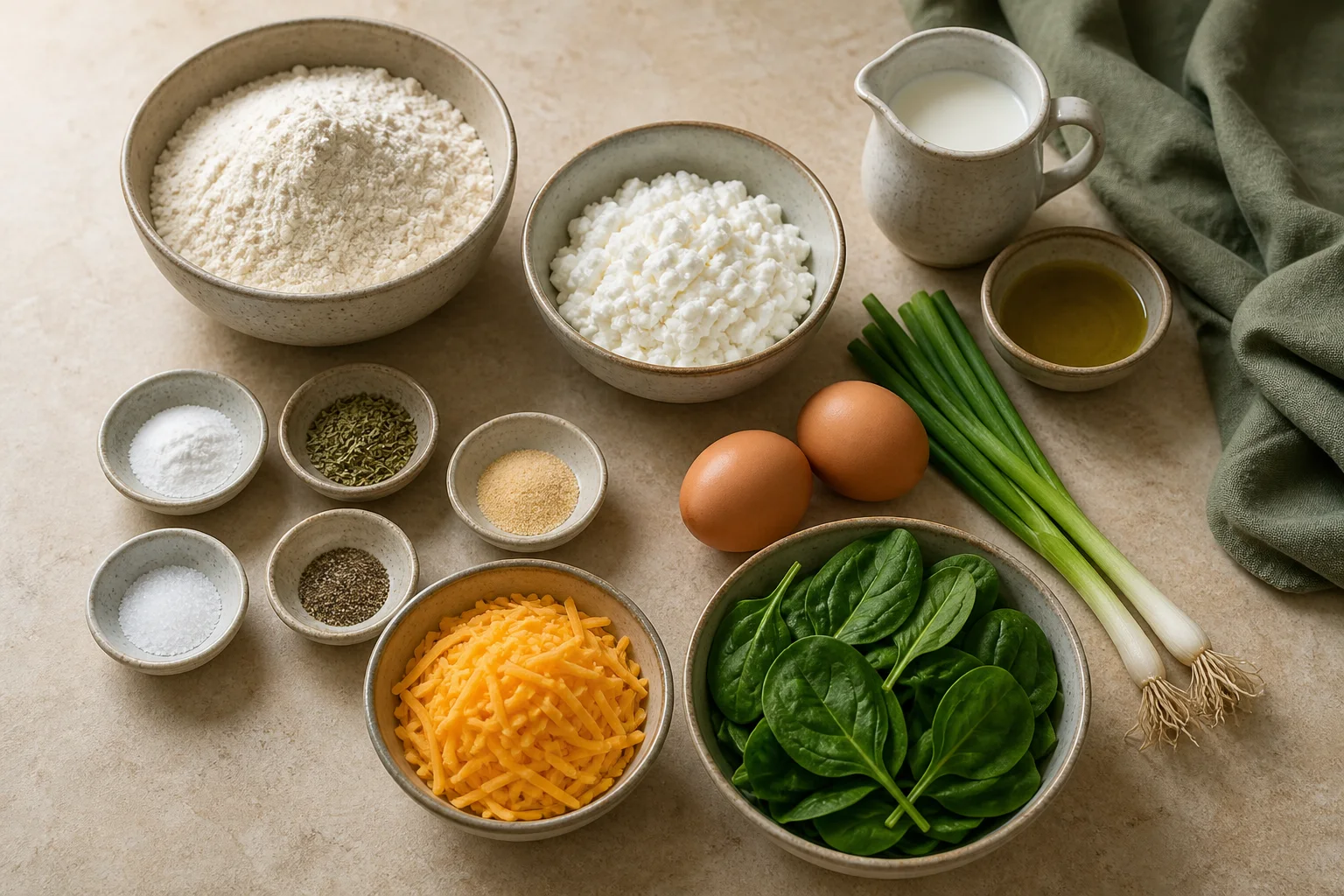
- 1 3/4 cups all-purpose flour, 210 grams
- 2 1/2 teaspoons baking powder
- 1 teaspoon dried oregano
- 1/2 teaspoon garlic powder
- 1/2 teaspoon fine salt
- 1/4 teaspoon ground black pepper
- 1 cup 4% cottage cheese, 226 grams
- 2 large eggs, about 100 grams without shells
- 1/2 cup milk, 120 grams
- 1/4 cup extra-virgin olive oil, 56 grams
- 1 packed cup baby spinach, 30 grams, washed and thoroughly dried
- 3 scallions, finely sliced, about 30 grams
- 3/4 cup shredded sharp cheddar, 85 grams, divided
Ingredient notes and substitutions
Cottage cheese: Full-fat small-curd cottage cheese gives the richest texture. Low-fat works but can contain more free whey and produce a firmer muffin. Stir the container before measuring; if liquid pours freely from the cup, drain only that loose whey for 5 minutes.
Flour: Weigh 210 grams for a consistent batter. A 1-to-1 gluten-free baking blend may work, but gum content varies and the texture will differ. Whole-wheat flour can replace up to half by weight and may require 1 additional tablespoon milk.
Baking powder: Two and a half teaspoons lifts the moist cheese batter. Level the spoons and whisk it throughout the flour so no metallic pockets remain.
Eggs: Eggs set the liquid and support the crumb. Use large eggs and do not replace them with extra cottage cheese. An egg substitute needs separate formulation.
Milk: Dairy or an unsweetened nondairy milk works. If the cottage cheese is visibly wet, hold back 1 tablespoon and add it only if the rested batter is sharply stiff.
Olive oil: Oil keeps refrigerated muffins softer than melted butter. A neutral oil can replace it by weight if a milder flavor is preferred.
Spinach: Wash before chopping, then dry in a salad spinner and blot. Chopped frozen spinach is usable only after thawing and squeezing very dry; use 1/3 cup tightly packed.
Scallions: Both white and green parts add flavor without the large wet pockets made by diced onion. Chopped chives can replace them by volume.
Cheddar: Sharp cheddar gives noticeable flavor with a moderate quantity. Monterey Jack, low-moisture mozzarella or a mix works. Reserve a small portion for the tops.
How to make cottage cheese muffins

1. Prepare the oven and pan
Heat the oven to 375°F with a rack in the center. Grease all 12 wells of a standard metal muffin pan, including the flat surface around each opening.
Parchment liners can be used, but thin paper liners tend to cling to moist savory muffins. If using paper, coat it lightly with cooking spray.
2. Wash and dry the spinach
Rinse spinach under running water, spin it dry and blot remaining moisture with a clean towel. Chop into pieces no larger than 1/2 inch.
Wet leaves add unmeasured water. Drying also keeps green liquid from streaking the batter around large leaf clusters.
3. Mix the dry ingredients
In a large bowl, whisk flour, baking powder, oregano, garlic powder, salt and pepper for at least 20 seconds.
Break up every flour lump. A broad whisk distributes the relatively small amount of leavener through the full bowl.
4. Blend the wet ingredients
Add cottage cheese, eggs, milk and olive oil to a blender. Blend for 20 to 30 seconds, just until smooth and uniform.
Stop and scrape if cottage cheese remains beneath the blades. Do not blend for several minutes; unnecessary air creates large bubbles that can collapse.
5. Fold wet into dry
Pour the blended mixture into the dry bowl. Fold with a silicone spatula, scraping the bottom, until only a few flour streaks remain.
The batter should be thick enough to mound from a scoop but soft enough to settle. Do not beat it smooth.
6. Add spinach, scallions and cheese
Fold in the dry chopped spinach, scallions and 2/3 cup of the cheddar. Stop as soon as the additions look evenly distributed.
Rest the batter for 5 minutes. If it stands in sharp dry peaks, fold in 1 tablespoon milk. If it flows flat like pancake batter, add 1 tablespoon flour and rest 2 minutes.
7. Portion evenly
Divide batter among 12 muffin wells with a 1/3-cup scoop, filling each about three-quarters full. Redistribute from the largest portions until the levels match.
Sprinkle the reserved cheddar over the tops. Keep stray cheese off the bare pan, where it can burn and make removal difficult.
8. Bake to set the centers
Bake for 21 to 26 minutes. The tops should be lightly golden, the centers should spring back and a tester should show moist crumbs without liquid batter.
For a temperature confirmation, the center should be at least 160°F for egg safety; a bread-like muffin normally reaches approximately 195 to 200°F when its crumb is fully set. Probe through the side of one center muffin without touching the pan.
9. Release and cool
Cool in the pan for 8 minutes. Run a thin flexible spatula around each edge and transfer muffins to a wire rack.
Cool at least 20 minutes before judging the crumb. Leaving them in the pan for the full cooling period traps steam and makes the bottoms damp.
Cottage cheese muffin texture guide
| Cue | Meaning | Action |
|---|---|---|
| Rested batter mounds softly and settles | Moisture and flour are balanced | Portion into wells |
| Batter stands in sharp, crumbly peaks | Cottage cheese was dry or flour was overmeasured | Fold in 1 tablespoon milk |
| Batter flows flat around vegetables | Cottage cheese or spinach added excess water | Add 1 tablespoon flour and rest 2 minutes |
| Top is golden but center jiggles | Exterior browned before the interior set | Continue baking and shield loosely if needed |
| Center springs back and tester has moist crumbs | Muffin is set | Remove from oven |
| Bottom becomes damp during cooling | Muffin stayed in the hot pan too long | Move to a wire rack after 8 minutes |
The batter is intentionally thicker than an egg mixture. It should be scoopable, not pour like custard.
Blending cottage cheese without making egg bites
Blending creates a smooth wet base, but flour and baking powder determine the final muffin structure. This recipe uses enough flour for a recognizable bread crumb rather than a custard.
Blend only the cottage cheese, eggs, milk and oil. Adding flour to the blender would overwork the batter and make the muffins elastic.
Small air bubbles on the wet mixture are normal. Letting it stand several minutes before folding allows the largest bubbles to rise.
If a textured curd is preferred, blend only half the cottage cheese and fold the remaining half with the vegetables. Expect small creamy pockets and a less uniform crumb.
How dry should the spinach be?
After washing, the leaves should not leave droplets on a clean towel. A salad spinner removes water from the leaf surfaces, and blotting catches moisture at the stems.
Chop after drying. Cut surfaces release a little liquid, so add the spinach immediately rather than salting it in advance.
For frozen spinach, thaw completely. Squeeze in a clean towel until no more water runs out, then measure 1/3 packed cup. A full cup of wet thawed spinach would overwhelm the batter.
The FDA advises rinsing fresh produce under running water and drying it with a clean cloth or paper towel in its raw produce safety guidance.
Muffin-pan and liner choices
A light or medium metal pan gives even browning. A very dark pan can overcolor the lower edges; begin checking 2 to 3 minutes earlier.
Silicone molds brown less and may need extra time. Place flexible molds on a sheet pan before filling so they enter the oven level.
Greased metal gives the cleanest savory crust. Parchment liners release more readily than untreated paper. Whatever liner is used, cool only 8 minutes in the pan.
For mini muffins, fill evenly and begin checking around 11 minutes. Their centers are difficult to probe, so use spring-back and tester cues as well as adequate baking time.
Flavor variations
Roasted pepper: Fold in 1/3 cup drained, blotted and finely diced roasted red pepper. Replace half the cheddar with feta and reduce salt slightly.
Dill and feta: Replace oregano with 2 tablespoons chopped fresh dill and cheddar with crumbled feta. Feta is saltier, so use 1/4 teaspoon added salt.
Broccoli cheddar: Use 1/2 cup finely chopped cooked broccoli that has been cooled and blotted dry. Large florets disrupt the crumb.
Corn and scallion: Replace spinach with 1/2 cup thawed corn, patted dry. Keep the scallions and add 1/2 teaspoon smoked paprika.
Jalapeño: Add 2 tablespoons finely minced seeded jalapeño and use pepper Jack cheese. Wash hands and avoid touching eyes after handling chiles.
Turkey sausage: Add 1/2 cup fully cooked, cooled and finely crumbled turkey sausage. Reheat leftovers thoroughly and keep the muffins refrigerated.
Troubleshooting
The centers are wet
The cottage cheese or spinach may have contributed extra liquid, the flour may be undermeasured or the bake may be short. Dry produce, weigh flour and check the center rather than relying on top color.
The muffins are heavy
The batter may be overmixed, baking powder may be old or the wells may be overfilled. Fold only until combined and keep each well about three-quarters full.
The muffins are rubbery
Flour was beaten after hydration or the eggs were overbaked. Keep flour out of the blender and remove the muffins once the crumb is set.
The paper liners stick
Moist savory muffins bond to untreated paper. Use greased metal, parchment liners or a light coating of spray. Let the muffins cool before peeling.
The bottoms are soggy
Muffins cooled too long in the pan or spinach was wet. Transfer after 8 minutes and dry the vegetables thoroughly.
The tops sink
The centers may not have set or too much liquid was added. Check one center muffin before removing the pan and use only tablespoon-size batter corrections.
The cheese burns on the pan
Shreds landed between the wells. Keep the reserved cheese on the batter surface and wipe the flat pan before baking.
The muffins taste bland
Cottage cheese and cheddar salt levels vary. Keep oregano, garlic, scallion and pepper measured; adjust added salt only after considering the cheese labels.
Storage and reheating
Cool completely, then refrigerate the muffins in a covered container for up to 4 days. Place a paper towel beneath them to absorb condensation and replace it if damp.
USDA guidance for shell eggs advises refrigerating cooked egg dishes promptly, using them within 3 to 4 days and cooking egg dishes to at least 160°F; see Shell Eggs from Farm to Table.
Reheat one muffin in the microwave for 20 to 30 seconds, then check the center. For several, use a 325°F oven for 8 to 10 minutes. Previously cooked leftovers should be reheated to 165°F.
Freeze fully cooled muffins in one layer, then transfer to a freezer bag for up to 2 months for best quality. Thaw overnight in the refrigerator before reheating.
Do not store these dairy-and-egg muffins at room temperature for meal prep. Pack with a cold source when carrying them for later.
Frequently asked questions
Do cottage cheese muffins taste like cottage cheese?
The flavor is mild and savory. Blending removes obvious curd texture, while cheddar, scallions and oregano provide the dominant flavor.
Can I use low-fat cottage cheese?
Yes. It may be firmer or contain more loose whey. Stir before measuring, drain only clearly separated liquid and follow the rested-batter cue.
Are these the same as cottage cheese egg bites?
No. Egg bites are custardy and usually flourless. These contain flour and baking powder, producing a tender bread-like muffin.
Can I skip the blender?
Yes. Mash small-curd cottage cheese with a fork and whisk the wet mixture thoroughly. The finished crumb will contain more visible curds.
Can I use frozen spinach?
Yes. Thaw, squeeze very dry and use 1/3 packed cup. Do not use a full cup of wet frozen spinach.
How do I know the muffins are cooked?
The centers should spring back, a tester should show moist crumbs without liquid batter and the egg mixture must reach at least 160°F. A fully set bread crumb is usually closer to 195 to 200°F.
Can I make mini muffins?
Yes. Fill greased mini wells evenly and begin checking around 11 minutes. Cool only a few minutes before transferring to a rack.
Can I freeze cottage cheese muffins?
Yes. Freeze cooled muffins for up to 2 months for best quality, thaw in the refrigerator and reheat the center thoroughly.
Recipe development note
These savory cottage cheese muffins were developed through culinary research and editorial review. They are not represented as a personal kitchen test. Cottage-cheese moisture, flour absorption, vegetable dryness, pan color and oven calibration vary; use the batter, doneness and cooling cues.
Nutrition is an estimate per one of 12 muffins. The accompanying visuals are AI-assisted food-editorial images, not photographs of a kitchen test.
Printable recipe card

Savory Cottage Cheese Muffins Recipe
Ingredients
Equipment
Method
- Heat the oven to 375°F. Grease all 12 wells and the surrounding surface of a standard metal muffin pan.
- Rinse spinach under running water, spin and blot thoroughly dry, then chop into pieces no larger than 1/2 inch.
- Whisk flour, baking powder, oregano, garlic powder, salt and pepper in a large bowl for 20 seconds.
- Blend cottage cheese, eggs, milk and olive oil for 20 to 30 seconds until smooth and uniform.
- Fold wet mixture into dry just until only a few flour streaks remain.
- Fold in spinach, scallions and 2/3 cup cheddar. Rest 5 minutes; add 1 tablespoon milk if sharply stiff or 1 tablespoon flour if the batter flows flat.
- Divide among 12 wells, filling about three-quarters full. Top with the reserved cheddar.
- Bake 21 to 26 minutes until tops are light golden, centers spring back and a tester has moist crumbs without liquid batter. The center must reach at least 160°F; a set bread crumb is usually 195 to 200°F.
- Cool in the pan 8 minutes, loosen the edges and transfer to a wire rack for at least 20 minutes.
Notes
- Blend only the cottage cheese, eggs, milk and oil; keep flour out of the blender.
- Wash, spin and blot spinach thoroughly dry before chopping.
- Rest batter 5 minutes and make only tablespoon-size corrections.
- Fill 12 wells about three-quarters full.
- Cook the egg-containing centers to at least 160°F; the bread-like crumb is usually set around 195 to 200°F.
- Contains milk, egg and wheat.
- This recipe was developed through culinary research and editorial review.
This recipe was developed through culinary research and editorial review. Cottage-cheese moisture, flour absorption, vegetable dryness, pan color and oven calibration vary; use the batter, doneness and cooling cues.
Nutrition is an estimate per one of 12 muffins.