
This oat muffin recipe turns ordinary rolled oats into tender, domed blueberry muffins with no wheat flour. Grinding the oats separately, mixing the batter by hand and giving it a 10-minute rest prevents the coarse, gritty crumb that can make an oat-flour muffin feel unfinished.
Greek yogurt supplies moisture and enough acidity for the baking soda, while maple syrup and neutral oil keep the crumb soft after cooling. Blueberries are folded in last so the batter stays pale and the fruit remains distributed instead of being pulverized in the blender.
This recipe was developed through culinary research and editorial review. Oat thickness, blender power, yogurt consistency, berry temperature and muffin-pan color vary, so use the flour-fineness, rested-batter and doneness cues below.
For a wheat-based fruit muffin with banana and yogurt, see the banana yogurt muffins. The oatmeal bread recipe uses soaked flakes and yeast, while the healthy oatmeal raisin cookies preserve the chew of whole rolled oats.
Why oat muffins can feel gritty
Rolled oats are thin flakes, not flour. A quick pulse leaves many coarse pieces that hydrate and bake at different speeds. Some soften while others remain distinct and dry, producing a sandy or pebbly crumb.
Grinding in measured batches gives the blades room to circulate. The flour should look powdery, with no intact flakes and only a few pinhead-size specks. Letting the mixed batter rest then gives those particles time to absorb liquid before the oven sets the crumb.
Overblending the complete batter creates a different problem. The leavener begins working as soon as it meets the acidic yogurt, and a high-speed blender can make the batter gummy. Grinding the oats first and folding wet into dry gives more control.
Ingredients
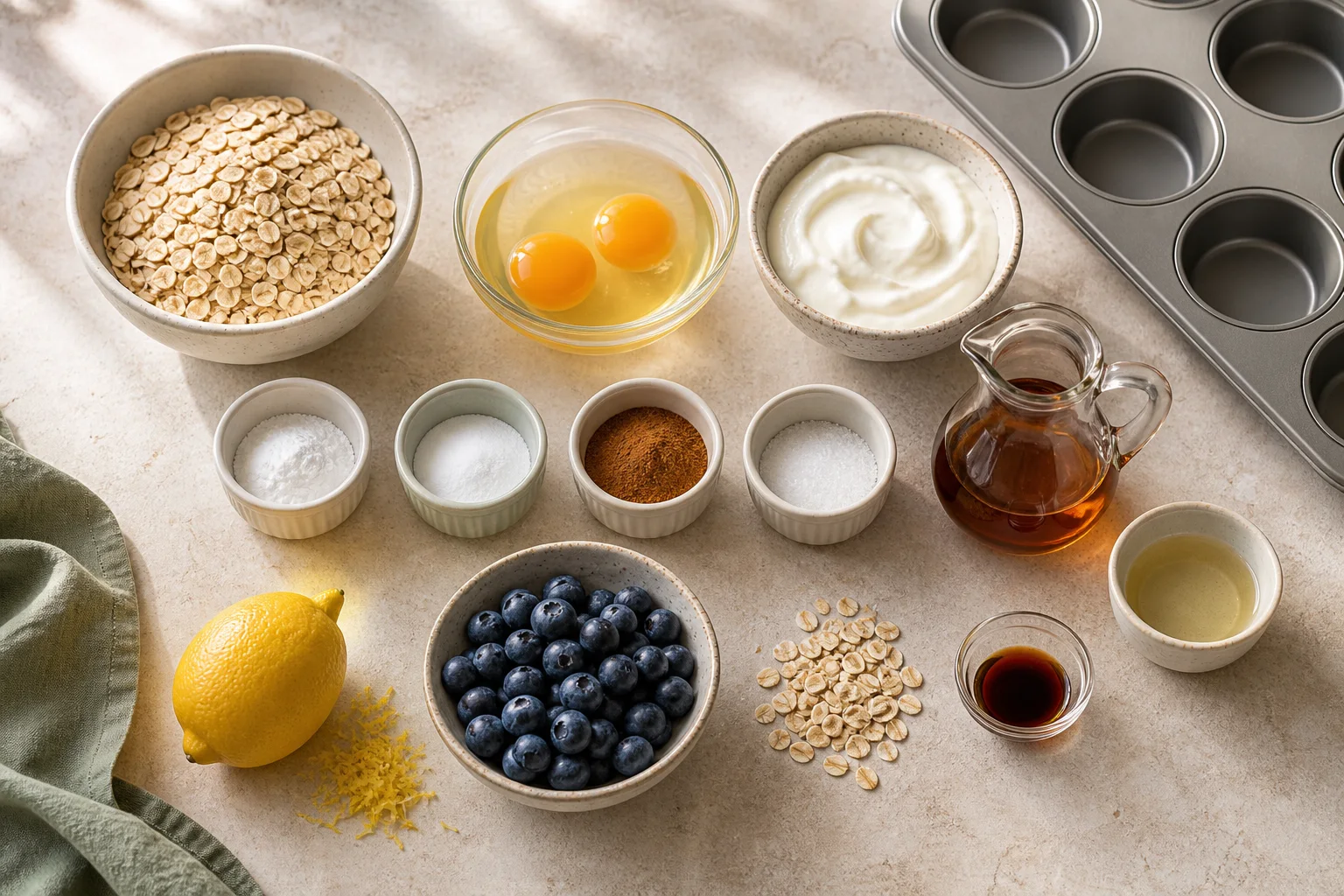
- 2 1/2 cups old-fashioned rolled oats, 225 grams
- 2 teaspoons baking powder
- 1/2 teaspoon baking soda
- 1/2 teaspoon ground cinnamon
- 1/2 teaspoon fine salt
- 2 large eggs, at cool room temperature
- 3/4 cup plain Greek yogurt, 170 grams
- 1/3 cup pure maple syrup, 105 grams
- 1/4 cup avocado oil or another neutral oil, 55 grams
- 1 teaspoon vanilla extract
- 1 teaspoon finely grated lemon zest, optional
- 1 cup blueberries, 150 grams, fresh or frozen
- 2 tablespoons rolled oats, optional for topping
- nonstick cooking spray or paper liners, for the pan
Ingredient notes and substitutions
Rolled oats: Old-fashioned rolled oats make a dependable flour when ground finely. Quick oats work by weight and need less blending, but they may absorb liquid faster. Steel-cut oats are too hard for this method.
Greek yogurt: Thick plain yogurt keeps the batter moist without making it runny. Whole-milk or 2% yogurt works. Regular yogurt is thinner; start with 2/3 cup and add the remainder only if the rested batter is unusually stiff.
Maple syrup: Use pure maple syrup. Honey can replace it by weight but gives a stronger flavor and quicker browning. Granulated sugar is not a direct swap because it removes liquid.
Oil: Avocado, grapeseed or a mild vegetable oil keeps the crumb soft when cool. Melted butter works by weight, but the muffins firm more noticeably after refrigeration.
Eggs: Two eggs bind an oat-only crumb. An egg substitute would require separate development and is not presented as a guaranteed one-for-one change.
Blueberries: Fresh berries are easiest to fold. Frozen berries can go in without thawing; thawing releases purple juice and extra water. Expect frozen fruit to add 2 to 4 minutes of baking.
Lemon zest: Optional zest brightens the berries without adding liquid. Orange zest also works. Do not replace it with a large pour of juice.
How to make blueberry oat muffins
1. Prepare the oven and pan
Place a rack in the center and heat the oven to 375°F. Lightly spray a standard 12-cup muffin pan or line it with paper liners.
If using liners, give them a very light spray because low-wheat and wheat-free oat batters can cling more than conventional muffins. Set the pan on a stable sheet pan only if the muffin pan is flexible silicone.
2. Grind the rolled oats
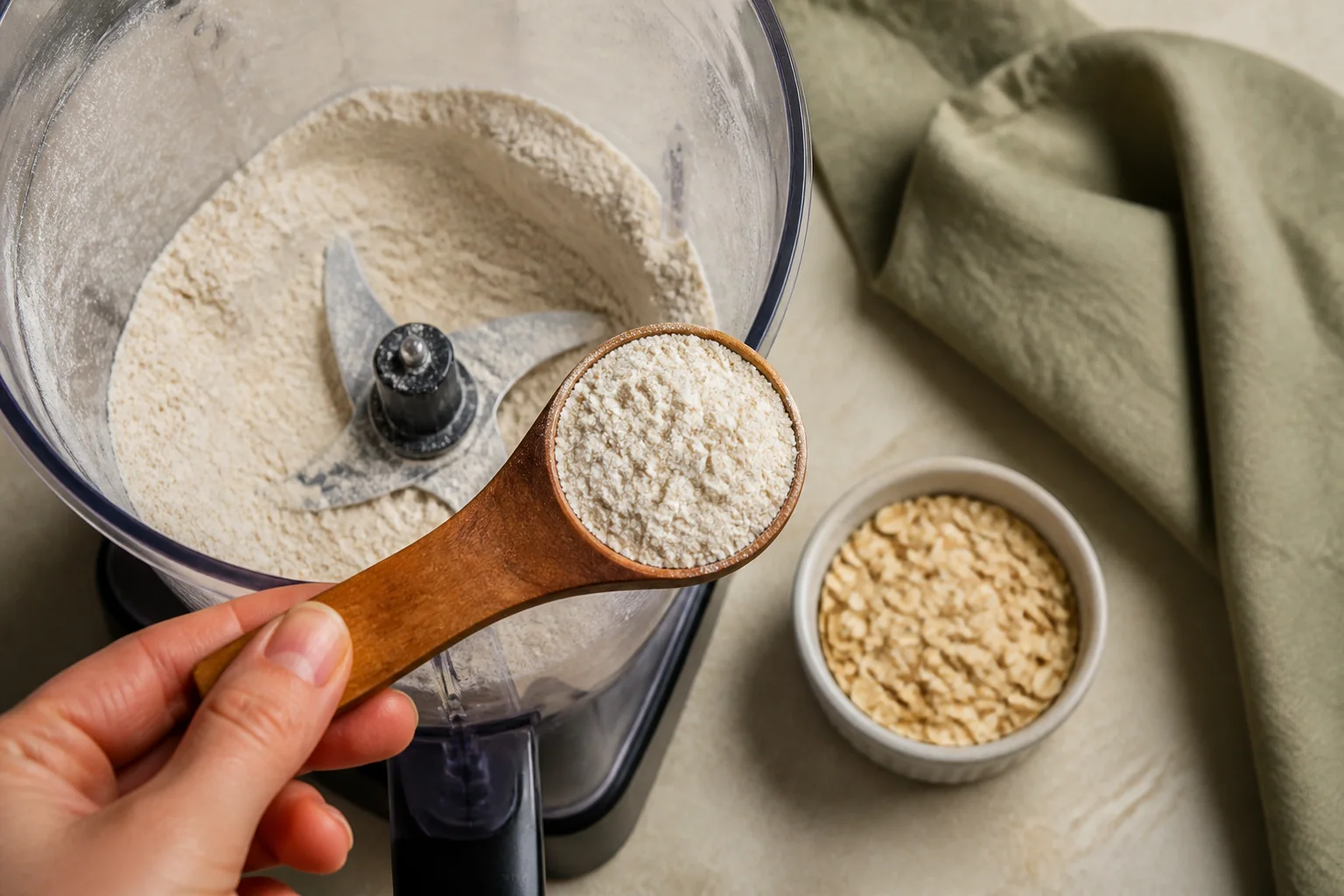
Add half the oats to a dry high-powered blender. Blend for 30 to 45 seconds, stop safely, shake or stir the container, then blend again until powdery. Transfer to a large mixing bowl and repeat with the remaining oats.
Look closely at a spoonful. There should be no full flakes and few particles larger than a pinhead. Grinding all 225 grams in a narrow blender at once may leave coarse flakes above the blades.
3. Mix the dry ingredients
Whisk baking powder, baking soda, cinnamon and salt into the freshly ground oat flour. Lift flour from the bottom several times so the small leavener quantities distribute evenly.
Break up every visible baking-soda clump. A concentrated pocket can taste bitter and create an irregular tunnel.
4. Mix the wet ingredients
In a second bowl, whisk eggs until the whites and yolks are completely combined. Add Greek yogurt, maple syrup, oil, vanilla and optional lemon zest; whisk until smooth.
Room-temperature ingredients combine more readily, but they should not sit out for an extended period. Small yogurt flecks are acceptable; large cold lumps should be whisked smooth.
5. Combine without overmixing
Pour the wet mixture into the oat flour. Fold with a flexible spatula just until no dry pockets remain. Scrape the bowl bottom and stop.
The fresh batter should be thick but soft, falling from the spatula in a slow ribbon. Do not blend it at high speed; mechanical overworking makes hydrated oat starches pasty.
6. Rest for 10 minutes
Leave the batter at room temperature for 10 minutes. The oat flour absorbs moisture and the batter becomes scoopable.
After resting, a spatula drawn through the bowl should leave a groove that closes slowly. If the batter is pourable, use the adjustment guide below. If it is stiff enough to stand in a dry mound, add liquid cautiously.
7. Fold in blueberries
Reserve about 24 berries for the tops if desired. Fold the rest into the rested batter with 5 to 7 broad strokes.
For frozen berries, add them straight from the freezer and fold as little as possible. Purple streaks are harmless, but extended stirring breaks the fruit and cools the batter.
8. Fill the muffin cups
Divide batter evenly among 12 cups, filling each about three-quarters full. A spring-loaded scoop makes portions more consistent.
Place two reserved berries on each top and sprinkle with optional rolled oats. Do not pile many cold berries in the center, where they can delay setting.
9. Bake until springy
Bake for 18 to 23 minutes with fresh berries or 20 to 27 minutes with frozen berries. Rotate the pan after 15 minutes only if the oven browns unevenly.
The tops should be lightly golden and spring back after a gentle center press. A toothpick inserted into muffin crumb—not through a berry—should emerge with a few moist crumbs but no wet batter. For an additional check, the center of an egg-containing muffin should reach about 200°F to 205°F.
10. Cool in stages
Set the pan on a rack for 10 minutes. Run a thin spatula around unlined muffins, then lift every muffin onto the rack.
Cool at least 30 minutes before judging the crumb. Oat flour continues setting as steam escapes; breaking one open immediately can make a fully baked center seem gummy.
Batter texture guide
| Batter after 10-minute rest | Meaning | Adjustment |
|---|---|---|
| Thick ribbon; groove closes slowly | Balanced hydration | Fold in berries and portion |
| Pourable like pancake batter | Oats were coarsely ground or yogurt is thin | Fold in 1 tablespoon finely ground oat flour; wait 3 minutes |
| Stands in a dry mound and cracks | Oats absorbed more liquid than expected | Fold in 1 tablespoon milk |
| Smooth but gluey and elastic | Complete batter was overblended | Bake promptly; mix by hand next time |
Adjust only once, wait, and reassess. Oat flour continues hydrating, so rapid repeated additions can overshoot the target.
How fine should homemade oat flour be?
Rub a pinch between clean fingers. It should feel floury with a little fine bran-like texture, not like chopped cereal. Full rolled-oat pieces indicate that the blender needs another cycle.
A wide food processor can grind oats, but its flour is often coarser. Work longer, scrape safely and sift out any conspicuous flakes. Return those flakes to the processor instead of discarding them.
Measure the original oats by weight before grinding. Volume changes as the flakes become flour, but the 225-gram ingredient amount stays the same.
Store-bought oat flour can replace homemade oat flour by weight. It is usually finer and may absorb slightly faster, so begin checking the rested batter at 8 minutes.
How to get better rise from oat flour
Use fresh leavener
Baking powder and soda lose effectiveness after long storage in humid conditions. Record the opening date and replace a questionable container before assuming oat flour is the problem.
Fill cups evenly
Small muffins finish before large ones and can dry out while the larger centers set. Weighing the total batter and dividing by 12 is the most exact option; an even scoop is the practical one.
Do not rest indefinitely
Ten minutes hydrates oats. A 45-minute countertop rest gives the leavener time to release gas before the batter reaches the oven. Fold berries, portion and bake promptly after the measured rest.
Keep frozen berries dispersed
A cluster of frozen fruit chills and weighs down the center. Fold briefly and distribute the berries among all cups.
Use the right oven temperature
A fully preheated 375°F oven sets the outside while the batter expands. A cool starting oven produces a flatter top and longer bake.
Fresh versus frozen blueberries
Fresh blueberries keep the batter warmer and release less juice during folding. Wash them under running water, drain and dry thoroughly before adding.
Frozen berries should remain frozen. Do not rinse unless the package specifically instructs it. Add them last and expect a longer bake.
Wild frozen blueberries are smaller and distribute well but color the batter more readily. Use the same weight. Large cultivated berries create bigger moist pockets, so avoid placing several together in one cup.
Blueberries can be replaced with the same weight of raspberries cut in half if very large. Strawberries contain more exposed water when diced and require a separate moisture adjustment.
What “healthy” means for oat muffins
FDA guidance explains that rolled oats processed by flattening or steaming are considered whole grains because the bran, germ and endosperm remain. This recipe uses oats as its only grain.
It also contains maple syrup and oil. “Made with whole grains” does not mean sugar-free, low-calorie or appropriate for every medical diet. Blueberries add fruit, but the serving is still one muffin from a 12-muffin batch.
For dietary tracking, use the package labels and actual portion weights. The recipe-card nutrition is an estimate, not a regulated product label.
Flavor variations
Lemon blueberry: Use the optional lemon zest and add no extra juice. Sprinkle a little zest on the cooled muffins.
Cinnamon raisin: Replace blueberries with 3/4 cup raisins and increase cinnamon to 1 teaspoon. Soak very dry raisins for 10 minutes, then blot thoroughly.
Apple: Fold in 1 cup very small peeled apple dice. The pieces must be no larger than 1/4 inch so the centers bake evenly.
Banana: Do not simply add mashed banana. It changes liquid, sugar and acidity; use the dedicated banana yogurt muffin recipe instead.
Chocolate chip: Replace berries with 3/4 cup mini chocolate chips. The result is sweeter and the nutrition estimate changes.
Nut topping: Sprinkle 1/3 cup finely chopped walnuts among the tops. Check allergen needs before serving.
Troubleshooting
The muffins are gritty
The oats were not ground finely or the batter skipped its 10-minute rest. Grind in two batches until powdery and give the flour time to hydrate.
The centers are gummy
The complete batter may have been overblended, the muffins underbaked or they were opened hot. Mix by hand, check crumb away from a berry and cool at least 30 minutes.
The muffins are dense and flat
Leavener may be old, the oven not fully heated or the batter rested too long. Portion and bake promptly after the 10-minute hydration period.
The tops browned before centers set
The pan may be dark or the rack high. Use a light pan on the center rack, tent loosely with foil and continue until the center cue is met.
Muffins stick to paper liners
Oat-only batters can cling while warm. Lightly spray liners and cool fully. Parchment-style liners generally release more easily than thin paper.
Frozen berries made purple batter
They thawed during mixing or were stirred too much. Keep them frozen and use only a few broad folds. The color is harmless.
The berries sank
The batter was too loose or the berries very wet. Dry fresh fruit, keep frozen fruit frozen and check the batter after its rest.
Muffins crumble when unwrapped
They may still be hot, or the eggs were undersized. Complete the pan and rack cooling stages before peeling liners.
Storage and reheating
Cool completely, then store in an airtight container at room temperature for up to 2 days. Line the container with a dry paper towel and place another above the muffins to manage surface moisture.
Refrigerate for up to 5 days. Warm one muffin for 10 to 15 seconds in the microwave or 5 minutes in a 300°F oven. Prolonged microwave heating makes an oat crumb rubbery.
Freeze fully cooled muffins in a rigid container or freezer bag for up to 3 months. Freeze them in one layer first if the berries make the sides moist, then stack once firm.
Thaw overnight in the refrigerator or at room temperature for about 1 hour. To warm from frozen, microwave at 50% power in 20-second intervals or use a 300°F oven for 10 to 15 minutes.
Frequently asked questions
Can I make oat muffins in a blender?
Use the blender to grind oats, not to repeatedly blend the complete batter. Mixing wet and dry by hand reduces the risk of a gummy oat-starch texture.
Can I use store-bought oat flour?
Yes. Use 225 grams and start checking batter texture after 8 minutes because a commercial fine grind may hydrate faster.
Are oat muffins gluten-free?
The formula contains no wheat ingredient, but oats can have cross-contact. Anyone with celiac disease or a medical need should use oats labeled or certified for that need and verify all other packages.
Can I leave out the yogurt?
Not without another acidic, similarly thick ingredient. Sour cream works by weight; milk is too thin as a direct replacement.
Why rest oat muffin batter?
The rest gives fine oat particles time to absorb liquid, producing a smoother crumb and a batter that holds blueberries more evenly.
Should frozen blueberries be thawed?
No. Fold them in frozen and allow a few extra minutes of baking.
How full should muffin cups be?
Fill standard cups about three-quarters full. Even portions give similar rise and doneness.
Can I eat oat muffin batter raw?
No. It contains raw egg. Keep the batter away from ready-to-eat food and bake it before eating.
Recipe development note
This blueberry oat muffins recipe was developed through culinary research and editorial review. It has not been represented as a personal kitchen test. Oat thickness, blender power, yogurt consistency, berry temperature and pan color vary; use the flour-fineness, rested-batter and doneness cues.
Nutrition is an estimate and changes with brands, berries and substitutions. The accompanying visuals are AI-assisted food-editorial images, not photographs of a kitchen test.
Printable recipe card
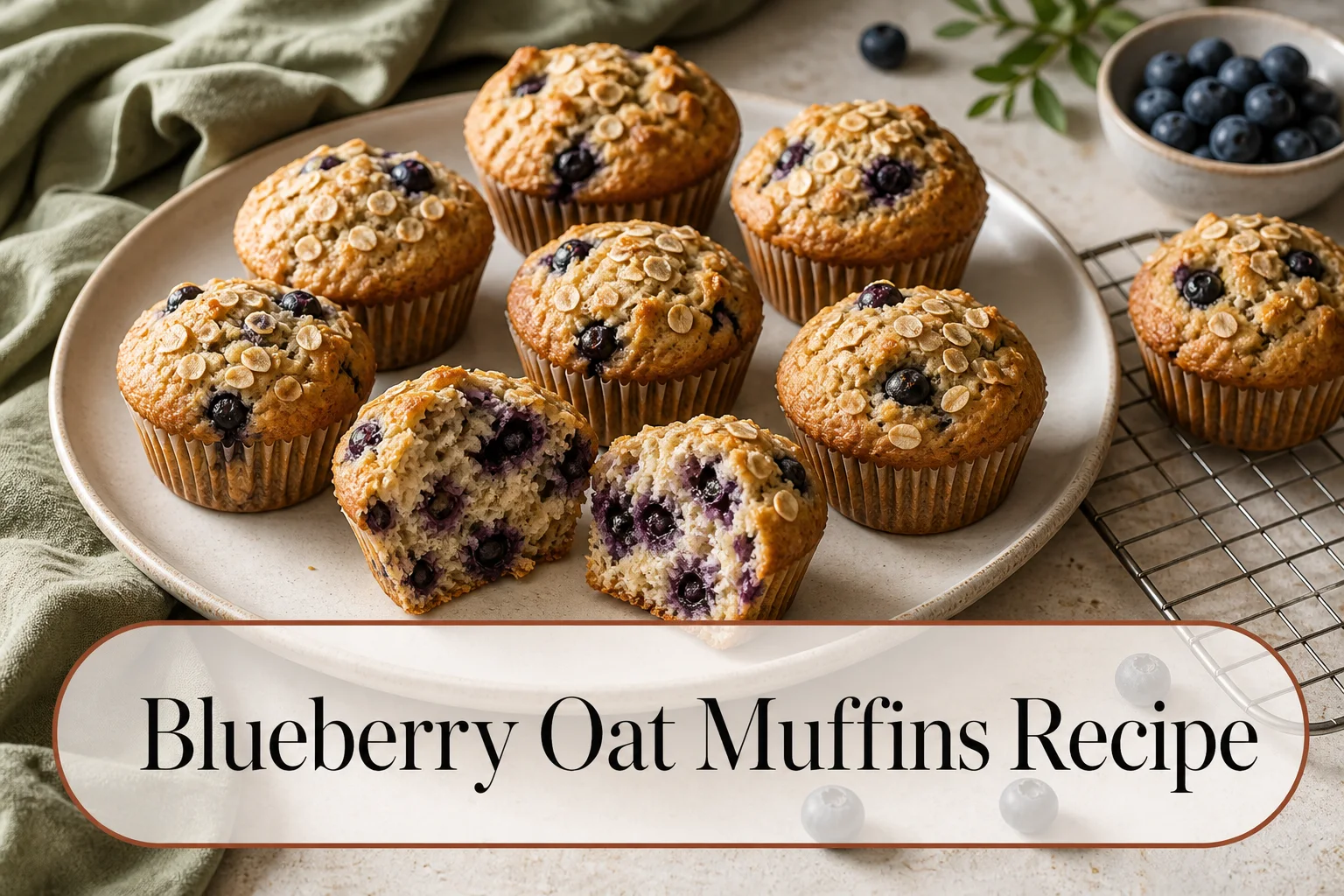
Blueberry Oat Muffins Recipe
Ingredients
Equipment
Method
- Heat the oven to 375°F with a center rack. Lightly spray a standard 12-cup muffin pan or spray-lined paper cups.
- Blend oats in two batches for 30 to 45 seconds each, stopping and stirring safely, until powdery with no intact flakes.
- Whisk the oat flour with baking powder, baking soda, cinnamon and salt, breaking up all leavener clumps.
- Whisk eggs, Greek yogurt, maple syrup, oil, vanilla and optional lemon zest until smooth.
- Fold wet into dry just until no flour pockets remain. Do not blend the complete batter at high speed.
- Rest batter at room temperature for 10 minutes. It should fall in a thick ribbon and a groove should close slowly.
- Reserve optional top berries, then fold the rest into the batter with 5 to 7 broad strokes. Keep frozen berries frozen.
- Divide among 12 cups, filling about three-quarters full. Add reserved berries and optional rolled oats.
- Bake 18 to 23 minutes with fresh berries or 20 to 27 minutes with frozen, until tops spring back and a crumb-area toothpick has no wet batter.
- Cool in the pan 10 minutes, then transfer muffins to a rack and cool at least 30 minutes before judging the crumb.
Notes
- Grind oats in two batches until powdery with no intact flakes.
- Mix the complete batter by hand and rest exactly 10 minutes.
- Fold frozen blueberries straight from the freezer.
- Insert the toothpick into crumb, not through a berry.
- Cool at least 30 minutes because the oat crumb continues setting.
- Contains milk and egg; verify oat labeling for gluten-related needs.
- This recipe was developed through culinary research and editorial review.
This recipe was developed through culinary research and editorial review. Oat thickness, blender power, yogurt consistency, berry temperature and pan color vary; use the flour-fineness, rested-batter and doneness cues.
Nutrition is an estimate per muffin and changes with brands, berry type and substitutions.