
This banana muffin recipe with yogurt produces soft, rounded muffins that taste clearly of ripe banana without becoming damp or heavy in the middle. Thick Greek yogurt supplies moisture and a little tang, while oil keeps the crumb tender even after the muffins cool.
The recipe measures mashed banana by volume because “three bananas” can mean very different amounts. Two cups of flour balance 1 1/4 cups banana and 1/2 cup yogurt, and the batter is folded only until the last dry streaks disappear. A steady 375°F oven gives the tops time to rise and brown while the centers cook through.
This recipe was developed through culinary research and editorial review. Banana size, ripeness, yogurt thickness, flour measurement and oven calibration vary, so use the batter, color and center-temperature cues along with the baking time.
If you have more Greek yogurt to use, make the fluffy Greek yogurt pancakes recipe for breakfast. The Greek yogurt strawberry smoothie recipe is a faster option when the oven is staying off.
Why banana yogurt muffins can turn dense
Banana and yogurt both contribute water. More of either ingredient does not automatically make a better muffin; excess moisture can weigh down the expanding batter and leave a gummy line near the bottom.
Flour measurement creates the opposite problem. Too much flour makes the batter stiff and the crumb dry, while too little flour leaves the structure too weak to hold the gases from baking powder and baking soda. Spooning flour into a cup and leveling it—or weighing 240 grams—keeps the ratio predictable.
Mixing also matters. Once wet ingredients meet flour, vigorous stirring develops gluten. The muffins become chewier and tunnels may form around a tight center. Folding just until no loose flour remains preserves a tender, even crumb.
Ingredients
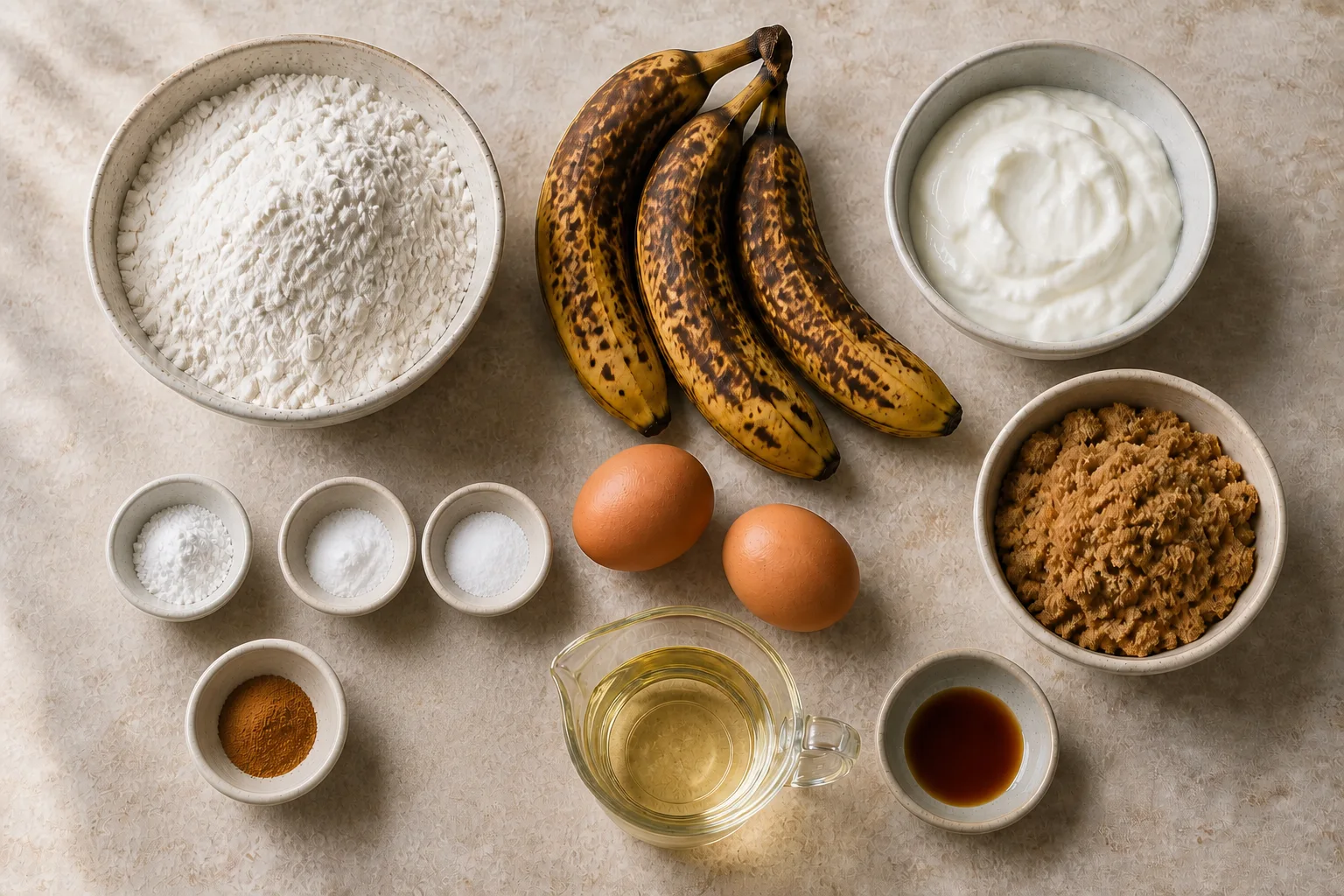
- 2 cups all-purpose flour, spooned and leveled, or 240 grams
- 1 teaspoon baking powder
- 1 teaspoon baking soda
- 1/2 teaspoon kosher salt
- 1 teaspoon ground cinnamon
- 1 1/4 cups mashed very ripe banana, about 3 medium bananas
- 1/2 cup plain whole-milk or 2% Greek yogurt, room temperature
- 1/2 cup packed light brown sugar
- 2 large eggs, room temperature
- 1/3 cup neutral oil, such as avocado or canola
- 2 teaspoons vanilla extract
- 1/2 cup chopped toasted walnuts or mini chocolate chips, optional
- 1 tablespoon coarse sugar for the tops, optional
Ingredient notes and substitutions
Bananas: Use bananas with heavily spotted or mostly brown skins. They mash smoothly and provide stronger flavor than firm yellow fruit. Measure the mash after peeling; freeze any extra rather than adding it to the batter.
Greek yogurt: Plain whole-milk or 2% Greek yogurt gives the most tender result. Nonfat yogurt can work, but the crumb may be slightly firmer. If the yogurt is exceptionally loose, do not add extra banana to compensate.
Flour: All-purpose flour provides enough structure for the wet batter. A cup-for-cup gluten-free blend may behave differently and has not been calibrated for this formula. Whole-wheat flour absorbs more water and can produce a denser muffin if substituted entirely.
Brown sugar: Light brown sugar supports moisture and banana flavor. Granulated sugar can replace it by volume, although the muffins may taste a little less caramel-like and dry slightly faster.
Oil: Neutral oil stays fluid at room temperature, which helps the muffins remain soft. Melted butter works in the same amount but gives a firmer crumb after cooling; let it cool until merely warm before mixing with eggs.
Leaveners: Baking powder supplies lift, and baking soda reacts with the yogurt and banana. Measure both level and make sure they are active. Extra baking soda can make the tops brown too quickly and leave a metallic or soapy taste.
Add-ins: Keep walnuts or mini chips to 1/2 cup. A heavy load can pull the center down. Toast nuts and cool them before folding; warm nuts can soften the batter.
For a vanilla muffin base without mashed banana, Greek yogurt muffins includes optional berries or chocolate chips and its own flour-to-liquid proportions.
How to make banana yogurt muffins
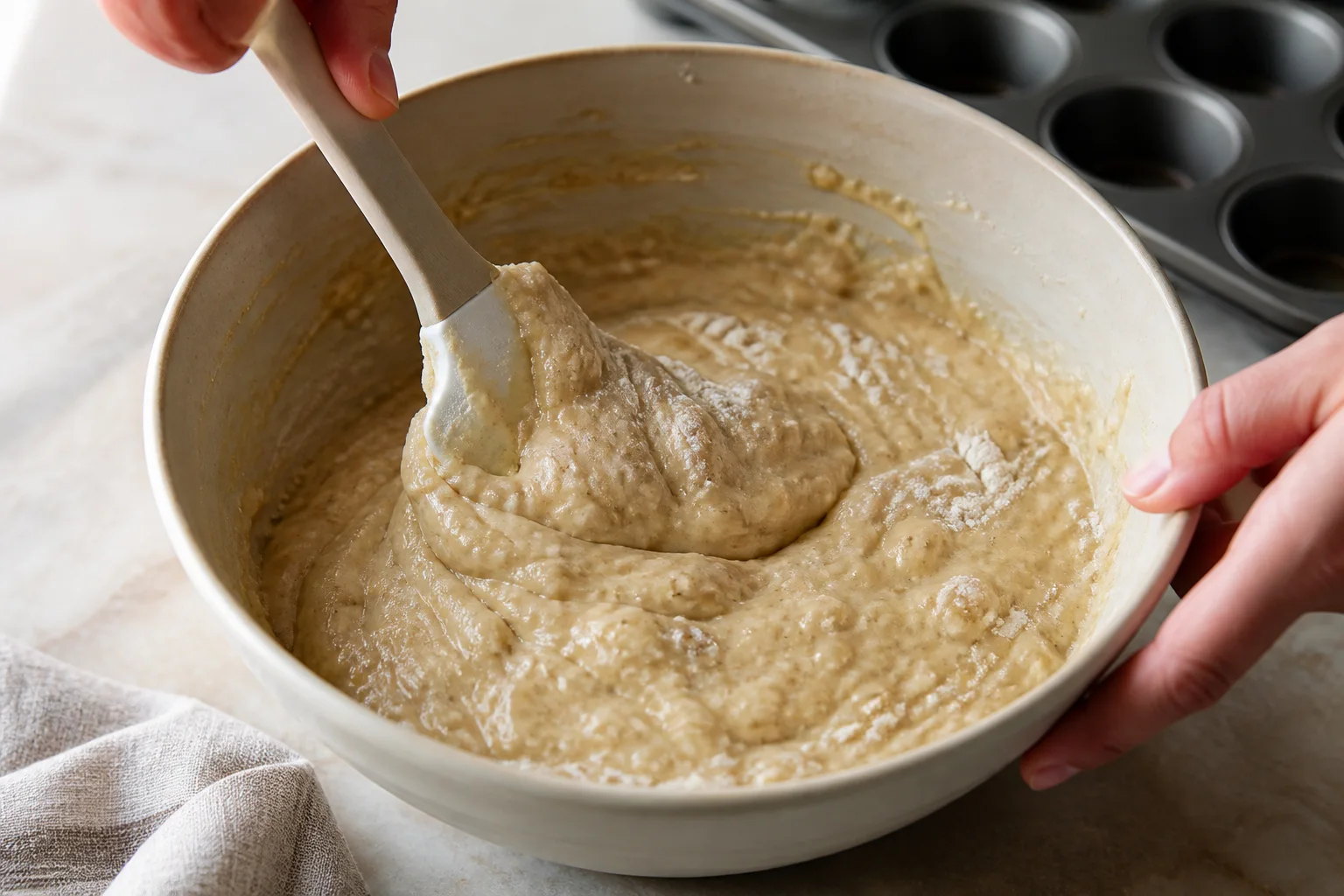
1. Prepare the pan and oven
Heat the oven to 375°F with a rack in the center. Line a standard 12-cup muffin pan with paper liners or grease each cup thoroughly.
Let the oven preheat for at least 15 minutes after it signals ready. Muffins depend on immediate heat for lift, and many ovens signal before the walls and rack are fully heated.
2. Combine the dry ingredients
Whisk flour, baking powder, baking soda, salt and cinnamon in a large bowl for about 20 seconds. Break up visible pockets of leavener.
If using walnuts or mini chocolate chips, toss them with 1 teaspoon of the measured flour mixture. The light coating helps distribute them instead of letting every piece sink.
3. Measure and mash the bananas
Mash peeled bananas on a plate or in a shallow bowl until mostly smooth. A few pea-size pieces are fine, but large chunks create wet pockets in the muffins.
Spoon the mash into a dry measuring cup without packing it and level at 1 1/4 cups. Do not pour liquid released from thawed bananas into the cup without the banana solids; mix thawed fruit and its liquid together first, then measure.
4. Whisk the wet mixture
In a medium bowl, whisk the mashed banana, Greek yogurt and brown sugar until no dense yogurt lumps remain. Add eggs, oil and vanilla, then whisk until glossy and uniform.
Room-temperature yogurt and eggs combine more readily. Cold ingredients can thicken the oil-and-yogurt mixture and require more stirring after the flour is added.
5. Fold the batter gently
Make a well in the dry ingredients and pour in the wet mixture. Fold with a flexible spatula, reaching to the bottom and rotating the bowl. Stop when only a few narrow flour streaks remain.
Add optional walnuts or chips and fold two or three more times, just until the flour disappears. The batter should be thick and scoopable, not pour like cake batter or stand as a rigid dough.
Do not taste the raw batter. FDA guidance explains that both raw flour and eggs may carry harmful germs, so wash bowls, utensils and surfaces after contact with the uncooked mixture.
6. Portion evenly
Divide the batter among 12 cups, using about 1/3 cup in each. The cups should be roughly three-quarters full. A spring-loaded scoop makes the portions more consistent.
Smooth only sharp peaks; do not press the batter flat. Sprinkle coarse sugar lightly over the tops if using.
7. Bake until the centers are set
Bake for 18 to 22 minutes, rotating the pan front to back once after 14 minutes only if the oven browns unevenly. Avoid opening the door earlier, when the structure is still fragile.
The tops should be rounded and golden, and they should spring back when lightly pressed near the center. A tester inserted through the tallest part should show moist crumbs but no glossy batter. For an objective check, the middle of a representative muffin should reach about 200 to 205°F.
8. Cool in two stages
Cool the muffins in the pan for 5 minutes. Then move them to a wire rack so steam can escape from the bottoms.
Let them cool at least 15 minutes before opening a liner. The crumb continues setting as heat redistributes, and a muffin torn open immediately can look wetter than it will after the short rest.
How ripe should the bananas be?
The best bananas are soft with extensive brown spotting. Their starch has converted to sugar, so they mash easily and carry a fuller aroma into the baked muffin.
Firm yellow bananas are harder to mash and produce a milder flavor. Baking them in their skins to force softness changes texture but does not create the same developed flavor as natural ripening.
If bananas are ready before you are, peel and freeze them in an airtight container. Thaw in the refrigerator, stir the fruit and released liquid together, and measure exactly 1 1/4 cups.
What the batter should look like
Proper batter sits in a soft mound when scooped and slowly relaxes. It should hold optional chips or nuts throughout rather than letting them drop instantly to the bottom.
A stiff batter that tears away from the bowl often signals too much flour. A loose batter that flows freely may contain too much banana, loose yogurt or inaccurately measured oil.
Do not automatically correct the batter with extra liquid or flour unless a clear measuring error occurred. Small differences in banana and yogurt naturally change appearance, and aggressive adjustment can create a new imbalance.
Doneness cues that prevent a gummy center
Use more than a toothpick. A toothpick can miss a wet pocket of banana or come out coated with melted chocolate, while a clean toothpick does not always prove the deepest center is fully set.
Look for a rounded top with no wet shine, gentle spring-back and a center temperature near 200 to 205°F. Insert the thermometer from the side toward the middle to avoid leaving a large hole in the top.
The muffins continue cooking slightly during the 5-minute pan rest. Leaving them in the hot pan much longer traps steam and can make the bottoms damp.
Optional add-ins and flavor variations
Walnut banana: Fold in 1/2 cup cooled toasted walnuts. Reserve a tablespoon for the tops if you want the flavor visible.
Chocolate chip: Use 1/2 cup mini semisweet chips. Mini chips disperse more evenly than large morsels and are less likely to form heavy pockets.
Blueberry: Fold in 3/4 cup small, dry blueberries. Frozen berries can streak and cool the batter; use them frozen, work quickly and expect a few additional minutes of baking.
Warm spice: Increase cinnamon to 1 1/2 teaspoons and add 1/8 teaspoon nutmeg. Avoid heavy spice amounts that overwhelm banana.
Less sweet: Reduce brown sugar to 1/3 cup. The muffins will be less moist and lightly browned, particularly if the bananas are only moderately ripe.
Crumb topping: A streusel adds flour, sugar and fat and changes the top-set timing. Keep it light so the center can rise; begin checking at 20 minutes.
Troubleshooting
The centers are gummy
Too much banana, underbaking or opening the oven too early are common causes. Measure the mash, wait for spring-back and a 200 to 205°F center, and cool for 15 minutes before judging the crumb.
The muffins are dry
Flour may have been scooped directly from the bag or the muffins baked too long. Spoon and level the flour, and remove the pan when the center is set rather than waiting for a completely dry tester.
The muffins are tough or full of tunnels
The batter was likely overmixed. Fold with a spatula only until dry pockets disappear. Do not use an electric mixer after flour is added.
The tops are flat
Old leaveners, a cool oven or very loose batter can reduce lift. Preheat thoroughly, use active baking powder and soda, and keep the measured wet-to-dry ratio.
The tops brown before the centers cook
The oven may run hot, the rack may be too high or extra baking soda may have been used. Check oven calibration, use the center rack and measure leaveners level.
The liners stick
Very warm muffins stick more readily because the crumb has not set. Cool at least 15 minutes. Paper quality and very low-fat ingredient substitutions can also affect release.
Add-ins sink to the bottom
The pieces may be too large or the batter too loose. Use mini chips or chopped nuts, coat them with a little measured flour and keep the total to 1/2 cup.
Storage and freezing
Cool muffins completely before storing; enclosing them while warm traps condensation. Keep them in an airtight container at room temperature for up to 2 days, with a paper towel beneath and above the muffins to absorb excess moisture.
For longer storage, refrigerate for up to 5 days. Refrigeration firms the crumb, so reheat briefly before serving.
Freeze cooled muffins in a single layer until firm, then move them to a freezer bag or airtight container. Use within 3 months for best quality. Freezing individually prevents them from sticking together and makes it easy to remove one serving.
How to reheat banana yogurt muffins
Microwave: Place one refrigerated muffin on a microwave-safe plate and heat for 10 to 15 seconds. From frozen, start at 30 seconds at reduced power and continue in short intervals.
Oven: Warm unwrapped muffins at 300°F for 8 to 10 minutes, or 14 to 18 minutes from frozen. Cover loosely with foil if the tops are already dark.
Toaster oven: Split a fully cooled muffin and warm cut-side up. Watch coarse sugar or chocolate closely because both can scorch near the heating element.
Frequently asked questions
Can I use regular yogurt instead of Greek yogurt?
Use a thick plain regular yogurt and begin with 2 tablespoons less than 1/2 cup. Regular yogurt contains more free liquid, so a full-volume swap can loosen the batter.
Can I use frozen bananas?
Yes. Thaw them in the refrigerator, stir the banana and released liquid together, then measure exactly 1 1/4 cups.
Can I use nonfat Greek yogurt?
Yes, although the crumb may be slightly firmer and dry sooner. Whole-milk or 2% yogurt gives the calibrated texture.
Can I make mini muffins?
Yes. Fill mini cups about three-quarters full and begin checking at 10 minutes. Their small centers cook quickly, so avoid waiting for dark tops.
Can I make jumbo muffins?
Divide into six jumbo cups and expect a longer bake, often 24 to 30 minutes. Use the spring-back and center-temperature cues rather than time alone.
Should I refrigerate banana yogurt muffins?
They can stay at room temperature for up to 2 days when fully cooled and airtight. Refrigerate for longer storage or freeze for the best retained texture.
Why are my banana muffins dark inside?
Banana naturally darkens as it bakes and oxidizes. A gray-brown crumb is usually a color change, while a glossy, compressed line signals underbaking or excessive moisture.
Recipe development note
This banana muffin recipe with yogurt was developed through culinary research and editorial review. It has not been represented as a personal kitchen test. Banana moisture, yogurt thickness, flour measurement, pan color and oven calibration can change the result; use the portion, spring-back and center-temperature cues throughout the method.
Nutrition is an estimate based on generic ingredients and excludes optional walnuts, chocolate chips and coarse sugar. The accompanying visuals are AI-assisted food-editorial images, not photographs of a kitchen test.
Recipe at a glance
| Metric | Details |
|---|---|
| Prep time | 20 minutes |
| Cook time | 22 minutes |
| Total time | 57 minutes |
| Yield | 12 muffins |
Printable recipe card
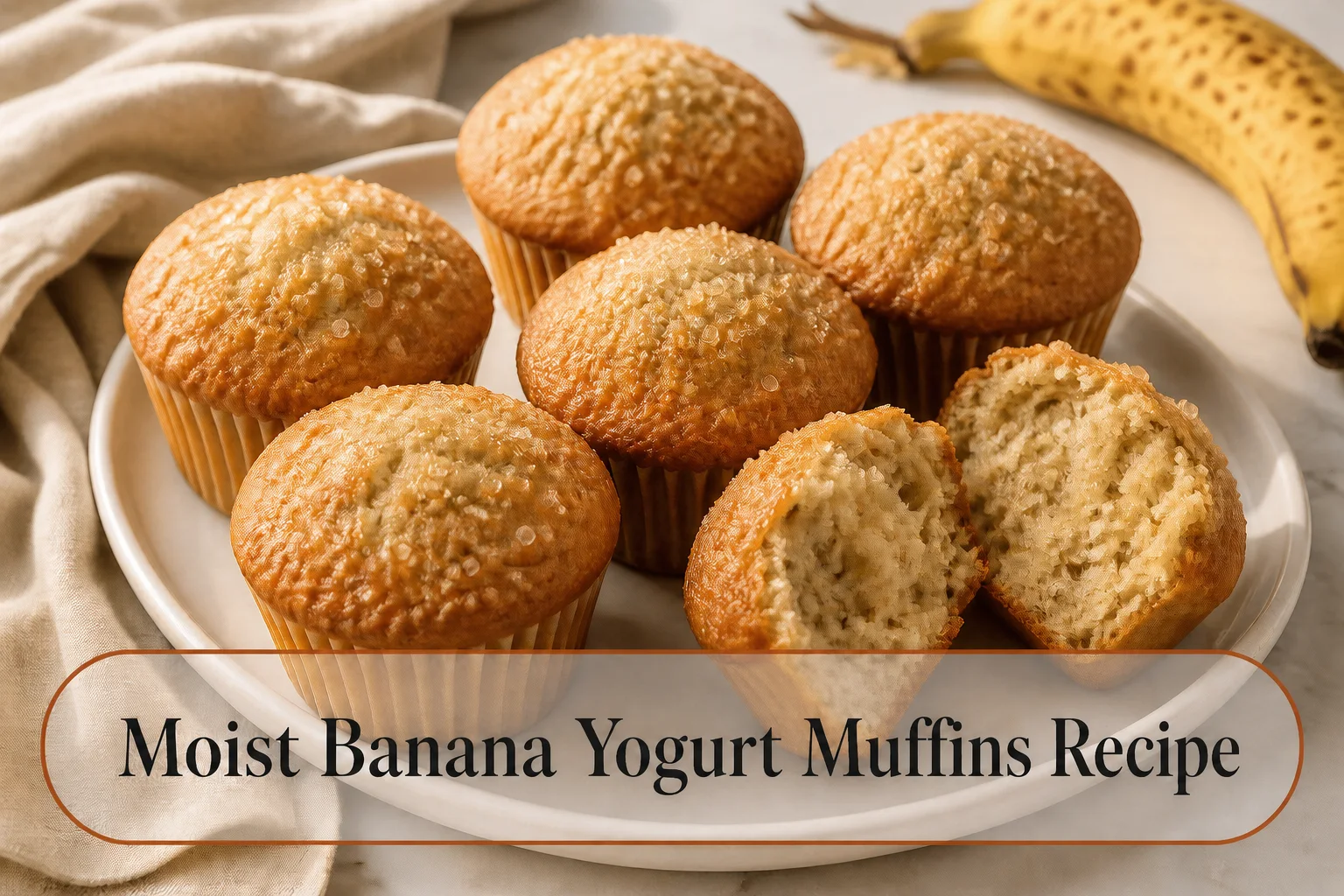
Moist Banana Yogurt Muffins Recipe
Ingredients
Equipment
Method
- Heat the oven to 375°F with a center rack. Line or grease a standard 12-cup muffin pan and allow the oven to preheat thoroughly.
- Whisk flour, baking powder, baking soda, salt and cinnamon in a large bowl. Toss optional walnuts or chips with 1 teaspoon of this mixture.
- Mash ripe bananas mostly smooth, then measure exactly 1 1/4 cups. Mix together any thawed banana and released liquid before measuring.
- Whisk banana, Greek yogurt and brown sugar until smooth. Whisk in eggs, oil and vanilla until glossy and uniform.
- Pour wet ingredients into dry and fold gently until only a few flour streaks remain. Add optional walnuts or chips and fold just until the flour disappears.
- Divide among 12 cups, about 1/3 cup each or roughly three-quarters full. Smooth sharp peaks and add coarse sugar if using.
- Bake 18 to 22 minutes, until tops are rounded and golden, centers spring back, a tester shows no glossy batter and a representative center reaches about 200 to 205°F.
- Cool in the pan 5 minutes, then transfer to a wire rack. Wait at least 15 minutes before opening a liner so the crumb can finish setting.
Notes
- Measure mashed banana at exactly 1 1/4 cups.
- Spoon and level flour or use 240 grams.
- Fold only until the final flour streaks disappear.
- Use spring-back, a clean center and about 200 to 205°F as combined doneness cues.
- This recipe was developed through culinary research and editorial review.
This recipe was developed through culinary research and editorial review. Banana moisture, yogurt thickness, flour measurement, pan color and oven calibration vary; use the portion, spring-back and center-temperature cues throughout the method.
Nutrition is an estimate based on generic ingredients and excludes optional walnuts, chocolate chips and coarse sugar; actual values vary.