
This Greek yogurt cheesecake recipe has the rich, clean slices people expect from baked cheesecake, with a little extra tang and a lighter finish. Full-fat Greek yogurt replaces part of the cream cheese—not all of it—so the center stays creamy instead of turning chalky or wet.
The method matters as much as the ingredient list. Completely softened cream cheese makes a lump-free base, the eggs are mixed in gently, and the cheesecake comes out while the center still has a controlled wobble. Gradual cooling finishes the set without pushing the filling toward a dry, firm texture.
This recipe was developed through culinary research and editorial review. Yogurt thickness, cream-cheese temperature, pan material and oven calibration vary, so follow the texture and doneness cues in addition to the times.
If you want a higher-protein cheesecake built around a different dairy base, compare this method with the baked cottage cheese cheesecake recipe. For a no-bake way to use the rest of a yogurt container, the Greek yogurt strawberry smoothie recipe is a quick option.
Why Greek yogurt works in cheesecake
Greek yogurt contributes acidity, moisture and milk solids. Its tang balances the sweetness and cream cheese, while its strained texture adds less free liquid than regular yogurt. That distinction is important: loose yogurt can lengthen the bake and leave the middle too soft.
Replacing only one-third of the dairy base with yogurt keeps enough cream-cheese fat for a smooth mouthfeel. A formula made almost entirely with nonfat yogurt may set, but it usually tastes sharper and feels more custardy or chalky than classic cheesecake.
Cornstarch provides a small margin of protection against curdling and helps the chilled cake slice cleanly. It should support the filling, not make it bouncy, so the recipe uses only two level tablespoons.
Ingredients
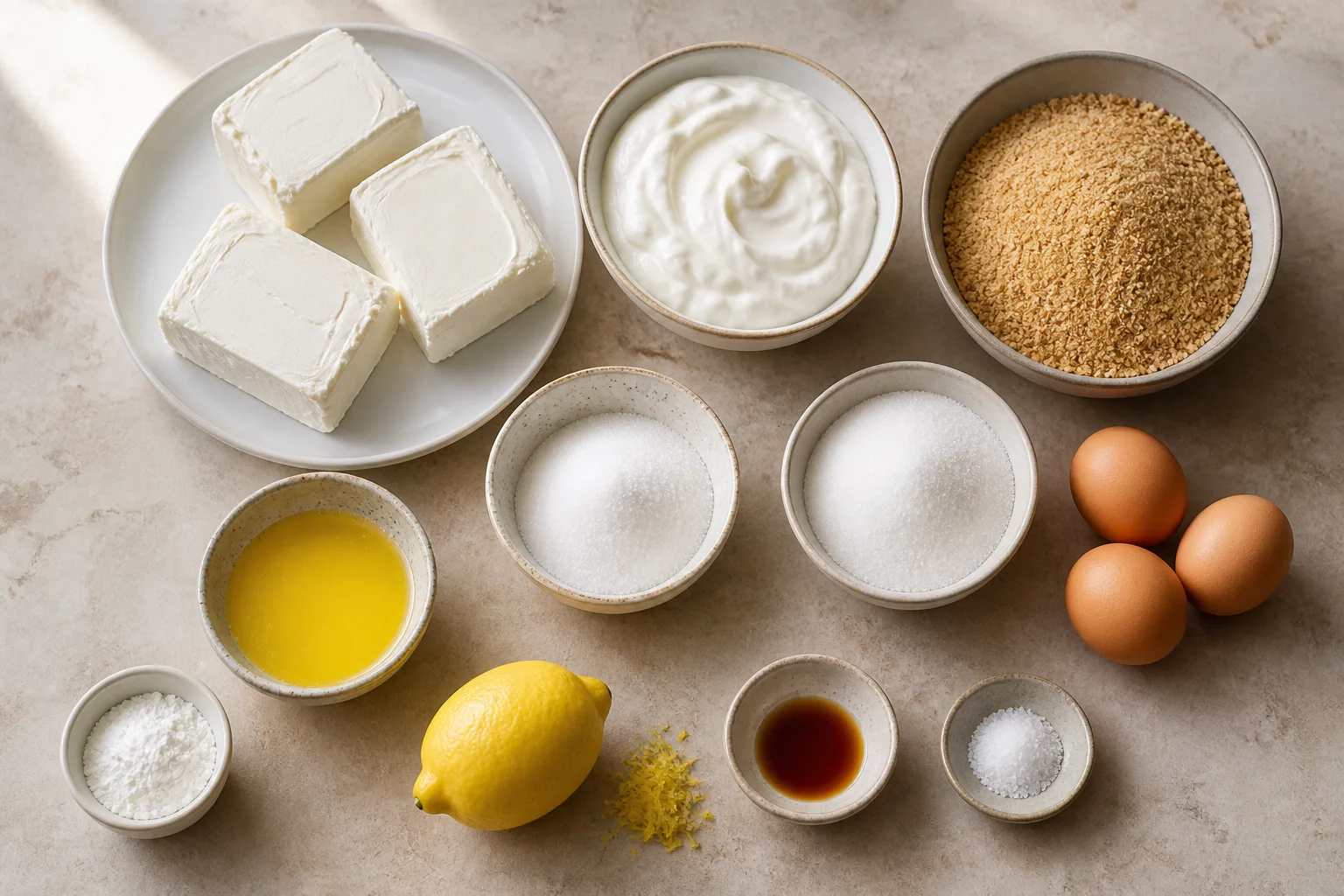
Graham cracker crust
- 1 1/2 cups fine graham cracker crumbs
- 2 tablespoons granulated sugar
- 1/4 teaspoon kosher salt
- 5 tablespoons unsalted butter, melted
Greek yogurt cheesecake filling
- 24 ounces full-fat block cream cheese, fully softened
- 1 cup plain whole-milk Greek yogurt, room temperature
- 3/4 cup granulated sugar
- 2 tablespoons cornstarch
- 2 teaspoons vanilla extract
- 1 teaspoon finely grated lemon zest
- 1 tablespoon fresh lemon juice
- 1/4 teaspoon kosher salt
- 3 large eggs, room temperature
Ingredient notes and substitutions
Cream cheese: Use full-fat block cream cheese, not whipped spread from a tub. Tub-style cream cheese contains more air and often more moisture. Softening is essential: each block should yield easily when pressed, with no cold core.
Greek yogurt: Plain whole-milk Greek yogurt gives the calibrated balance of tang and richness. A thick 2% yogurt can work, though the finished texture may be slightly firmer. Avoid sweetened or flavored yogurt and do not substitute unstrained regular yogurt cup for cup.
Sugar: Granulated sugar dissolves into the softened dairy base. Do not substantially reduce it; sugar affects both sweetness and the tenderness of the set filling.
Cornstarch: Spoon it into the tablespoon and level it. Flour can thicken cheesecake, but it requires a different amount and can make the filling more cake-like.
Eggs: Room-temperature eggs combine faster, which means less mixing and less trapped air. Set cold, uncracked eggs in warm—not hot—water for about 10 minutes if needed.
Lemon: The zest and small amount of juice brighten the yogurt without turning this into a pronounced lemon cheesecake. For a vanilla-only flavor, omit the zest but keep the tablespoon of juice.
Crust: Fine, evenly sized crumbs pack firmly and cut more neatly. Certified gluten-free graham-style crumbs can be used when the product and kitchen controls meet your dietary needs.
How to make Greek yogurt cheesecake
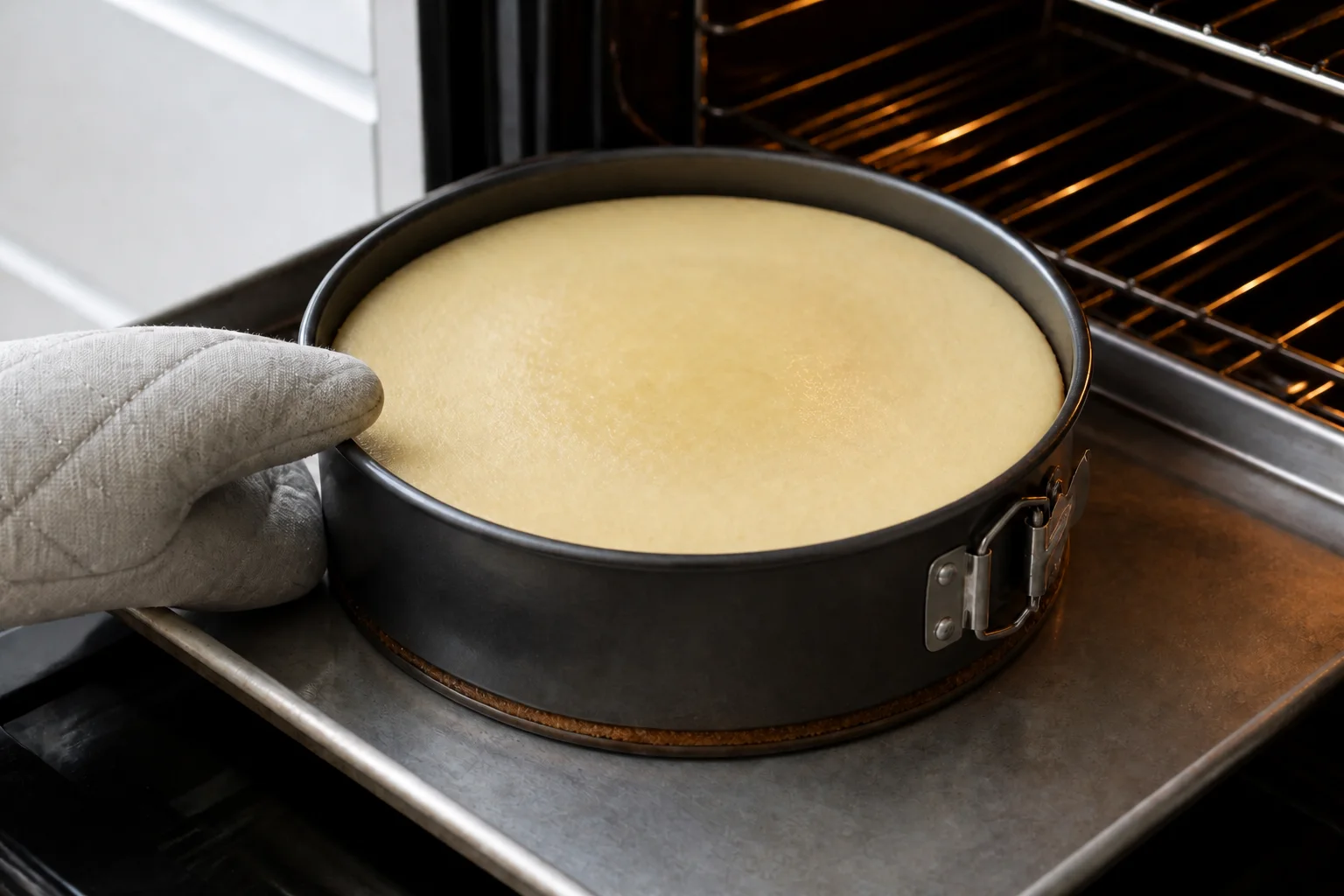
1. Prepare the oven and pan
Heat the oven to 350°F with a rack in the lower-middle position. Lightly grease a 9-inch springform pan and line the bottom with a parchment round.
Wrap the outside bottom in a layer of foil to catch possible butter seepage, then set the pan on a rimmed sheet pan. The cheesecake does not need to sit in a water bath.
2. Mix and prebake the crust
Stir the graham crumbs, 2 tablespoons sugar and 1/4 teaspoon salt until evenly combined. Pour in the melted butter and stir until every crumb looks moistened. A squeezed handful should hold together.
Press the crumbs firmly and evenly over the bottom of the pan with a flat-bottomed measuring cup. Bake for 8 minutes, until fragrant and just beginning to deepen in color. Cool for at least 10 minutes and reduce the oven to 325°F.
3. Make a smooth cream-cheese base
Beat the fully softened cream cheese on low speed for about 60 seconds, stopping to scrape the bowl and beater. Add the sugar and cornstarch, then mix on low only until creamy and uniform.
Scrape all the way to the bottom of the bowl. A hidden piece of cold cream cheese will not dissolve later without overmixing the eggs.
4. Add Greek yogurt gradually
Stir the Greek yogurt briefly in its measuring cup. Add it to the cream cheese in three portions, mixing on low and scraping after each addition. Mix in the vanilla, lemon zest, lemon juice and 1/4 teaspoon salt.
The base should look smooth and glossy, without small white lumps. If lumps remain at this point, keep mixing gently now; once the eggs are added, mixing should be minimal.
5. Add the eggs without whipping
Add the eggs one at a time on the mixer’s lowest speed. Stop as soon as the yellow streaks from each egg disappear. Remove the bowl from the mixer, scrape once and fold by hand several times to check the bottom.
Do not taste batter containing raw egg. FDA guidance recommends avoiding raw dough or batter and cleaning hands, bowls and surfaces that contacted the uncooked mixture.
6. Fill the crust
Pour the batter over the cooled crust. Smooth the top without repeatedly working it, then tap the pan gently on the counter two or three times. Pop only the largest visible bubbles with a toothpick.
If the batter has a foamy cap, let it stand for 5 minutes before filling the pan. That pause allows some trapped air to rise.
7. Bake to a center wobble
Bake at 325°F for 50 to 65 minutes. Begin checking at 50 minutes without leaving the oven door open for long.
The outer 2 inches should look set and slightly puffed. A 2- to 3-inch circle in the center should move as one soft unit when the pan is nudged; it should not ripple like liquid. Do not wait for the whole surface to become rigid.
8. Cool gradually
Turn off the oven, crack the door open several inches and leave the cheesecake inside for 30 minutes. Move the pan to a rack and cool at room temperature for about 1 hour.
After 15 minutes on the rack, run a thin knife around the inside edge to release the cake as it contracts. Leave the springform ring in place.
9. Chill until fully set
Cover the pan without pressing plastic wrap onto the surface. Refrigerate for at least 6 hours, although an overnight chill gives the cleanest slices.
Remove the ring only when the cheesecake is cold. A warm center can look done but collapse when unwrapped too early.
10. Slice cleanly
Dip a thin, sharp knife in hot water and wipe it dry. Make one cut, then clean and warm the knife before the next. This takes an extra minute but prevents filling and crust crumbs from dragging across every slice.
For the creamiest texture, let individual slices stand at room temperature for 10 to 15 minutes before serving.
The mixing order that prevents lumps
Temperature is the first control. Room-temperature cream cheese blends smoothly; cold cream cheese breaks into stubborn little pieces. Greek yogurt and eggs should also lose their refrigerator chill so they do not make the softened base seize.
The second control is sequence. Smooth the cream cheese first, incorporate dry sugar and cornstarch, then dilute the base gradually with yogurt. Eggs come last because vigorous beating after they are added traps air.
Trapped bubbles expand in the oven and contract during cooling. That rise-and-fall cycle can cause a puffy rim, a sunken center or surface cracks even when the ingredient ratios are correct.
How to tell when cheesecake is done
Look at the edge, center and movement together. The edge should be matte and stable. The center may still look slightly glossy, but it should wobble cohesively rather than slosh under the surface.
Carryover heat continues cooking the center during the 30-minute oven rest. A cheesecake that looks completely firm while the oven is still hot is often overbaked after it cools.
Ovens cycle above and below the displayed temperature, and dark pans absorb heat faster than light pans. Treat 50 to 65 minutes as a range. The physical cues decide when to stop.
Do you need a water bath?
Not for this formula. A moderate 325°F oven, limited egg aeration and gradual cooling provide a creamy result without placing the springform pan in water.
A water bath can make heat gentler, but a springform seam may admit water and soften the crust. The rimmed sheet pan here supports the pan and catches any butter drips; it is not filled with water.
Troubleshooting
The batter has cream-cheese lumps
The cream cheese was too cold or the bowl was not scraped thoroughly. If eggs have not been added, keep mixing on low until smooth. After the eggs go in, avoid chasing every tiny lump with high-speed mixing.
The cheesecake cracked
Common causes are excess air, overbaking or abrupt cooling. Mix on low, stop while the center still wobbles, and use the switched-off oven rest. A crack changes appearance, not whether the cheesecake is safe or enjoyable.
The center sank
A dramatic rise followed by a dip usually points to excess air. A center that remains wet and cannot hold a chilled slice was more likely underbaked.
The texture is chalky or firm
Nonfat yogurt, reduced-fat cream cheese or overbaking can each remove the creamy mouthfeel. Use the full-fat ingredients listed and take the cheesecake out before the center becomes rigid.
The filling is too soft to slice
First check chilling time: six hours is the minimum. If a fully chilled cake still cannot hold a slice, it may have been underbaked or made with unusually loose yogurt. Serve it in bowls with fruit rather than trying to rebake a cold cheesecake.
The crust is soggy
The crumbs may have been coarse, underpacked or not prebaked. Use fine crumbs, press firmly and complete the 8-minute prebake before adding filling.
The top browned
The rack may have been too high or the oven may run hot. Move the rack to the lower-middle position and check oven calibration. The cheesecake needs gentle heat, not a browned top.
Toppings that suit Greek yogurt cheesecake
Fresh berries provide color and acidity without masking the filling. Wash and dry them well, then add them shortly before serving so juice does not stain the surface.
A cooled berry compote also works. Spoon it onto individual slices rather than covering the whole cheesecake if you expect leftovers; the plain surface stores more neatly.
For a simple finish, serve each slice with a spoonful of Greek yogurt loosened with a little honey. Keep the topping separate until serving.
Storage and freezing
Cover and refrigerate cheesecake promptly. For best quality, use it within 3 to 4 days. USDA guidance recommends keeping refrigerated leftovers at 40°F or below.
To freeze, chill the cheesecake completely first. Freeze individual slices on a lined sheet pan until firm, wrap them well and transfer to an airtight container. Use within 2 months for best texture.
Thaw overnight in the refrigerator. Freezing can make the surface slightly more moist, but slow refrigerator thawing protects the creamy interior better than counter thawing.
Frequently asked questions
Can Greek yogurt replace sour cream in cheesecake?
Yes, thick whole-milk Greek yogurt can replace sour cream by volume in many cheesecake formulas. It tastes a little tangier and may contain less fat, so the exact texture depends on the rest of the recipe.
Can I use nonfat Greek yogurt?
It is not recommended here. The cheesecake can set, but the center may taste sharper and feel firmer or chalkier. Whole-milk Greek yogurt is the calibrated choice.
Is Greek-style yogurt the same as Greek yogurt?
Not always. Some products labeled Greek-style are thickened rather than traditionally strained. Check that the yogurt is plain and genuinely thick; a loose product adds more water to the batter.
Can I use regular yogurt?
Not cup for cup. Regular yogurt contains more free liquid. Straining it through a fine cloth in the refrigerator can approximate Greek yogurt, but the final volume must be measured after straining.
Can I make this cheesecake crustless?
Yes. Grease the pan and line the bottom and sides with parchment. Begin checking a little earlier because there is no crust insulating the base.
How far ahead can I make it?
One day ahead is ideal because the cheesecake needs a long chill. Keep it covered and add fruit or compote shortly before serving.
Why did my Greek yogurt cheesecake curdle?
Excess heat is the most likely reason. Use a moderate oven, avoid overbaking and remove the cake while the center retains a cohesive wobble.
Recipe development note
This Greek yogurt cheesecake recipe was developed through culinary research and editorial review. It has not been represented as a personal kitchen test. Yogurt thickness, ingredient temperature, mixer speed, pan construction and oven calibration can affect the result; use the visual and texture cues throughout the method.
Nutrition is an estimate based on generic full-fat ingredients. The accompanying visuals are AI-assisted food-editorial images, not photographs of a kitchen test.
Recipe at a glance
| Metric | Details |
|---|---|
| Prep time | 30 minutes |
| Cook time | 60 minutes |
| Total time | 540 minutes |
| Yield | 12 slices |
Printable recipe card
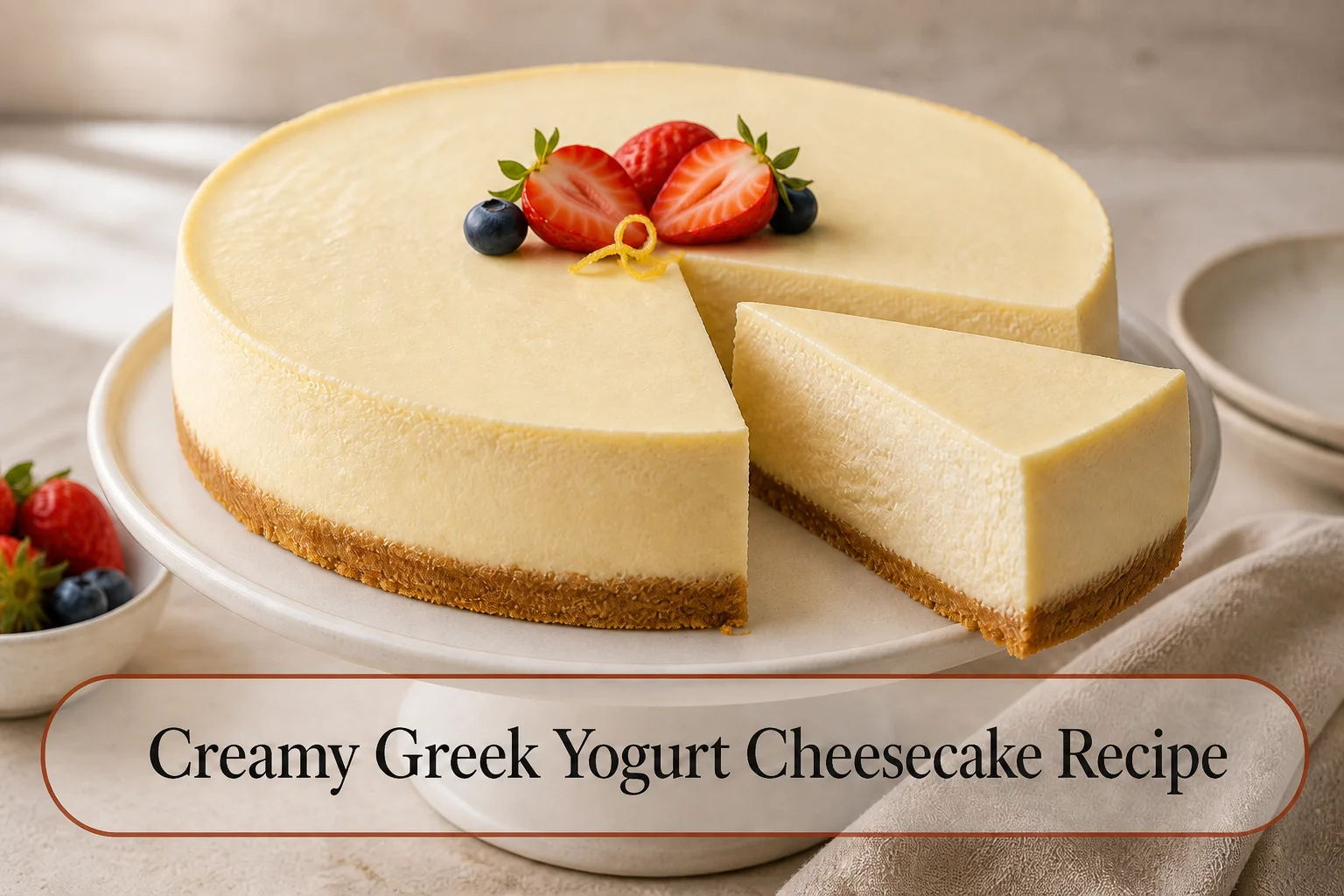
Creamy Greek Yogurt Cheesecake Recipe
Ingredients
Equipment
Method
- Heat the oven to 350°F with a rack in the lower-middle position. Grease a 9-inch springform pan, line the bottom with parchment, wrap the outside bottom with foil and set it on a rimmed sheet pan.
- Combine graham crumbs, 2 tablespoons sugar and 1/4 teaspoon salt. Mix in melted butter, press evenly over the pan bottom and bake 8 minutes. Cool at least 10 minutes and reduce the oven to 325°F.
- Beat softened cream cheese on low for about 60 seconds, scraping thoroughly. Add 3/4 cup sugar and cornstarch and mix on low until creamy.
- Add Greek yogurt in three portions, mixing on low and scraping after each. Mix in vanilla, lemon zest, lemon juice and 1/4 teaspoon salt until smooth.
- Add eggs one at a time on the lowest speed, stopping as soon as each disappears. Scrape once and fold by hand several times; do not whip.
- Pour batter over the cooled crust, smooth the top and tap the pan gently two or three times. Pop only the largest surface bubbles.
- Bake at 325°F for 50 to 65 minutes, until the outer 2 inches are set and a 2- to 3-inch center circle moves as one soft unit when nudged.
- Turn off the oven, crack the door and leave the cheesecake inside 30 minutes. Cool on a rack about 1 hour, running a thin knife around the edge after the first 15 minutes.
- Cover and refrigerate at least 6 hours, preferably overnight. Remove the springform ring only when fully cold.
- Warm a thin sharp knife in hot water, wipe dry and cut. Clean and warm the blade between slices; let slices stand 10 to 15 minutes before serving.
Notes
- Use full-fat block cream cheese and thick whole-milk Greek yogurt.
- Bring all filling ingredients to room temperature.
- Mix eggs only on low to avoid excess air.
- Remove the cheesecake while the center retains a cohesive wobble.
- Chill at least 6 hours for clean slices.
- This recipe was developed through culinary research and editorial review.
This recipe was developed through culinary research and editorial review. Yogurt thickness, ingredient temperature, mixer speed, pan construction and oven calibration vary; use the visual and texture cues throughout the method.
Nutrition is an estimate based on generic full-fat ingredients; actual values vary by brand, measurement and serving size.