
The air fryer restores chicken-wing texture by moving dry heat around the skin, but high heat alone can darken sauce before the center becomes hot. Starting chilled wings at a moderate temperature, leaving space, turning once and checking 165°F gives leftovers time to heat through without an unnecessarily long, drying cycle.
Ingredient moisture, piece size, cookware and starting temperature can shift the finish. The method therefore pairs a practical time range with visible or temperature-based doneness cues.
This recipe was developed through culinary research and editorial review. It is not represented as a personal kitchen test.
For a related idea, see how to reheat chicken wings. You may also want air fryer chicken wings recipe.
Why this recipe works
Moderate heat warms the center: Starting at 350°F reduces the chance of burning the exterior while the cold meat remains below reheating temperature.
One layer restores more skin: Air can reach exposed surfaces and carry moisture away instead of steaming a pile.
Sauce is refreshed afterward: Late sauce protects sugary glazes and lets the reheated skin crisp first.
The first batch is the useful reference point. Measure as written, note the finish in your equipment, and change only one variable at a time if an adjustment is needed.
Ingredients
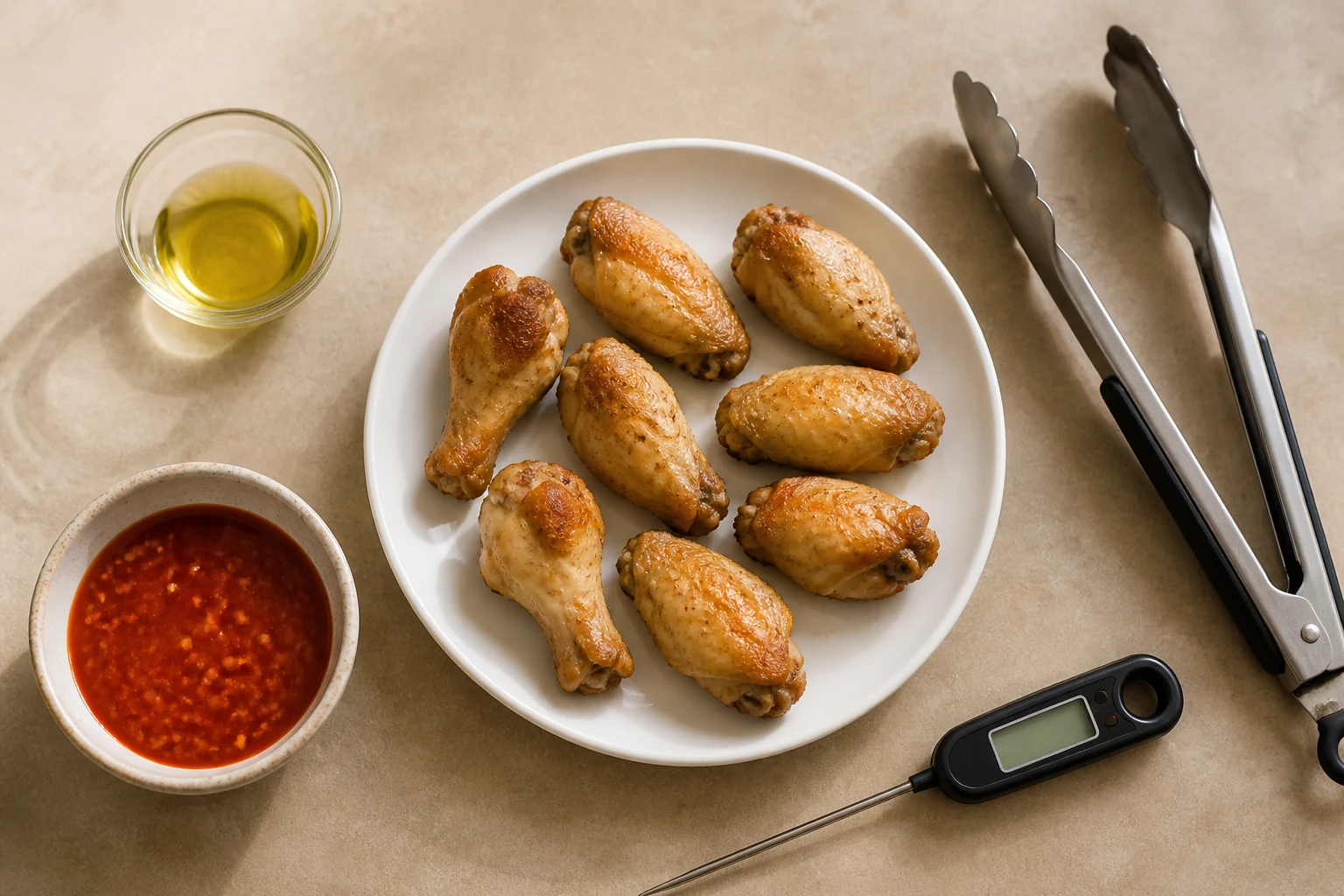
- 8 cooked refrigerated chicken wings, plain, dry-rubbed or lightly sauced
- 1 teaspoon neutral oil, optional for dry wings
- 2 tablespoons fresh sauce, optional, added after reheating
- 1 tablespoon chopped scallions, optional garnish
Ingredient notes
Refrigerated wings
This primary timing is for fully cooked wings taken from a 40°F-or-colder refrigerator, not raw poultry.
Sauced wings
Sweet, sticky wings darken faster. Begin checking early and use 325°F if the glaze is already very dark.
Frozen cooked wings
Reheat from frozen only when they were safely frozen; allow additional time at 325°F before a brief crisping finish.
How to Reheat Chicken Wings in the Air Fryer
1. Check storage
Use wings refrigerated promptly and stored no longer than 3 to 4 days. Discard leftovers with an uncertain time-temperature history.
2. Preheat
Preheat the air fryer to 350°F for 3 minutes if the appliance manual recommends it.
3. Arrange
Place wings in one loose layer with small gaps. Brush only very dry plain wings with a trace of oil; do not add sugary sauce yet.
4. Reheat the first side
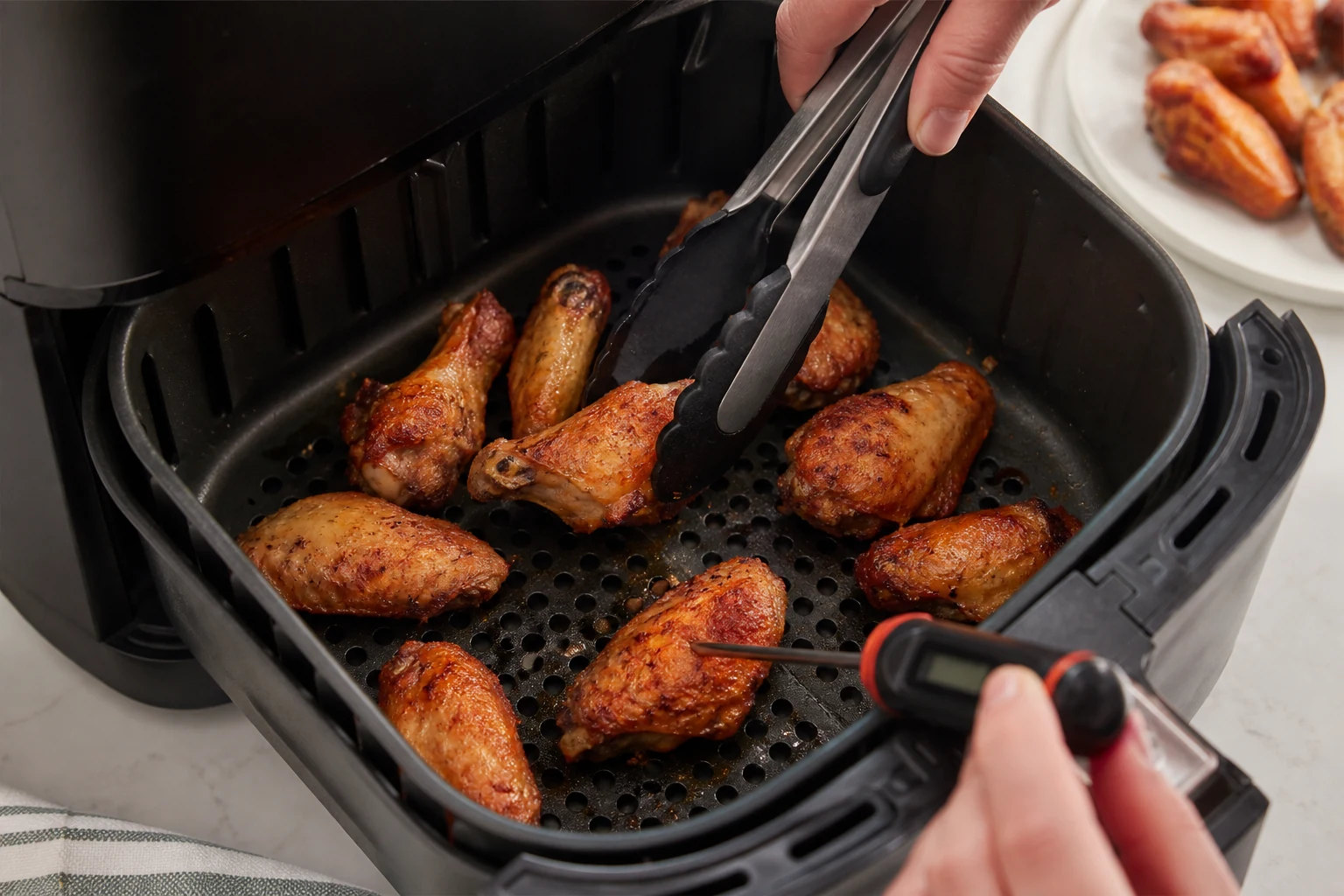
Air fry at 350°F for 4 minutes, then turn each wing.
5. Finish and verify
Continue 3 to 6 minutes, checking early for small or heavily sauced pieces. Measure several thick pieces away from bone and require 165°F.
6. Rest and sauce
Rest 2 minutes on an open plate. Add fresh warm sauce after reheating rather than softening the skin in the basket.
Quick timing and doneness guide
| Stage | What to look for | What to do |
|---|---|---|
| Preparation | Starting at 350°F reduces the chance of burning the exterior while the cold meat remains below reheating temperature. | Complete the size, moisture or equipment setup before cooking |
| First check | Air fry at 350°F for 4 minutes, then turn each wing. | Check at the early end of the range and keep unfinished portions cooking |
| Finished | Rest 2 minutes on an open plate. Add fresh warm sauce after reheating rather than softening the skin in the basket. | Stop when the stated texture or safe temperature is reached |
| If adjustment is needed | Lower to 325–350°F and continue in 2-minute intervals until several pieces reach 165°F. | Make the smallest useful change, then check again |
This table is a decision guide, not a replacement for ingredient labels, the appliance manual or safe-temperature guidance. When food safety depends on internal temperature, check more than one thick piece with a reliable thermometer.
Substitutions and variations
Oven method
Reheat on a rack at 375°F until 165°F, usually 10 to 18 minutes depending on size and starting temperature.
Toaster oven
Use a small rack over a tray and follow the same temperature and internal-temperature cues.
Boneless wings
Begin checking several minutes earlier because small breaded pieces heat and darken quickly.
Change one major component at a time. Moisture, sweetness, structure and cooking time affect one another, so several simultaneous substitutions are harder to predict.
Serving ideas
Serve immediately with fresh sauce, celery, slaw or a crisp salad. Reheat only the quantity needed so the remaining refrigerated wings do not cycle through repeated warming.
Troubleshooting
The skin is still soft
Likely cause: The basket was crowded or the wings were coated in wet sauce.
Fix: Reheat in smaller batches and add sauce only after the surface crisps.
The sauce is burning
Likely cause: Sugary glaze was exposed to high heat too long.
Fix: Lower to 325°F, cover nothing, and check the center more frequently.
The meat is dry
Likely cause: The wings reheated beyond 165°F or were repeatedly warmed.
Fix: Use the early check and reheat only the portion that will be eaten.
The outside is hot but the center is cool
Likely cause: The temperature was too high for thick chilled pieces.
Fix: Lower to 325–350°F and continue in 2-minute intervals until several pieces reach 165°F.
Storage, freezing and reheating
Refrigerator: Keep cooked wings at 40°F or below and use within 3 to 4 days; return untouched leftovers to refrigeration promptly.
Freezer: Freeze safely chilled cooked wings for up to 3 months for best quality.
Reheating or serving after storage: Reheat only once when practical and verify 165°F in several thick pieces before serving.
For general handling, the FoodSafety.gov Cold Food Storage Chart is the authoritative outside reference used for this article. FoodSafety.gov lists cooked meat and poultry leftovers for 3 to 4 refrigerated days; USDA guidance calls for reheated leftovers to reach 165°F.
Frequently asked questions
How long do you reheat wings in an air fryer?
Refrigerated wings commonly need 7 to 10 minutes at 350°F, but size, sauce and appliance output change timing.
What temperature should reheated wings reach?
Reheated leftovers should reach 165°F; check several thick pieces away from bone.
Can I reheat sauced wings in the air fryer?
Yes. Use moderate heat, check early and add fresh sauce afterward because sugary glaze darkens quickly.
Recipe development note
The method for reheat chicken wings in air fryer was developed through culinary research and editorial review. The quantities and time ranges are an editorial recipe specification, not a claim that every ingredient brand, appliance or batch was personally tested in one kitchen.
Nutrition is an estimate per servings and varies with brands, optional ingredients and portion size. The accompanying visuals are AI-assisted food-editorial images, not photographs of a kitchen test.
Printable recipe card
How to Reheat Chicken Wings in the Air Fryer
Ingredients
Equipment
Method
- Use wings refrigerated promptly and stored no longer than 3 to 4 days. Discard leftovers with an uncertain time-temperature history.
- Preheat the air fryer to 350°F for 3 minutes if the appliance manual recommends it.
- Place wings in one loose layer with small gaps. Brush only very dry plain wings with a trace of oil; do not add sugary sauce yet.
- Air fry at 350°F for 4 minutes, then turn each wing.
- Continue 3 to 6 minutes, checking early for small or heavily sauced pieces. Measure several thick pieces away from bone and require 165°F.
- Rest 2 minutes on an open plate. Add fresh warm sauce after reheating rather than softening the skin in the basket.
Notes
- Read ingredient labels and the manual for any appliance used.
- Begin checking at the early end of the range.
- FoodSafety.gov lists cooked meat and poultry leftovers for 3 to 4 refrigerated days; USDA guidance calls for reheated leftovers to reach 165°F.
- This recipe was developed through culinary research and editorial review.
This recipe was developed through culinary research and editorial review. Equipment, ingredient brands, starting temperature and batch size can change timing; follow the method cues and applicable safety guidance.
Nutrition is an estimate per servings and varies with brands, optional ingredients and portion size.